Novel Bacteriophage-Based Biosensor Test Method Shows Potential for Rapid Detection of Viable Foodborne Pathogens
Researchers have developed a bacteriophage-based lateral flow biosensor capable of detecting viable Salmonella in chicken meat within approximately seven hours, which, after further optimization, could offer a potential alternative to conventional culture-based screening methods that typically require three to five days.
Additionally, the underlying bacteriophage amplification approach could be adapted to detect other viable bacterial foodborne pathogens through the selection of appropriate bacteriophages.
The novel testing platform, which combines bacteriophage amplification with a lateral flow immunoassay (PA–LFI), achieved a detection limit of approximately 100 colony-forming units (CFU) per 25 grams of chicken meat. In a field evaluation involving 30 retail chicken samples, the method demonstrated 72.7 percent sensitivity, 89.5 percent specificity, and 83.3 percent overall agreement with the ISO 6579-1:2017 reference culture method.
The findings were described in Biosensors and Bioelectronics. The project was conducted by an international research team, with support from the Thailand Agricultural Research Development Agency and the Mahidol University Strategic Research Fund.
How the Detection Method Works
The researchers developed the PA–LFI platform to address limitations of existing rapid Salmonella detection methods. Although molecular assays such as polymerase chain reaction (PCR) can provide rapid results, they cannot inherently distinguish viable from nonviable bacterial cells. Similarly, conventional lateral flow immunoassays detect bacterial antigens without differentiating between living and dead bacteria.
The developed method instead uses bacteriophages, viruses that infect viable bacterial cells and replicate within them, to generate a detectable signal indicating the presence of living Salmonella.
The testing procedure involved three main steps:
- Selective enrichment: Chicken meat samples were incubated for three hours to promote Salmonella growth while suppressing competing microorganisms
- Bacteriophage amplification: Samples were exposed to the Salmonella-specific bacteriophage, which infected viable bacterial cells and produced progeny phages during a three-hour amplification period
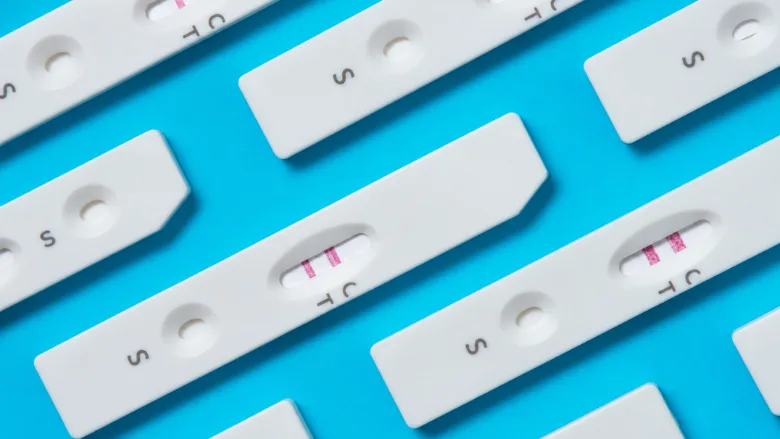
- Lateral flow detection: Amplified bacteriophages were detected using an immunoassay strip containing anti-phage antibodies conjugated to gold nanoparticles, producing a visible result within 15 minutes.
The complete procedure required approximately seven hours and provided a visual readout without requiring specialized instruments.
Looking for quick answers on food safety topics?
Try Ask FSM, our new smart AI search tool.
Ask FSM →
Testing Demonstrates Broad Salmonella Detection, With Some Limitations
Laboratory evaluation demonstrated that the PA–LFI method detected 43 of 49 Salmonella strains tested, representing 87.8 percent of the strains. These included all 20 S. Enteritidis strains and all 20 S. Typhimurium strains, but only one of three strains each of S. Choleraesuis, S. Hadar, and S. Virchow.
No cross-reactivity was observed among 30 non-Salmonella bacterial strains tested, including Escherichia coli, Listeria monocytogenes, Staphylococcus aureus, Shigella spp., and Vibrio parahaemolyticus.
In artificially contaminated chicken samples, the assay detected Salmonella at concentrations as low as 100 CFU/25 g. However, this detection limit was higher than the 1 CFU/25 g reported for the ISO reference method.
Novel Assay vs. Traditional Culture Under Real-World Conditions
To assess performance under real-world conditions, the researchers tested 30 retail chicken samples collected from supermarkets and fresh markets in Bangkok, Thailand.
The reference culture method identified 11 positive samples, while PA–LFI identified ten. Of the 11 culture-positive samples, PA–LFI correctly detected eight, producing three false-negative results. The assay also produced two positive results among 19 culture-negative samples.
Further investigation using metagenomic sequencing detected Salmonella-associated sequences in all five discordant samples. Additional bacteriophage plaque assays supported the presence of viable Salmonella in the two samples that tested positive by PA–LFI but negative by conventional culture.
The researchers noted that insufficient bacteriophage amplification, low bacterial recovery, biofilm formation, and differences in bacterial physiological states could contribute to false-negative results.
Potential Applications After Further Optimization and Validation
According to the researchers, the PA–LFI platform could serve as a preliminary screening tool for routine food safety monitoring, allowing laboratories and food producers to prioritize potentially contaminated samples for confirmatory culture testing.
The researchers estimated the assay would cost approximately $12 USD per test.
Although the method offered substantially faster results than conventional culture, its moderate sensitivity and limited field evaluation indicated a need for further optimization and validation. The researchers suggested that incorporating bacteriophage cocktails, improving enrichment and amplification conditions, and expanding testing across additional food matrices could improve performance.