OP-ED
Beyond the Smoking Gun: Why Food Safety Needs Systems Thinking
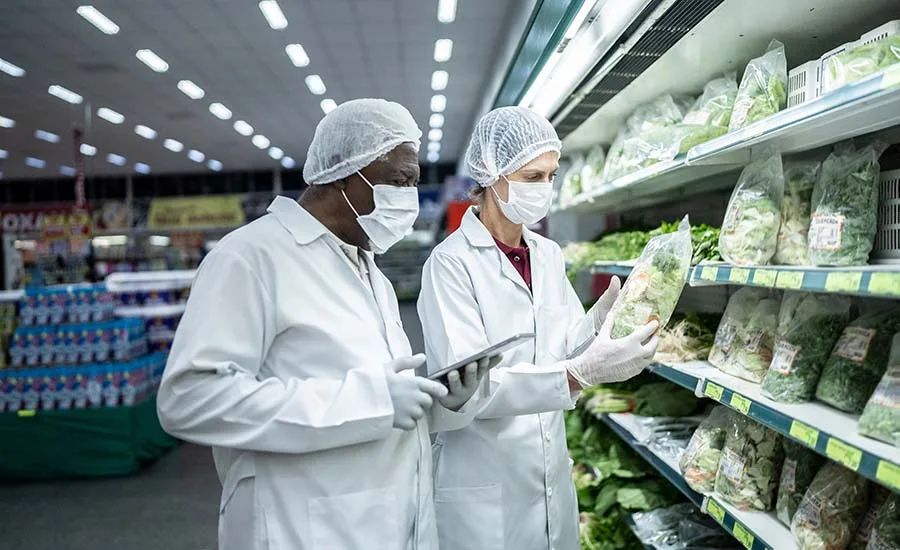
The recent Cyclospora outbreak linked to shredded iceberg lettuce is a reminder of just how difficult modern foodborne outbreak investigations have become. News reports often ask a simple question: Did investigators find the parasite in the lettuce? When a laboratory result is withdrawn or proves inconclusive, it can create the impression that the investigation has stalled or that the suspected food is no longer implicated.
In reality, food safety investigations rarely depend on a single "smoking gun." They are built from many independent pieces of evidence—patient interviews, laboratory analyses, distribution records, traceback investigations, supplier information, and increasingly sophisticated genomic and epidemiological methods. Like detectives investigating a complex crime, investigators assemble a case by combining multiple imperfect clues. A single piece of evidence may change, but the overall picture can remain compelling.
This distinction matters because today's food system is itself a complex network. Fresh produce moves rapidly from farms to processors, distribution centers, restaurants, grocery stores, and ultimately consumers. Information, however, flows in the opposite direction. By the time people become ill, the lettuce has often already been consumed or discarded. Investigators must reconstruct the past using invoices, shipping records, laboratory data, and interviews to trace illnesses back through the supply chain to their most likely source.
This is fundamentally a systems problem.
The operations research (OR) and analytics community has spent decades developing methods for understanding complex networks, making decisions under uncertainty, and integrating information from multiple sources. The same OR approaches at play in a number of industries—from aviation and manufacturing to finance and healthcare—are and can be used to their fullest potential in food safety. It is all about systems thinking.
Today's food safety investigations, particularly those tied to recalls, already draw upon numerous data streams: clinical diagnoses, epidemiological interviews, laboratory testing, product traceback, supplier records, and distribution networks. Yet, these information sources often remain fragmented, which can present problems in themselves.
The future of ensuring food safety lies not in simply improving any one test or technology, but in integrating them into a comprehensive decision-support system.
Looking for quick answers on food safety topics?
Try Ask FSM, our new smart AI search tool.
Ask FSM →
Imagine that during an emerging outbreak, clinical reports begin appearing in several states. At the same time, traceback data show that affected restaurants received lettuce from a common supplier.
Environmental monitoring at a processing facility detects an unusual signal, while production and shipping records identify a narrow window of product originating from a particular growing region. None of these observations alone proves the source of the outbreak. Together, however, they provide a compelling picture that allows investigators to focus their efforts more quickly, narrow recalls more precisely, and intervene before additional people become ill.
The goal is not to replace today's food safety practices, but to connect them. Rather than viewing epidemiology, laboratory science, environmental monitoring, and supply chain traceability as separate activities, we should view them as complementary sensors observing the same system from different perspectives.
A useful analogy is modern weather forecasting. Meteorologists do not rely on a single thermometer to predict tomorrow's weather. They integrate observations from satellites, radar, weather stations, ocean buoys, weather balloons, and sophisticated computer models. Each source is imperfect on its own, but together they provide a remarkably accurate mosaic of what is most likely to happen.
Food safety can follow a similar path. Rather than searching for one definitive test, we should be building systems capable of synthesizing many independent observations into a continuously updated assessment of risk.
Imagine a future produce processing facility that continuously monitors wash water characteristics, environmental conditions, supplier information, production schedules, and traceability records. Add environmental surveillance, rapid molecular diagnostics, and perhaps even wastewater monitoring of processing operations. None of these data streams is perfect in isolation. Together, however, they could provide an early warning signal that contaminated product has entered the system, allowing processors and regulators to investigate quickly and preemptively.
Since the technologies needed to support this vision already exist in many other industries, applying their capabilities thoughtfully to food safety could significantly improve the ability to detect emerging outbreaks, narrow investigations, target recalls more precisely, and restore public confidence more quickly.
This approach also changes how we think about prevention. Instead of viewing food safety as a series of inspections separated by periods of uncertainty, we can envision continuous situational awareness across the food system. Every shipment, environmental measurement, laboratory result, and traceability record becomes another sensor contributing to a more complete understanding of risk.
No single technology will eliminate foodborne illness. But systems thinking reminds us that resilient systems rarely depend on perfect components. They depend on well-designed interactions among many complementary components.
As food supply chains become more complex and consumers increasingly expect both fresh products and rapid transparency, food safety must evolve beyond the search for a single "smoking gun." The future belongs to systems that learn continuously, integrate evidence intelligently, and respond quickly when something appears out of place.