EU Lowers Safe Level of Exposure to TFA, a PFAS ‘Forever Chemical’ in Water, Food
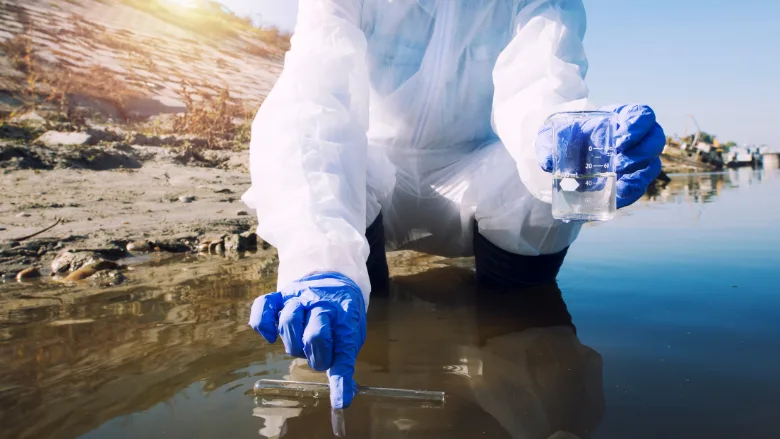
The European Food Safety Authority (EFSA) has lowered its health-based guidance values for trifluoroacetic acid (TFA), a persistent environmental contaminant that can be present in food and water. Considered an ultra-short-chain per- and polyfluoroalkyl substance (PFAS), TFA is a breakdown product of certain PFAS, industrial gases, and some plant protection products.
The revised guidance follows a comprehensive reassessment requested by the European Commission, which asked EFSA to review all available evidence on TFA and update its consumer health-based guidance values. EFSA evaluated approximately 170 studies and regulatory documents using a weight-of-evidence approach and benchmark dose modeling.
Based on the assessment, EFSA established a new acceptable daily intake (ADI) of 0.014 milligrams per kilogram of body weight per day (mg/kg BW/day), replacing the previous 2017 ADI of 0.05 mg/kg BW/day. The authority also established, for the first time, an acute reference dose (ARfD) of 0.07 mg/kg BW.
EFSA concluded that TFA and its sodium salt are unlikely to be genotoxic. However, new animal studies identified developmental, reproductive, and thyroid hormone effects, with decreased thyroxine (T4) levels representing the most sensitive endpoint used to derive the updated guidance values.
The new ADI was based on benchmark dose modeling of thyroid hormone changes observed in an extended, one-generation reproductive toxicity study in rats. EFSA applied the standard 100-fold uncertainty factor to account for differences between animals and humans and variability within the human population, along with an additional five-fold uncertainty factor due to remaining data gaps.
According to EFSA, the additional uncertainty factor reflects the absence of long-term carcinogenicity studies and limited information on potential developmental immunotoxicity.
The revised guidance values provide more stringent benchmarks for assessing dietary exposure to TFA than those established in 2017 and are expected to support future EU risk assessments related to food safety, drinking water monitoring, pesticides, and chemical regulation.
Looking for quick answers on food safety topics?
Try Ask FSM, our new smart AI search tool.
Ask FSM →