USDA Researcher Identifies Key Cold Storage Temperature for Maintaining Microbial Safety of Work-in-Process Fresh-Cut Produce
Maintaining work-in-process (WIP) fresh-cut produce at 4 °C (39 °F) can significantly limit the growth of foodborne pathogens during storage prior to blending and packaging, according to findings from a Center for Produce Safety (CPS)-funded study led by Xuetong Fan, Ph.D., with the U.S. Department of Agriculture's Agricultural Research Service (USDA-ARS).
The Best Temperature for Inhibiting Pathogen Growth
The project evaluated the survival of cold-adapted Listeria monocytogenes, Escherichia coli O157:H7, and Salmonella on fresh-cut salad ingredients, including carrots, red cabbage, kale, Brussels sprouts, yellow onions, and broccoli stalks. Researchers inoculated minimally processed produce with five-strain pathogen cocktails and stored the samples at 4, 8, and 12 °C (39–54 °F) for up to seven days.
The researchers observed minimal pathogen growth at 4 °C but found that even modest temperature increases promoted microbial growth, particularly for L. monocytogenes. Dr. Fan said the findings underscore the importance of maintaining proper cold-storage temperatures throughout processing.
Some Produce May Naturally Inhibit Listeria
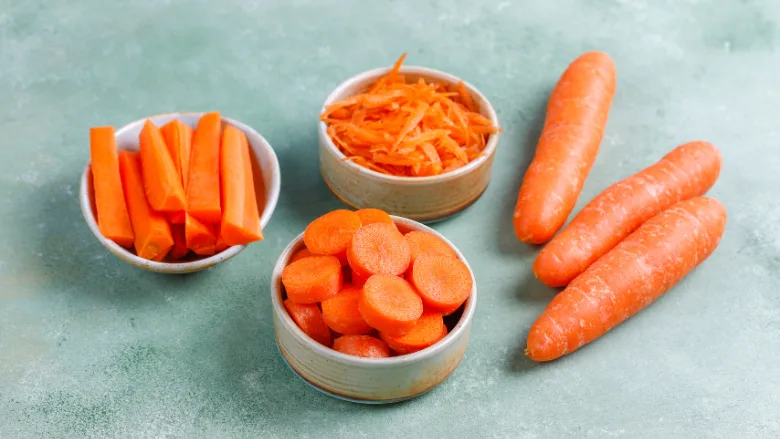
The study also found that some produce items, particularly carrots, naturally inhibited L. monocytogenes. Populations on carrots declined by 2–3 log colony forming units (CFU) to nearly undetectable levels, although similar reductions were not observed for E. coli or Salmonella. Dr. Fan noted that additional research is needed to better understand the compounds responsible for carrots' anti-Listeria activity and emphasized that processors should continue following established preventive controls for all produce.
Peracetic Acid Could Facilitate Listeria Growth During Storage
Researchers also examined the effects of sanitizer washes before storage. Although peracetic acid (PAA) was more effective than chlorine at reducing initial L. monocytogenes populations on some produce items, PAA-treated samples sometimes exhibited greater Listeria growth during storage. The researchers suggested this may result from PAA reducing competing background microbiota, allowing L. monocytogenes to proliferate more readily.
In a separate experiment, contaminated storage containers transferred pathogens to fresh batches unless they were thoroughly cleaned and sanitized, indicating that simple rinsing was insufficient to eliminate contamination.
Developing Pathogen Growth Predictive Models
Data generated by the project are being used to develop predictive models that estimate pathogen growth based on storage temperature, holding time, sanitizer treatment, and produce type. Bryan Vinyard, Ph.D., USDA-ARS, developed mathematical models from the dataset, and researchers are collaborating with Luyao Ma, Ph.D., of Oregon State University to apply machine learning to improve risk prediction.
Looking for quick answers on food safety topics?
Try Ask FSM, our new smart AI search tool.
Ask FSM →