FRESH Act Aims to Preempt State Food Safety Laws, Proposes Controversial GRAS Reforms

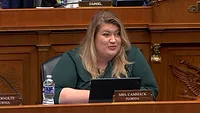
A draft House bill published by Representative Kat Cammack (R-Florida) seeks to implement a swath of changes to how the U.S. Food and Drug Administration (FDA) regulates foods, including the “Generally Recognized as Safe” (GRAS) ingredient oversight, infant formula safety, and other areas. Notably, the bill would preempt state food safety legislation, prompting criticism from consumer advocacy organizations that argue the bill could weaken existing safeguards.
The legislation, titled the FDA Review and Evaluation for Safe, Healthy, and Affordable Foods Act of 2026 (FRESH Act), would amend the Federal Food, Drug, and Cosmetic Act (FFDC) to establish new requirements for food chemical oversight, including a mandatory notification system for GRAS substances and the creation of a public registry of GRAS determinations.
Proposed Changes to the GRAS Process
The FRESH Act would require companies to submit GRAS notifications to FDA before marketing foods containing such substances, with a 90-day review window for the agency to determine whether the safety information submitted with a notification is sufficient to determine a substance as GRAS.
The legislation would also formalize a role for accredited third-party scientific panels to evaluate GRAS determinations, allowing substances reviewed by such panels to enter the food supply through an alternative notification pathway.
Additionally, the FRESH Act includes provisions to establish a national registry of GRAS substances.
It is worth noting that, separate from the FRESH Act, an FDA rule to close gaps in the GRAS process is currently pending White House review.
Systematic Food Chemical Safety Reviews
If enacted as-is, the FRESH Act would require FDA to establish a systematic post-market food chemical safety review program by no later than September 30, 2026. Additionally, by September 30, 2027, and annually thereafter, FDA would be required to publish a list of chemicals prioritized for risk assessment.
Looking for quick answers on food safety topics?
Try Ask FSM, our new smart AI search tool.
Ask FSM →
Notably, FDA announced in 2025 that it was launching “a stronger, more systematic review process” for food chemicals already on the market, including a list of priority substances for review.
Infant Formula and Baby Food Safety Provisions
The FRESH Act also seeks to establish new requirements regarding infant and toddler food safety, including a mandate for FDA to set limits on contaminants and toxic elements such as lead, arsenic, and cadmium. The bill would also require infant and toddler food manufacturers to conduct routine sampling and testing for such contaminants and toxic elements, and to keep records.
The legislation would also expand FDA authority related to infant formula safety. Manufacturers would be required to report positive pathogen test results to FDA and implement mandatory environmental monitoring programs for Salmonella and Cronobacter. Additionally, FDA would be empowered to enforce mandatory recalls of infant formula or baby foods if it determines that it contains a contaminant that renders the product adulterated under FFDC.
Federal Preemption of State Food Laws
A key provision of the bill would establish federal preemption over state food safety laws—which have been increasing in number in recent years—related to the GRAS process, food additive and ingredient restrictions and bans, and requirements for foods to carry warning statements based on the presence of an additive or ingredient.
FRESH Act Draws Criticism from Consumer Protection Groups
Consumer advocacy organizations raised concerns that the bill could weaken oversight of food chemicals and limit state-led food safety efforts.
Sarah Sorscher, J.D., M.P.H., Director of Regulatory Affairs at the Center for Science in the Public Interest (CSPI), said the bill “would broadly block state food safety policies while weakening current FDA authority over premarket safety review for substances used in foods.” Ms. Sorscher argued that the bill’s preemption language would erase the progress achieved by recent state food safety laws, such as the precedent-setting California Food Safety Act to ban several chemical food additives thought to be harmful, and similar state legislation that has since passed.
“This extreme preemption language will hurt consumers but serves as a major win for big food companies, which last year launched a multimillion dollar effort to broadly preempt state safety and labeling laws,” she said, referring to the industry-backed lobbyist group Americans for Ingredient Transparency.
Ms. Sorscher also criticized the bill’s approach to GRAS oversight, stating that it “would not require FDA premarket review of new food chemicals,” but instead, by “forcing FDA to rubber-stamp decisions made in secret by review panels paid by the food industry,” it would “make permanent, and even widen in some ways, the current loophole in federal law that allows food companies to introduce new food substances without submitting safety data for FDA review.” For instance, the FRESH Act specifically names the industry-funded Flavor Extract Manufacturers Association as an example of a third-party panel that would be relied upon to review GRAS determinations.
Similarly, the Environmental Working Group (EWG) said the FRESH Act could further weaken the current system for food chemical oversight by preempting state food safety laws and by retroactively approving all food chemicals considered GRAS. Melanie Benesh, EWG’s Vice President for Government Affairs, said the bill “would gut rules on the information companies must provide [to FDA]” when submitting a GRAS notification and allow new substances to enter the food supply without an affirmative finding of safety by FDA.
EWG also raised concerns about the bill’s provisions allowing substances to be marketed if FDA does not respond to GRAS notifications within 90 days and the potential for continued reliance on industry-funded scientific panels.
Update, April 30, 2026: The FRESH Act was debated during an April 29 Congressional hearing. Coverage of the hearing can be read here.