Food Safety
search
Ask Food Safety AI
cart
facebook twitter linkedin instagram youtube
  • Sign In
  • Create Account
  • Sign Out
  • My Account
Food Safety
  • NEWS
    • Latest News
    • White Papers
  • PRODUCTS
  • TOPICS
    • Contamination Control
    • Food Types
    • Management
    • Process Control
    • Regulatory
    • Sanitation
    • Supply Chain
    • Testing and Analysis
  • PODCAST
  • EXCLUSIVES
    • Food Safety Five Newsreel
    • eBooks
    • FSM Distinguished Service Award
    • Interactive Product Spotlights
    • Videos
  • BUYER'S GUIDE
  • MORE
    • NEWSLETTERS >
      • Archive Issues
      • Subscribe to eNews
    • Store
    • Sponsor Insights
    • ASK FSM AI
  • WEBINARS
  • FOOD SAFETY SUMMIT
  • EMAG
    • eMagazine
    • Archive Issues
    • Editorial Advisory Board
    • Contact
    • Advertise
  • SIGN UP!
NewsRegulatoryHACCPUSDA

USDA-FSIS Seeks Input on Potential Updates to Establishment Size Definitions
By Food Safety Magazine Editorial Team
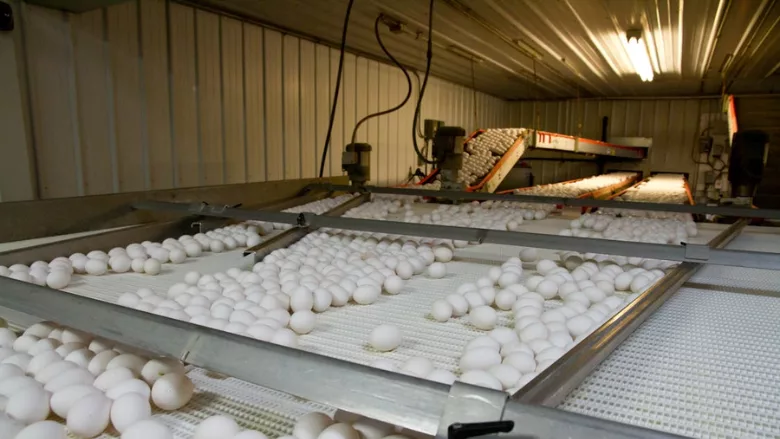
eggs on conveyor in processing facility
Image credit: Mark Stebnicki via Pexels
March 24, 2026

The U.S. Department of Agriculture’s Food Safety and Inspection Service (USDA-FSIS) has issued an advance notice of proposed rulemaking (ANPR) to gather stakeholder input on whether and how the agency should revise its establishment size definitions for meat, poultry, and egg production facilities.

The current size classifications, established under the 1996 Pathogen Reduction/Hazards Analysis and Critical Control Points (HACCP) Systems Final Rule, categorize establishments as very small, small, or large based on employee count and annual sales. These definitions have historically been used to assess regulatory impacts, implement regulatory requirements in phases, and tailor assistance to small businesses.

As of December 2025, FSIS-regulated establishments include 2,961 very small, 2,847 small, and 508 large facilities.

However, FSIS has increasingly relied on additional metrics, including production volume thresholds, to inform regulatory analysis, sampling frequencies, and inspection requirements. The agency said these evolving practices have prompted consideration of whether current size definitions accurately reflect modern industry structure and operations.

Possible Alternative Categorization Approaches

The ANPR follows recommendations from the (now disbanded) National Advisory Committee on Meat and Poultry Inspection (NACMPI), which reviewed the issue in September 2024. The committee concluded that the existing categorization scheme may group establishments that have significantly different operational scales and resources.

NACMPI recommended that FSIS consider a dual-metric approach to classification. Under this framework, establishments would be categorized both by production volume and by business size factors such as employee count, annual revenue, and corporate ownership structure. The committee suggested that production volume could better inform regulatory requirements, while business size metrics could support determinations related to financial assistance and compliance resources.

The committee also raised concerns about establishments classified as small but affiliated with larger corporate entities, suggesting that ownership structure should be considered when determining eligibility for federal programs.

Looking for quick answers on food safety topics?
Try Ask FSM, our new smart AI search tool.
Ask FSM →

Consideration of SBA Standards and Additional Categories

FSIS is also seeking input on whether its size definitions should align with Small Business Administration (SBA) standards, which define small businesses based on employee thresholds that are generally higher than FSIS HACCP categories. NACMPI advised against adopting SBA standards outright, citing concerns that employee-based metrics alone may not accurately reflect operational scale or resource availability.

In addition, FSIS is requesting feedback on the potential creation of additional size categories, including classifications based on production volume, product type, or other operational characteristics such as processing methods or facility capacity.

Request for Data and Comments

Stakeholder feedback will inform whether FSIS moves forward with proposed changes to establishment size definitions to better reflect current industry conditions and improve regulatory effectiveness.

Specifically, FSIS is seeking input on:

  • Economic impacts of current HACCP size classifications
  • Potential effects of revised or new classification systems
  • The role of production volume, corporate ownership, and other factors in defining establishment size
  • Data collection, reporting, and verification methods for size-related information
  • Impacts of size definitions on regulatory requirements, industry costs, and federal program eligibility.

The full ANPR can be accessed here. Comments must be submitted by May 26, 2026 on regulations.gov under docket number FSIS-2026-0001.


KEYWORDS: NACMPI small food companies

Share This Story

Fsm purple logo 200x200

The Food Safety Magazine editorial team comprises Bailee Henderson, Digital Editor ✉ and Adrienne Blume, M.A., Editorial Director.

Recommended Content

JOIN TODAY
to unlock your recommendations.

Already have an account? Sign In

  • people holding baby chicks

    Serovar Differences Matter: Utility of Deep Serotyping in Broiler Production and Processing

    This article discusses the significance of Salmonella in...
    Contamination Control
    By: Nikki Shariat Ph.D.
  • woman washing hands

    Building a Culture of Hygiene in the Food Processing Plant

    Everyone entering a food processing facility needs to...
    Facilities
    By: Richard F. Stier, M.S.
  • graphical representation of earth over dirt

    Climate Change and Emerging Risks to Food Safety: Building Climate Resilience

    This article examines the multifaceted threats to food...
    International
    By: Maria Cristina Tirado Ph.D., D.V.M. and Shamini Albert Raj M.A.
Manage My Account
  • eMagazine Subscription
  • Subscribe to Newsletters
  • Manage My Preferences
  • Website Registration
  • Subscription Customer Service

More Videos

Sponsored Content

Sponsored Content is a special paid section where industry companies provide high quality, objective, non-commercial content around topics of interest to the Food Safety Magazine audience. All Sponsored Content is supplied by the advertising company and any opinions expressed in this article are those of the author and not necessarily reflect the views of Food Safety Magazine or its parent company, BNP Media. Interested in participating in our Sponsored Content section? Contact your local rep!

close
  • The image shows a variety of fresh produce packaged in plastic trays and wrap.
    Sponsored byWaters Corporation

    PFAS-Free Food Packaging by August 2026

  • This image displays a multi-stage water filtration system designed to remove contaminants from drinking water.
    Sponsored byWaterdrop Filter

    The 4.0 ppt Era: Future-Proofing Your Food Supply Chain Against 'Forever Chemicals'

  • The image displays a bottling plant production line, commonly used in the beverage industry for filling and packaging soft drinks.
    Sponsored byBIOIONIX

    Sustainability with ROI: A Beverage Producer Case Study in Water Savings

Popular Stories

RAW FARM-brand raw cheddar cheese product

Multistate E. coli Outbreak Likely Caused by Raw Cheese, but Manufacturer Refuses to Recall

RAW FARM-brand raw cheddar cheese shreds

Amid E. coli Outbreak, Congress Urges FDA to Mandate Raw Cheese Recall

world map made of beans and grains with a person's hand touching the African continent

Researchers Urge Moving Away From ‘Zero-Risk’ Food Safety Mentality, Toward Consideration of Sustainability Trade-Offs

foreign material webinar


Events

March 26, 2026

Continuous Pathogen Control: Enhancing Sanitation and Environmental Monitoring in Food Processing

Live: March 26, 2026, at 2:00 pm EST: This session explores the role of continuous airborne pathogen control technology in supporting sanitation and environmental monitoring programs within food processing environments.

March 31, 2026

Regulatory Risk, Ingredient Safety, and GRAS: What Companies Need to Act on Now

Live: March 31, 2026, at 11:00 am EDT: From this webinar, attendees will recognize patterns in food policy affecting dietary guidelines, UPFs, state legislative actions, and expected GRAS reform.

April 8, 2026

Foreign Material Contamination: Why In-Line Reinspection Isn't Enough

Live: April 8, 2026, at 11:00 am EDT: From this webinar, attendees will learn why reinspecting with in-line equipment is not sufficient when it comes to potential foreign material contamination.

View All

Products

Global Food Safety Microbial Interventions and Molecular Advancements

Global Food Safety Microbial Interventions and Molecular Advancements

See More Products

Related Articles

  • hands using laptop

    NACMPI Holding Public Meeting in September to Advise USDA-FSIS on Definitions, Technology

    See More
  • white chickens in a pasture on a farm

    USDA-FSIS Grants Pilot Project to Poultry Establishment for Studying Salmonella Controls

    See More
  • FDA Seeks Industry Input on How to Facilitate Consumer Notification of Adulterated Foods

    See More

Related Products

See More Products
  • 9781138198463.jpg

    Food Safety Management Programs: Applications, Best Practices, and Compliance

  • 1118474600.jpg

    Practical Food Safety: Contemporary Issues and Future Directions

  • 0813808774.jpg

    Improving Import Food Safety

See More Products

Events

View AllSubmit An Event
  • March 3, 2026

    FDA/USDA Regulatory Updates: Food Safety Work Plans for 2026

    On Demand: In this high-level, exclusive webinar, FDA Deputy Commissioner for Human Foods Kyle Diamantas and USDA Under Secretary for Food Safety Mindy Brashears, Ph.D. will share their agencies' regulatory priorities and work plans for 2026 and beyond.
  • March 31, 2026

    Regulatory Risk, Ingredient Safety, and GRAS: What Companies Need to Act on Now

    Live: March 31, 2026, at 11:00 am EDT: From this webinar, attendees will recognize patterns in food policy affecting dietary guidelines, UPFs, state legislative actions, and expected GRAS reform.
View AllSubmit An Event

Related Directories

  • OneVision Corp.

    We develop, manufacture, sell and support can seam inspection and weighing systems to food and beverage canners, can makers, and specialty manufacturers (oil filter, aerosol cans, composite cans). Founded in 1994, we've installed and support more than 350 can seam inspection systems around the world.
×

Never miss the latest news and trends driving the food safety industry

Newsletters | Website | eMagazine

JOIN TODAY!
  • RESOURCES
    • Advertise
    • Contact Us
    • Directories
    • Store
    • Want More
  • SIGN UP TODAY
    • Create Account
    • eMagazine
    • Newsletters
    • Customer Service
    • Manage Preferences
  • SERVICES
    • Marketing Services
    • Reprints
    • Market Research
    • List Rental
    • Survey/Respondent Access
  • STAY CONNECTED
    • LinkedIn
    • Facebook
    • Instagram
    • X (Twitter)
  • PRIVACY
    • PRIVACY POLICY
    • TERMS & CONDITIONS
    • DO NOT SELL MY PERSONAL INFORMATION
    • PRIVACY REQUEST
    • ACCESSIBILITY

Copyright ©2026. All Rights Reserved BNP Media, Inc. and BNP Media II, LLC.

Design, CMS, Hosting & Web Development :: ePublishing