Food Safety
search
Ask Food Safety AI
cart
facebook twitter linkedin instagram youtube
  • Sign In
  • Create Account
  • Sign Out
  • My Account
Food Safety
  • NEWS
    • Latest News
    • White Papers
  • PRODUCTS
  • TOPICS
    • Contamination Control
    • Food Types
    • Management
    • Process Control
    • Regulatory
    • Sanitation
    • Supply Chain
    • Testing and Analysis
  • PODCAST
  • EXCLUSIVES
    • Food Safety Five Newsreel
    • eBooks
    • FSM Distinguished Service Award
    • Interactive Product Spotlights
    • Videos
  • BUYER'S GUIDE
  • MORE
    • NEWSLETTERS >
      • Archive Issues
      • Subscribe to eNews
    • Store
    • Sponsor Insights
    • ASK FSM AI
  • WEBINARS
  • FOOD SAFETY SUMMIT
  • EMAG
    • eMagazine
    • Archive Issues
    • Editorial Advisory Board
    • Contact
    • Advertise
  • SIGN UP!
NewsManagementRegulatoryRecall/Crisis ManagementFDA

FDA Petitioned to Stop Protecting Identity of Companies Involved in Foodborne Illness Outbreaks
By Food Safety Magazine Editorial Team
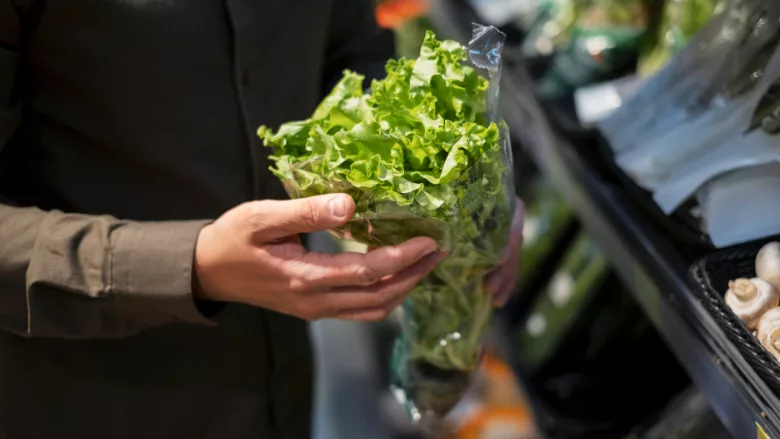
person holding romaine lettuce at grocery store
Image credit: Freepik
February 10, 2026

Stop Foodborne Illness has submitted a petition to the U.S. Food and Drug Administration (FDA) urging the agency to adopt a policy of publicly disclosing the names of all companies associated with foodborne illness outbreaks, regardless of whether there is a related recall.

Legal Basis for Disclosing Companies Involved in Outbreaks

At present, FDA protects the identity of these companies from disclosure because it considers a company name to be “confidential commercial information” (CCI) per the Trade Secrets Act—an interpretation which the petition says is inconsistent with applicable statutory language and case law.

The Trade Secrets Act defines CCI as information “which concerns or relates to the trade secrets, processes, operations, style of work, or apparatus, or to the identity, confidential statistical data, amount or source of any income, profits, losses, or expenditures of any person, firm, partnership, corporation, or association; or permits any income return or copy thereof or any book containing any abstract or particulars thereof.”

Additionally, legal precedent (Food Mktg. Inst. v. Argus Leader Media) defines “confidential” company information as that which is “customarily kept private, or at least closely held, by the person imparting it,” and the company must have received “some assurance that [the information] would remain secret.”

Granting Petition Would Display ‘Radical Transparency’

The petition argues that changing FDA’s position that a company name is CCI would be easily achieved through an agency statement or memorandum announcing a change in its interpretation.

However, if the agency decides to continue to treat a company name as CCI, then the petition asks that FDA still disclose the names of all companies linked to an outbreak based either on its responsibility to ensure safe food under the Federal Food Drug and Cosmetic Act (FDCA) or by revising the language in the Code of Federal Regulations (21 CFR §20.91) to allow broader disclosure of the brand name of any company linked to the outbreak.

“Such action is consistent with FDA’s mission to protect public health, and with [the Presidential] Administration’s commitment to ‘radical transparency,’” says the petition.

Looking for quick answers on food safety topics?
Try Ask FSM, our new smart AI search tool.
Ask FSM →

Not Sharing Company Names Disproportionately Affects Produce Outbreaks

According to the petition, publicizing the name of every company involved in a foodborne illness outbreak could 1) prompt some consumers who ate affected product but did not seek medical attention or report their illnesses to the health department to do so, 2) alert people who may still have the food product in their homes not to eat it and thereby prevent additional illnesses, and 3) incentivize companies whose names have been publicly disclosed to redouble their efforts related to food safety.

Furthermore, FDA’s policy of limiting disclosure of company names to only outbreaks involving recalls disproportionately affects outbreaks involving fresh produce, per the petition. Because produce is perishable, recalls often occur less frequently for fresh fruits and vegetables than for processed foods, which have longer shelf lives. At the same time, fresh produce is responsible for a significant percentage of foodborne illness outbreaks.

The petition provides an example of a multistate outbreak at the end of 2024 caused by Escherichia coli-contaminated romaine lettuce distributed to schools, restaurants, catered events, and retail. A total of 89 people were sickened, seven people developed hemolytic uremic syndrome, and one died. Despite FDA identifying the company that sold the lettuce via whole genome sequencing (WGS), the agency did not disclose its name because the outbreak did not have an associated ongoing recall or the product was no longer being sold.


KEYWORDS: foodborne illness outbreak outbreak investigations STOP Foodborne Illness

Share This Story

Fsm purple logo 200x200

The Food Safety Magazine editorial team comprises Bailee Henderson, Digital Editor ✉; Adrienne Blume, M.A., Editorial Director; and Stacy Atchison, Publisher.

Recommended Content

JOIN TODAY
to unlock your recommendations.

Already have an account? Sign In

  • people holding baby chicks

    Serovar Differences Matter: Utility of Deep Serotyping in Broiler Production and Processing

    This article discusses the significance of Salmonella in...
    Food Type
    By: Nikki Shariat Ph.D.
  • woman washing hands

    Building a Culture of Hygiene in the Food Processing Plant

    Everyone entering a food processing facility needs to...
    Sanitation
    By: Richard F. Stier, M.S.
  • graphical representation of earth over dirt

    Climate Change and Emerging Risks to Food Safety: Building Climate Resilience

    This article examines the multifaceted threats to food...
    International
    By: Maria Cristina Tirado Ph.D., D.V.M. and Shamini Albert Raj M.A.
Manage My Account
  • eMagazine Subscription
  • Subscribe to Newsletters
  • Manage My Preferences
  • Website Registration
  • Subscription Customer Service

More Videos

Sponsored Content

Sponsored Content is a special paid section where industry companies provide high quality, objective, non-commercial content around topics of interest to the Food Safety Magazine audience. All Sponsored Content is supplied by the advertising company and any opinions expressed in this article are those of the author and not necessarily reflect the views of Food Safety Magazine or its parent company, BNP Media. Interested in participating in our Sponsored Content section? Contact your local rep!

close
  • Salmonella bacteria
    Sponsored byThermoFisher

    Food Microbiology Testing Methods: Salmonella species

  • a diagram explaining indicator organisms
    Sponsored byHygiena

    How Proactive Listeria Testing Helps Prevent Six- and Seven-Figure Recalls

  • woman grocery shopping
    Sponsored byCorbion

    Designing Safety Into Every Bite: Proactive Risk Mitigation for Refrigerated Foods

Popular Stories

plate of RTE deli meats and sausages

Boar’s Head Reopens Production Facility Behind Fatal Listeriosis Outbreak

natural blue food coloring powder

FDA Allows Foods with ‘Natural’ Food Dyes to Claim ‘No Artificial Colors’

person on clipboard in processing environment

Preventive Maintenance: A Complex Prerequisite Program

Events

February 25, 2026

How to Manage Food Safety and Regulatory Risks in Your Supply Chain

Live: February 25, 2026 at 2:00 pm EST: From this webinar, attendees will learn how large food manufacturing organizations can successfully manage their supply chain, food safety, and regulatory risks.

March 3, 2026

FDA/USDA Regulatory Updates: Food Safety Work Plans for 2026

Live: March 3, 2026 at 2:00 pm EST: In this high-level, exclusive webinar, FDA Deputy Commissioner for Human Foods Kyle Diamantas and USDA Under Secretary for Food Safety Mindy Brashears, Ph.D. will share their agencies' regulatory priorities and work plans for 2026 and beyond.

May 11, 2026

The Food Safety Summit

Stay informed on the latest food safety trends, innovations, emerging challenges, and expert analysis. Leave the Summit with actionable insights ready to drive measurable improvements in your organization. Do not miss this opportunity to learn from experts about contamination control, food safety culture, regulations, sanitation, supply chain traceability, and so much more.

View All

Products

Global Food Safety Microbial Interventions and Molecular Advancements

Global Food Safety Microbial Interventions and Molecular Advancements

See More Products

Related Articles

  • illustration of business people holding puzzle pieces

    Five Companies Including Amazon, Yum! Brands Join Alliance to Stop Foodborne Illness

    See More
  • Alliance and FDA Food Safety Culture webinar series

    FDA, Stop Foodborne Illness Joint Food Safety Culture Webinar Series to Resume

    See More
  • Alliance and FDA Food Safety Culture webinar series

    Alliance to Stop Foodborne Illness, FDA Bring Back Joint Webinar Series on Food Safety Culture

    See More

Related Products

See More Products
  • 9781138070912.jpg

    Trends in Food Safety and Protection

  • 1119237963.jpg

    Food Safety in China: Science, Technology, Management and Regulation

  • 9781498721776.jpg

    Handbook of Food Processing: Food Safety, Quality, and Manufacturing Processes

See More Products

Related Directories

  • Eagle Protect PBC

    Eagle Protect, the world's first B Corp certified disposable glove and clothing specialist, supplies high-quality, ethically sourced products, via a transparent and traceable supply chain, unique to the PPE industry. Eagle Protect’s proprietary Delta Zero glove quality testing program ensures a range of Eagle gloves adhere to the highest level of consistent glove safety and performance. Eagle's premium quality gloves enable customers to reduce overall glove cost while increasing overall efficiency and sustainability.
  • Aptar Food + Beverage - Food Protection

    Aptar Food Protection manufactures premium active packaging systems and processing equipment, applying its unique material science expertise to develop advanced packaging systems that help extend freshness and enhance safety for fresh-cut fruits, vegetables and seafood. The company’s newest groundbreaking technology, InvisiShield™, offers an antimicrobial packaging solution that seamlessly integrates into sealed packages to protect fresh-cut produce and other food products from bacteria, fungi and viruses. Other offerings include trays, pouches, containers, slicing equipment, lidding film, and tray sealing technology.
×

Never miss the latest news and trends driving the food safety industry

Newsletters | Website | eMagazine

JOIN TODAY!
  • RESOURCES
    • Advertise
    • Contact Us
    • Directories
    • Store
    • Want More
  • SIGN UP TODAY
    • Create Account
    • eMagazine
    • Newsletters
    • Customer Service
    • Manage Preferences
  • SERVICES
    • Marketing Services
    • Reprints
    • Market Research
    • List Rental
    • Survey/Respondent Access
  • STAY CONNECTED
    • LinkedIn
    • Facebook
    • Instagram
    • X (Twitter)
  • PRIVACY
    • PRIVACY POLICY
    • TERMS & CONDITIONS
    • DO NOT SELL MY PERSONAL INFORMATION
    • PRIVACY REQUEST
    • ACCESSIBILITY

Copyright ©2026. All Rights Reserved BNP Media.

Design, CMS, Hosting & Web Development :: ePublishing