Food Safety
search
Ask Food Safety AI
cart
facebook twitter linkedin
  • Sign In
  • Create Account
  • Sign Out
  • My Account
Food Safety
  • NEWS
    • Latest News
    • White Papers
  • PRODUCTS
  • TOPICS
    • Contamination Control
    • Food Types
    • Management
    • Process Control
    • Regulatory
    • Sanitation
    • Supply Chain
    • Testing and Analysis
  • PODCAST
  • EXCLUSIVES
    • Food Safety Five Newsreel
    • eBooks
    • FSM Distinguished Service Award
    • Interactive Product Spotlights
    • Videos
  • BUYER'S GUIDE
  • MORE
    • ENEWSLETTER >
      • Archive Issues
      • Subscribe to eNews
    • Store
    • Sponsor Insights
    • ASK FSM AI
  • WEBINARS
  • FOOD SAFETY SUMMIT
  • EMAG
    • eMagazine
    • Archive Issues
    • Editorial Advisory Board
    • Contact
    • Advertise
  • SIGN UP!
ManagementCultureBest PracticesTraining

Practical Training Aids for Effective Food Safety Training

By Andrew Thomson, Matthew Wilson Ph.D.
restaurant kitchen training
Image credit: SDI Productions/E+ via Getty Images
November 4, 2025

With the impact of rapid technological advancements across the food industry, developing long-lasting, adaptable skills is more critical than ever. As we enter the Intelligent Age, there is an increased opportunity for sharing knowledge through online learning and other mediums. However, it is not uncommon for online food safety training to fail to incorporate essential practical tools or translate this knowledge into true competency.

What are Training Aids and Why are They Important?

Training aids are physical or interactive tools that make complex food safety concepts clearer, more visual, and easier to remember. They connect theory and practice, helping production workers and food handlers understand the "why" behind food safety measures.

Quality assurance professionals and frontline leaders must ensure that food handlers learn and apply food safety principles on the job. Traditional online modules often reduce critical topics—such as hand hygiene—to passive, compliance-based exercises. In contrast, effective food safety training should be action-oriented, engaging, and designed to build competence.

Integrating training aids into learning deepens understanding by transforming abstract risks into visible workplace examples. These tools stimulate discussion, reinforce key concepts, and strengthen practical knowledge.

When used in microlearning sessions, training aids shift learning from passive knowledge intake to active skill-building, ensuring that employees recognize risks and respond effectively. This competency-based approach fosters stronger food safety habits and long-term behavioral change.

Examples of effective training aids include:

  • UV hand hygiene training aid: A UV-sensitive lotion or powder reveals missed areas after handwashing, visually reinforcing correct hand hygiene techniques.
  • Vomiting Larry: A demonstration model simulates norovirus transmission, showing how contamination spreads through aerosolized particles. Researchers at Britain's Occupational Hygiene Unit created Vomiting Larry to illustrate the rapid spread of norovirus. The model uses fluorescent liquid to simulate projectile vomiting, demonstrating how far airborne particles travel. This reinforces the importance of rigorous handwashing, cleaning, and sanitation protocols.

Enhancing Training with Micro-Learning

Micro-learning delivers short, targeted sessions focused on specific skills in a way that makes the lessons stick. It is especially effective for employees who need "just-in-time" training that can be immediately applied on the job.

Combining micro-learning with hands-on training aids enhances food safety outcomes. Instead of a lengthy online module on handwashing, a quick UV hand hygiene training aid demonstration allows food handlers to see and correct mistakes immediately. This approach encourages:

  • Active participation and engagement
  • Immediate feedback and discussion
  • Important behavior adjustments.

Preventing the Spread of Norovirus and Other Pathogens

Foodborne illness outbreaks, especially those caused by norovirus, are a major concern throughout the supply chain, particularly in foodservice businesses. Norovirus spreads rapidly through contaminated hands, surfaces, and aerosolized particles, making correct handwashing, cleaning, and sanitizing practices critical.

Looking for quick answers on food safety topics?
Try Ask FSM, our new smart AI search tool.
Ask FSM →

By using Vomiting Larry, food handlers witness firsthand how easily virus particles spread, reinforcing the need for:

  • High standards of cleaning and sanitizing 
  • Correct hand hygiene
  • Strict policies for unwell employees.

UV hand hygiene training aid highlights how incorrect handwashing leaves contamination behind, increasing the risk of pathogen transfer.

A commonly overlooked step in handwashing is thorough drying. Doug Powell, Ph.D., a retired food safety professor from Kansas State University, has noted that many food handlers fail to understand that drying hands completely, such as with a paper towel, removes lingering pathogens that water alone cannot eliminate. In a strong food safety culture, employees hold each other accountable and ensure that correct hygiene practices are consistently followed.

Strengthening Accountability 

Effective learning initiatives must be supported by structured observation and assessment to ensure competency. During a contracted role at a large-scale foodservice operation, author Andrew Thomson conducted hand hygiene training and later met with employees to assess competence using an Observation Assessment tool that he developed. This approach reinforced key hygiene practices and highlighted areas for improvement, ensuring that training translated into actual workplace behavior.

A well-designed Observation Assessment tool strengthens accountability by:

  • Asking specific, targeted questions about hygiene and food handling practices
  • Recording observations and verbal responses to assess understanding and practical application on the job
  • Providing documented evidence of compliance or areas requiring improvement.

By implementing structured follow-up discussions after training, businesses can ensure that employees consistently apply safe food handling practices in their daily work.

Beyond a Box-Ticking Exercise

Far too many businesses treat assessment as a formality, marking employees as "competent" without valid evidence. However, true competency requires structured observations—not just a ticked box when an issue arises.

Valid assessment practices include:

  • Consistent, recorded judgments of an employee's performance
  • Verifiable evidence that the employee was assessed, demonstrating competency through repeated observations over a period of time
  • Ongoing assessment opportunities, which allow employees who are not yet considered competent to receive further training and reassessment.

An effective observation process ensures that food handlers not only follow correct food safety practices but also understand the rationale behind them. This reinforces long-term behavioral change and strengthens the food safety culture.

Why Action-Learning Outperforms Online Learning

Many food businesses rely on online training, but these programs may lack engagement and fail to translate knowledge into practice. Employees may pass a quiz but still struggle with essential food safety tasks in the workplace—something the authors have witnessed time and again on the job.

In contrast, hands-on, action-oriented training with tools like the UV hand hygiene training aid and Vomiting Larry:

  • Engages food handlers with actual workplace scenarios
  • Encourages team discussions and problem-solving
  • Provides immediate feedback and skill correction
  • Reinforces competency-based learning rather than just compliance.

The Role of Quality Assurance and Frontline Leaders 

Quality assurance teams and frontline leaders play a vital role in bridging the gap between training and competency. They are responsible for conducting regular observations, reinforcing correct practices, and providing immediate feedback to employees. Actively involving quality assurance employees in the design and implementation of food safety training allows for a greater focus on activities that are of direct relevance to a specific food business, as they have first-hand knowledge of the critical points that apply to specific processes.

Their active involvement ensures that food safety protocols are not just theoretical but consistently applied in daily operations. By leading assessments, coaching employees, and fostering a culture of accountability, they help shift food safety training from a compliance-driven task to a dynamic process of continuous improvement.

Building a Food Safety Culture

For food safety training to be effective, it must go beyond ticking compliance boxes and focus on building skills, confidence, and accountability among food handlers and leaders. This can be helped by integrating:

  • Training aids
  • Microlearning techniques
  • Competency assessments with structured observations.

Food businesses must foster a strong food safety culture—one where employees understand not just what to do, but why it matters.

Engaged employees make safer decisions. When food safety training is designed for impact, not just compliance, businesses benefit from fewer incidents, better audit results, and a more adaptable and resilient workforce. From these benefits arise new business opportunities resulting from greater customer satisfaction.


KEYWORDS: employee education

Share This Story

Andrew Thomson is the Director of Think ST Solutions in Adelaide, Australia. With over 23 years of field experience, he has accumulated a wealth of expertise and formal qualifications. Andrew began his career as an Environmental Health Officer and Food Industry Teacher, and has since evolved into leadership roles within the foodservice industry. He holds qualifications as a teacher and lead auditor, among others, and is an academic staff member at the School of Agriculture, Food, and Wine at Adelaide University. He has presented at conferences in Australia and New Zealand and contributed as an author to Food Safety Magazine. He is also a member of the Australian Institute of Training and Development.

Matthew Wilson, Ph.D. is a Senior Lecturer in the School of Agriculture, Food, and Wine at the University of Adelaide in Australia. He has a diverse research background in food quality and preservation, horticulture, new crop development, plant physiology, and sustainability. Dr. Wilson has over 10 years of experience exploring the intersection between the environmental conditions influencing primary production and the resulting influences on food chemistry and sensory perception. This has led to an acute understanding of the factors determining food quality, as measured by microbiological, instrumental, and human-based means. As an education specialist, Dr. Wilson teaches in the Food and Nutrition Science program and is part of the Haide College teaching team. He teaches and assists with the development and delivery of several undergraduate and postgraduate courses.

Recommended Content

JOIN TODAY
to unlock your recommendations.

Already have an account? Sign In

  • people holding baby chicks

    Serovar Differences Matter: Utility of Deep Serotyping in Broiler Production and Processing

    This article discusses the significance of Salmonella in...
    Meat/Poultry
    By: Nikki Shariat Ph.D.
  • woman washing hands

    Building a Culture of Hygiene in the Food Processing Plant

    Everyone entering a food processing facility needs to...
    Training
    By: Richard F. Stier, M.S.
  • graphical representation of earth over dirt

    Climate Change and Emerging Risks to Food Safety: Building Climate Resilience

    This article examines the multifaceted threats to food...
    Contamination Control
    By: Maria Cristina Tirado Ph.D., D.V.M. and Shamini Albert Raj M.A.
Manage My Account
  • eMagazine Subscription
  • Subscribe to eNewsletter
  • Manage My Preferences
  • Website Registration
  • Subscription Customer Service

More Videos

Sponsored Content

Sponsored Content is a special paid section where industry companies provide high quality, objective, non-commercial content around topics of interest to the Food Safety Magazine audience. All Sponsored Content is supplied by the advertising company and any opinions expressed in this article are those of the author and not necessarily reflect the views of Food Safety Magazine or its parent company, BNP Media. Interested in participating in our Sponsored Content section? Contact your local rep!

close
  • Salmonella bacteria
    Sponsored byThermoFisher

    Food Microbiology Testing Methods: Salmonella species

  • a diagram explaining indicator organisms
    Sponsored byHygiena

    How Proactive Listeria Testing Helps Prevent Six- and Seven-Figure Recalls

  • woman grocery shopping
    Sponsored byCorbion

    Designing Safety Into Every Bite: Proactive Risk Mitigation for Refrigerated Foods

Popular Stories

baby eating bottle

Infant Botulism Spike Exceeds 100 Cases, Extent of ByHeart's Involvement Unclear

NRTE breaded stuffed chicken

USDA Indefinitely Delays Enforcement of Salmonella as Adulterant in Raw Breaded, Stuffed Chicken

digital map of europe

EU Publishes Food Fraud Tool Mapping Thousands of Cases Since 2016

Events

December 11, 2025

How to Develop and Implement an Effective Food Defense Strategy

Live: December 11, 2025 at 2:00 pm EDT: From this webinar, attendees will learn common areas where companies encounter challenges in their food defense strategies and how to address them.

May 11, 2026

The Food Safety Summit

Stay informed on the latest food safety trends, innovations, emerging challenges, and expert analysis. Leave the Summit with actionable insights ready to drive measurable improvements in your organization. Do not miss this opportunity to learn from experts about contamination control, food safety culture, regulations, sanitation, supply chain traceability, and so much more.

View All

Products

Global Food Safety Microbial Interventions and Molecular Advancements

Global Food Safety Microbial Interventions and Molecular Advancements

See More Products

Related Articles

  • rockmelon

    Making Risk Assessments Practical: Spotting and Preventing Food Safety Hazards

    See More
  • three smiling women kitchen staff

    Building a Skilled and Capable Workforce: Why Food Businesses Need Training Transition Plans

    See More
  • line worker moving food on conveyor

    The Business Case for Building Food Safety Skills

    See More

Related Products

See More Products
  • 1118474600.jpg

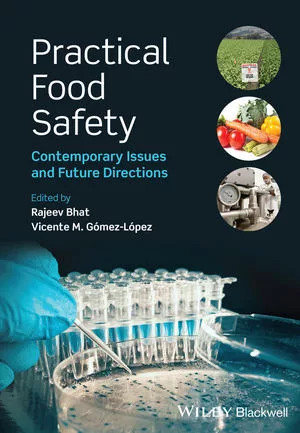
    Practical Food Safety: Contemporary Issues and Future Directions

  • 1119053595.jpg

    Food Safety for the 21st Century: Managing HACCP and Food Safety throughout the Global Supply Chain, 2E

  • 1119160553.jpg

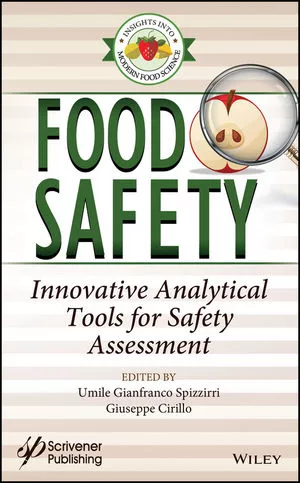
    Food Safety: Innovative Analytical Tools for Safety Assessment

See More Products

Events

View AllSubmit An Event
  • March 11, 2025

    Change Management of Food Safety Culture: Effective Strategies for Achieving Greatness

    On Demand: During this webinar, attendees will gain practical knowledge on successful food safety culture change programs and transformation journeys from real-world experiences, enabling attendees to navigate challenges and achieve lasting improvements in their FSC initiatives.
  • September 9, 2025

    Strengthening the Food Safety Workforce Through Education and Training

    On Demand: From this webinar, attendees will learn how the global workforce shortage in food safety is affecting the food supply chain and creating gaps in food safety oversight.
View AllSubmit An Event

Related Directories

  • Responsible Training

    Responsible Training has been a trusted leader in compliance education since 1999, providing accessible and reliable training solutions for businesses across highly regulated industries. With deep local expertise in Texas and a nationwide reach, we specialize in helping kitchens across industries get tailored, regulation-focused content that ensures businesses seamlessly meet their compliance requirements. Contact us for more information about our Food Manager Certification, Food Handler Courses, Alcohol Server and Cannabis Vendor courses.
×

Never miss the latest news and trends driving the food safety industry

eNewsletter | Website | eMagazine

JOIN TODAY!
  • RESOURCES
    • Advertise
    • Contact Us
    • Directories
    • Store
    • Want More
  • SIGN UP TODAY
    • Create Account
    • eMagazine
    • eNewsletter
    • Customer Service
    • Manage Preferences
  • SERVICES
    • Marketing Services
    • Reprints
    • Market Research
    • List Rental
    • Survey/Respondent Access
  • STAY CONNECTED
    • LinkedIn
    • Facebook
    • Instagram
    • X (Twitter)
  • PRIVACY
    • PRIVACY POLICY
    • TERMS & CONDITIONS
    • DO NOT SELL MY PERSONAL INFORMATION
    • PRIVACY REQUEST
    • ACCESSIBILITY

Copyright ©2025. All Rights Reserved BNP Media.

Design, CMS, Hosting & Web Development :: ePublishing