Food Safety
search
Ask Food Safety AI
cart
facebook twitter linkedin instagram youtube
  • Sign In
  • Join Today
  • Sign Out
  • My Account
Food Safety
  • NEWS
    • Latest News
    • Food Safety Five Newsreel
  • PRODUCTS
  • TOPICS
    • Contamination Control
    • Food Types
    • Management
    • Process Control
    • Regulatory
    • Sanitation
    • Supply Chain
    • Testing and Analysis
  • PODCAST
  • EXCLUSIVES
    • eBooks
    • Sponsored Insights
    • Sponsored White Papers
    • FSM Distinguished Service Award
    • Interactive Product Spotlights
    • Videos
  • MORE
    • BUYER'S GUIDE
    • NEWSLETTERS >
      • Archive Issues
      • Subscribe to eNews
    • Store
    • ASK FSM AI
  • WEBINARS
  • FOOD SAFETY SUMMIT
  • FSM FEATURES
    • FSM Features Collection
    • eMag Archives
    • Editorial Advisory Board
    • Contact
    • Advertise
  • JOIN
NewsContamination ControlSanitationSupply ChainMicrobiological ControlCleaners/SanitizersFood Prep/HandlingPersonal Hygiene/HandwashingFoodservice/Retail

Study: Sanitizer Formulation Impacts Efficacy, Guidance for Use in Food Settings Needed

By Food Safety Magazine Editorial Team
person applying hand sanitizer
Image credit: wirestock via Freepik
September 23, 2025

A recent study from the Arkansas Center for Food Safety underscores the importance of application time and product formulation in the effectiveness of hand sanitizers—critical tools in preventing the spread of foodborne viruses.

The Arkansas Center for Food Safety is a part of the Arkansas Agricultural Experiment Station, which is the University of Arkansas (U of A) System Division of Agriculture's research arm. The study was conducted by Kristen Gibson, Ph.D., U of A Professor of Food Safety and Microbiology and Director of the Arkansas Center for Food Safety; alongside Francis Torko, Ph.D. student and Research Assistant in the Department of Food Science at U of A.

Using 30 volunteers, the study evaluated five commercially available foam hand sanitizers. Results showed that rubbing hands until the sanitizer dried led to significantly greater viral reduction compared to the standard 10-second rub. This finding is especially relevant in food environments where hand hygiene is essential to minimizing microbial contamination risks.

The study also tested both alcohol-based and benzalkonium chloride-based sanitizers against surrogate viruses representing those that cause gastrointestinal distress (i.e., norovirus) and respiratory symptoms (i.e., influenza, coronavirus). According to U.S. Centers for Disease Control and Prevention (CDC) estimates, norovirus is the top contributor to foodborne illness in the country, causing 5.5 million cases in 2019 alone. Additionally, most viral outbreaks (e.g., norovirus) are caused by contamination from ill food workers.

Notably, the research revealed that formulation, rather than just active ingredient concentration, plays a pivotal role in sanitizer efficacy. For example, a 63 percent isopropanol product showed a greater log reduction than a 70 percent isopropanol product due to differences in formulation.

This finding is in line with previous studies cited by Drs. Torko and Gibson, which demonstrated significant differences between products with similar active ingredient concentrations, as well as a lack of significant differences between products with varying active ingredient concentrations. For example, studies showed that reducing glycerol (a moisturizing ingredient that slows alcohol evaporation) in sanitizer formulations positively impacted efficacy.

The insights are valuable for high-contact settings like food establishments, where hands frequently interact with surfaces and food, increasing the risk of pathogen transmission.

Looking for quick answers on food safety topics?
Try Ask FSM, our new smart AI search tool.
Ask FSM →

The study also emphasized the need for evidence-based practices to guide sanitizer use in real-world conditions, including proper volume and rubbing duration.

Supported by the U.S. Department of Agriculture’s National Institute of Food and Agriculture (USDA-NIFA), the research contributes to ongoing efforts to strengthen food safety protocols and reduce viral contamination risks in food handling environments.


KEYWORDS: study University of Arkansas viral transmission

Share This Story

Fsm purple logo 200x200

The Food Safety Magazine editorial team comprises Bailee Henderson, Director of Content Strategy and news editor ✉, and Adrienne Blume, M.A., Director of Editorial and Industry Engagement.

Recommended Content

JOIN TODAY
to unlock your recommendations.

Already have an account? Sign In

  • people holding baby chicks

    Serovar Differences Matter: Utility of Deep Serotyping in Broiler Production and Processing

    This article discusses the significance of Salmonella in...
    Food Type
    By: Nikki Shariat Ph.D.
  • woman washing hands

    Building a Culture of Hygiene in the Food Processing Plant

    Everyone entering a food processing facility needs to...
    Facilities
    By: Richard F. Stier, M.S.
  • graphical representation of earth over dirt

    Climate Change and Emerging Risks to Food Safety: Building Climate Resilience

    This article examines the multifaceted threats to food...
    Best Practices
    By: Maria Cristina Tirado Ph.D., D.V.M. and Shamini Albert Raj M.A.
Manage My Account
  • Join Food Safety Magazine
  • Manage My Preferences
  • Customer Service

More Videos

Sponsored Content

Sponsored Content is a special paid section where industry companies provide high quality, objective, non-commercial content around topics of interest to the Food Safety Magazine audience. All Sponsored Content is supplied by the advertising company and any opinions expressed in this article are those of the author and not necessarily reflect the views of Food Safety Magazine or its parent company, BNP Media. Interested in participating in our Sponsored Content section? Contact your local rep!

close
  • pre-packaged salads, noodles, and prepared meals stocked on multi-tier grocery store refrigerator shelves
    Sponsored byCorbion

    How Many Days of Shelf Life Are You Leaving on the Table?

  • Top view portrait of two factory workers standing by conveyor belt during quality inspection at food production, copy space
    Sponsored byFlexXray

    Foreign Material By the Numbers: What the 2026 Benchmark Report Reveals

  • a conveyorized industrial metal detector system that appears to resemble a Loma Systems IQ4 Metal Detector setup with an integrated conveyor belt and control panel for food or package inspection.
    Sponsored byMettler Toledo

    Beyond Detection: How to Avoid Physical Contamination in Food Through a Smarter Inspection Strategy

Popular Stories

choosing food in the freezer aisle

Refrigerator Malfunctions on U.S. Military Bases May Be Result of Targeted Cyberattacks, Similar to French Incident

This image depicts a meat processing facility

Study Finds Differences Between Beef, Pork Microbial Contamination During Processing

supermarket freezers

Another Wave of Refrigerator Cyberattacks Sweeps European Grocery Stores, Causing More Food Losses

allergens ebook

Events

November 5, 2026

How Middle Managers Shape Food Safety Culture and Risk Performance

Live: November 5, 2026 at 11:00 am EST: From this webinar, attendees will learn how investing in middle managers improves both FSQ strategy implementation and accountability across all levels of the company.

November 12, 2026

From Data Overload to Actionable Food Safety Risk Intelligence

Live: November 12, 2026 at 11:00 am EST: This webinar explores how data integration, advanced analytics, and digital technologies can help transform disparate information into meaningful risk intelligence.

November 17, 2026

Are You Getting the Most from Your Food Safety Testing?

Live: November 17, 2026 at 11:00 am EST: Attend this webinar to explore practical ways food processors can modernize sanitation verification and microbiological testing while keeping workflows simple and effective.

View All

Products

Global Food Safety Microbial Interventions and Molecular Advancements

Global Food Safety Microbial Interventions and Molecular Advancements

See More Products

Related Articles

  • Non-EPA Registered Cleaners and Sanitizers for Use in Food Production Facilities and Retail Food Establishments

    See More
  • two veterinarians talking on cow farm with clipboard

    Sales of Medically Important Antibiotics for Use in Food-Producing Animals Decreased Slightly in 2023

    See More
  • strawberries

    The Regulation of Chemical Recyclates for Use in Food Packaging

    See More

Related Products

See More Products
  • 9781138070912.jpg

    Trends in Food Safety and Protection

  • 1119053595.jpg

    Food Safety for the 21st Century: Managing HACCP and Food Safety throughout the Global Supply Chain, 2E

  • 1118396308.jpg

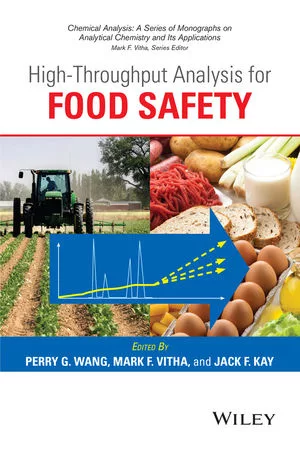
    High Throughput Analysis for Food Safety

See More Products

Events

View AllSubmit An Event
  • May 28, 2026

    Advanced Sanitation Strategies for Allergen Risk Reduction in Food Processing

    On Demand: From this webinar, attendees will learn why validation and verification are necessary for allergen control, and how analytical tools can support allergen management programs.
  • July 21, 2026

    Using AI Responsibly in Food Safety Management Systems

    On Demand: This webinar will provide participants with guidance on how to effectively use generative artificial intelligence (AI) tools to develop key components of a food safety management system (FSMS).
View AllSubmit An Event

Related Directories

  • Women In Food Safety

    Women in Food Safety is a US-based global nonprofit organization dedicated to empowering and advancing women in the food safety and quality industry. Women In Food Safety provides a platform for professionals at all stages of their careers to grow, share knowledge, and support one another. Through community events, educational initiatives, and leadership development, we are building a more inclusive and resilient future for food safety worldwide. Together, we can do BETTER!
  • Best Sanitizers Inc.

    Since 1995, Best Sanitizers, Inc. has supplied the Food Processing and Healthcare industries with high-quality products and support. Our stringent practices and policies ensure reliable performance, giving you confidence in every use. We offer hand soaps, hand sanitizers, surface sanitizers, and industrial cleaners. As the first company to achieve both an E3 rating for an alcohol-based hand sanitizer and a D2 rating for an alcohol/quat-based surface sanitizer, we continue to innovate and provide effective hygiene and sanitation solutions.
  • Food Radar Systems in Sweden AB

    Food Radar Systems, based in Sweden, develops microwave technology that detects and rejects low-density foreign bodies in pumpable food products, helping food manufacturers improve safety, protect consumers, and strengthen quality assurance in modern production environments.
×

Never miss the latest news and trends shaping the food safety industry

Newsletters | Website | FSM Features Collection

JOIN TODAY!
  • RESOURCES
    • Advertise
    • Contact Us
    • Directories
    • Store
  • JOIN TODAY
    • Create Account
    • FSM Features Collection
    • Newsletters
    • Customer Service
    • Manage Preferences
  • SERVICES
    • Marketing Services
    • Reprints
    • Market Research
    • List Rental
    • Survey/Respondent Access
  • STAY CONNECTED
    • LinkedIn
    • Facebook
    • Instagram
    • X (Twitter)
    • YouTube
  • PRIVACY
    • PRIVACY POLICY
    • TERMS & CONDITIONS
    • DO NOT SELL MY PERSONAL INFORMATION
    • PRIVACY REQUEST
    • ACCESSIBILITY

Copyright ©2026. All Rights Reserved BNP Media, Inc. and BNP Media II, LLC.

Design, CMS, Hosting & Web Development :: ePublishing