The Strategic Importance of Food Industry Conferences
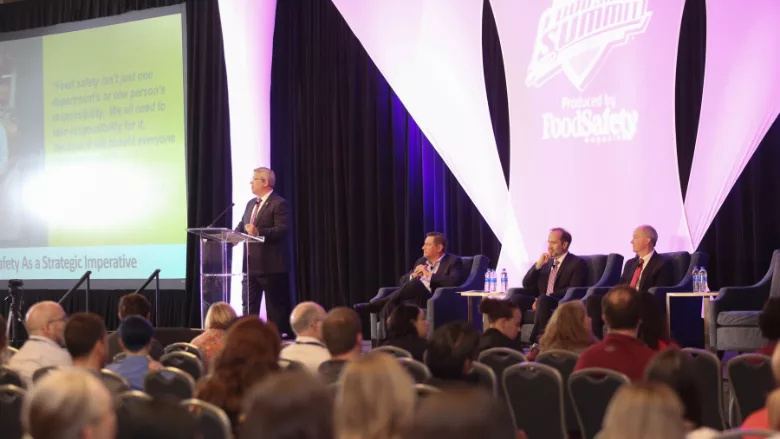
Conference season is here—and with it come essential considerations on the value of industry events to your business. Across all sectors, businesses must take action to stay ahead of food safety challenges and advancements. Attending the right conference(s) provides a platform for learning, networking, and problem-solving, offering delegates direct access to experts, practical solutions, and industry innovations. Whether in hospitality, manufacturing, retail, or primary production, conferences that focus on meaningful outcomes can drive substantive progress, strengthen professional skills, and create lasting business value.
When deciding whether to attend a conference, one should ask: Does the agenda offer relevant and innovative insights? Are the speakers bringing fresh perspectives? Is food safety framed as a strategic priority, or just a compliance requirement? Most importantly, does the event provide meaningful opportunities for networking and collaboration?
Elevating Skills and Bridging Knowledge Gaps
One of the biggest challenges across all sectors of the food industry is ensuring that employees have the skills and knowledge to meet certification, regulatory, and consumer expectations. Compliance is the minimal standard, but the best food businesses exceed these standards by embedding a culture of continuous learning and improvement with proactive risk management. Skills gaps lead to operational inefficiencies, safety risks, and reputational damage, making it harder for businesses to adapt to evolving market demands.
Industry conferences play a critical role in addressing these gaps by providing access to leading research, regulatory updates, and best practices. They serve as a platform where professionals can engage in meaningful discussions about the challenges they face, exchange ideas, and collaborate on solutions. This exposure encourages critical thinking and problem-solving—essential traits for a resilient and forward-thinking food industry. Businesses that invest in employee education and training gain a competitive advantage by fostering a skilled, informed, and adaptable workforce.
Attracting and Retaining Employees Through Career Pathways
With workforce shortages throughout the food supply chain, food businesses must focus on attracting and retaining employees who want to feel valued. High turnover rates disrupt operations, increase recruitment costs, and create knowledge gaps that impact food safety and quality.
To address this, businesses must establish clear career pathways, demonstrating that the food industry offers more than just a job—it provides a meaningful and rewarding career. Research from major consulting firms, as well as industry-specific reports from non-governmental organizations, reinforce these actions. Several reports and studies highlight the impact of high employee turnover on operations, recruitment costs, and food safety and quality.
The Australian Human Resources Institute (AHRI) indicated that 63 percent of respondents identified a lack of career progression opportunities as the main reason employees leave their organizations.1 Meanwhile, Food Standards Australia New Zealand (FSANZ) emphasizes the importance of a strong food safety culture in mitigating risks, suggesting that staff retention and training are critical components.2 In the UK, the Food and Drink Sector Council (FDSC) highlighted existing recruitment difficulties and anticipated labor and skills shortages in the UK food and drink sector, emphasizing the need for upskilling and attracting talent to mitigate these challenges.3 Furthermore, the UK Food Standards Agency found that labor shortages across key occupations in the food supply chain can affect food availability and safety, and suggested that such shortages may lead to compromised food safety standards.4
Looking for quick answers on food safety topics?
Try Ask FSM, our new smart AI search tool.
Ask FSM →
These reports highlight the critical need for effective employee retention strategies to maintain operational stability and uphold food safety standards in the food industry.
Conferences serve as a critical platform for showcasing these opportunities, helping businesses engage with aspiring professionals who are exploring career options. Many people are unaware of the diverse and dynamic career paths available in quality assurance, food safety, manufacturing, hospitality, and primary production. Industry events highlight job roles, skill development opportunities, and leadership pathways, positioning the food industry as an attractive and inclusive career choice.
Leading Food Industry Conferences That Set the Benchmark
Several conferences offer valuable insights, networking opportunities, and educational sessions that address industry challenges:
- The Food Safety Summit. Organized by Food Safety Magazine and BNP Media, the Food Safety Summit offers a comprehensive educational program that includes interactive sessions, workshops, and certification courses designed to address pressing food safety challenges and provide actionable solutions. For food industry professionals seeking mentorship and career development opportunities within the food industry, several specialized programs are available. To view the agenda and register for the 2025 Food Safety Summit, taking place May 12–15 in Rosemont, Illinois, visit here.
- Good Food Institute (GFI) Mentor Program. This program enables entrepreneurs and start-ups to engage in one-on-one mentoring sessions with subject matter experts across the alternative protein ecosystem.
- Women in Food and Agriculture (WFA) Mentorship Program. This initiative connects women in the food and agriculture sector with mentors to support their career advancement and leadership development. In 2023, over 450 participants from around the world joined the program, which is open to professionals from all areas of industry.
- Women in Food Industry Management (WFIM) Mentorship Program. Combining mentorship with leadership skills development, WFIM's program connects women in the food industry to help develop their leadership potential and build specific skills necessary for success.
Industry events provide a space for businesses to connect with educational institutions, industry associations, and workforce development programs. Strengthening these partnerships ensures a steady pipeline of skilled talent entering the industry while also giving students, mature workers, and individuals with disabilities access to authentic on-the-job experience, internships, and professional networks. By actively supporting career growth and fostering a culture of learning, businesses can attract a broad and diverse workforce, improve retention rates, and build a future-ready industry that is adaptable to changing demands.
Building a Learning Culture in the Food Industry
A key takeaway from industry-leading conferences is the need for a strong learning culture within food businesses. Learning should not be an afterthought or a compliance exercise—it must be a strategic priority embedded into daily operations. Businesses that cultivate a culture of learning and continuous improvement see higher employee engagement, improved operational performance, and stronger food safety outcomes. A well-trained workforce is not only more efficient, but also more confident in decision-making, reducing the likelihood of costly errors and food safety breaches.
A genuine learning culture extends beyond formal training sessions. It integrates learning into everyday tasks, encouraging employees to ask questions, reflect on processes, and apply new knowledge on the job. This approach shifts training from a one-time event to an ongoing process, where employees continuously develop their skills through coaching, mentoring, peer discussions, and hands-on experiences. Leaders play a crucial role in fostering this environment by actively supporting professional development and demonstrating a commitment to learning.
Conferences provide businesses with insights into the latest training methodologies, workplace learning strategies, and technological advancements that can enhance employee development. By exploring innovative approaches such as microlearning, action-based learning/training, and digital learning tools, businesses can create more effective and engaging training programs. Access to case studies and success stories from industry leaders also allows businesses to see firsthand how learning culture drives measurable improvements in food safety, efficiency, and regulatory compliance.
By prioritizing learning and upskilling, companies can ensure that their teams remain competent, adaptable, and prepared for future challenges. In an industry facing rapid change—whether due to shifting regulations, new technologies, or evolving consumer expectations—businesses that invest in their people gain a significant competitive advantage. A strong learning culture is not just about meeting today's standards, but about shaping the future of food safety and operational excellence.
The Role of Leadership in Driving a Learning Culture
Strong leadership is essential for embedding a culture of learning, continuous improvement, and food safety excellence in the industry. Leaders must move beyond compliance-driven training and champion competency-based learning approaches that empower employees to make better decisions on the job. This requires an active commitment to professional development, where leaders model the behaviors they expect from their teams.
Effective leaders create an environment where learning is valued, mistakes are seen as opportunities for growth, and employees feel confident to ask questions and challenge existing processes. By encouraging knowledge-sharing, mentoring, and hands-on skills development, leaders help bridge skills gaps and strengthen workforce capability.
Additionally, leadership engagement in training initiatives ensures that learning is not viewed as a checkbox exercise, but as a strategic priority. When leaders actively participate in training sessions, provide regular feedback, and support career development pathways, employees are more likely to stay motivated, engaged, and committed to food safety and quality standards.
Investing in leadership development within food businesses—whether through executive education, coaching programs, or industry mentorship—creates a ripple effect that enhances overall industry performance. Strong leadership drives employee retention, fosters innovation, and positions businesses for long-term success in an ever-evolving industry.
Questions for Industry Leaders to Consider:
- How can businesses integrate conference learning into their daily operations to drive real change?
- What strategies can be implemented to ensure that training and skills development become ongoing priorities, rather than one-time initiatives?
- How can industry leaders collaborate to create a unified approach to addressing skills gaps and workforce challenges?
Turning Insights into Action: A Roadmap for Success
Attending a conference is only the first step—what truly matters is how businesses, industry associations, and leaders translate these learnings into meaningful action. Without a clear roadmap, even insightful discussions risk becoming another "talkfest" with little impact. Conference organizers must summarize key learning outcomes, identify strategic priorities, and outline actionable steps that drive real change.
Industry associations and business leaders must commit to implementing fresh perspectives, exploring new ideas, and embracing innovation. This means moving beyond traditional, compliance-focused training and fostering dynamic, competency-based learning approaches that empower employees to make better decisions on the job. By setting clear strategic directions, tracking progress, and holding stakeholders accountable, the food industry can transform conferences from passive learning experiences into catalysts for continuous improvement and industry-wide advancement.
It's time to shift the industry mindset and make training and learning a top priority!
References
- Australian Human Resources Institute." Turnover and Retention Research Report." August 2018. https://www.ahri.com.au/wp-content/uploads/turnover-and-retention-report_final.pdf.
- Food Standards Australia New Zealand (FSANZ). "Food Safety Culture" May 15, 2023. https://www.foodstandards.gov.au/business/food-safety-culture.
- UK Food and Drink Sector Council. "Preparing for a Changing Workforce: A Food and Drink Supply Chain Approach to Skills." https://www.fdf.org.uk/globalassets/resources/publications/fdsc-workforce-skills-report.pdf.
- Food Standards Agency. "The Impact of Labour Shortages on UK Food Availability and Safety. March 2022. https://www.food.gov.uk/sites/default/files/media/document/Final%20The%20impact%20of%20labour%20shortages%20on%20UK%20food%20availability%20and%20safety.pdf.
Authors
Andrew Thomson is the Director of Think ST Solutions in Adelaide, Australia.
Matthew Wilson, Ph.D. is a Senior Lecturer at the University of Adelaide in Australia.