Food Safety
search
Ask Food Safety AI
cart
facebook twitter linkedin instagram youtube
  • Sign In
  • Join Today
  • Sign Out
  • My Account
Food Safety
  • NEWS
    • Latest News
    • Food Safety Five Newsreel
  • PRODUCTS
  • TOPICS
    • Contamination Control
    • Food Types
    • Management
    • Process Control
    • Regulatory
    • Sanitation
    • Supply Chain
    • Testing and Analysis
  • PODCAST
  • EXCLUSIVES
    • eBooks
    • Sponsored Insights
    • Sponsored White Papers
    • FSM Distinguished Service Award
    • Interactive Product Spotlights
    • Videos
  • MORE
    • BUYER'S GUIDE
    • NEWSLETTERS >
      • Archive Issues
      • Subscribe to eNews
    • Store
    • ASK FSM AI
  • WEBINARS
  • FOOD SAFETY SUMMIT
  • FSM FEATURES
    • FSM Features Collection
    • eMag Archives
    • Editorial Advisory Board
    • Contact
    • Advertise
  • JOIN
NewsContamination ControlRegulatoryChemical ControlFDA

RFK Jr. Pressures Food Industry Giants in Closed-Door Meeting to End Use of Food Dyes
By Bailee Henderson
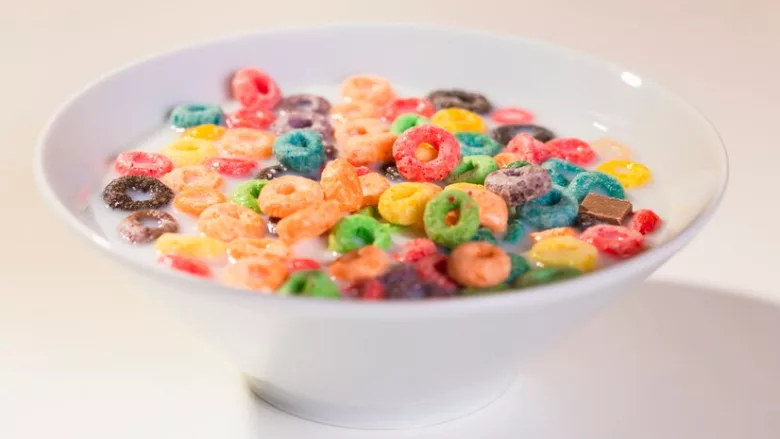
brightly colored cereal

Image credit: Freepik

March 14, 2025

In a March 10, 2025 meeting with the CEOs of food industry giants, Robert F. Kennedy Jr. (RFK Jr.), Secretary of the U.S. Department of Health and Human Services (HHS) known for his “Make America Healthy Again” agenda, demanded that their companies end the use of artificial food dyes in their products—before the government is forced to act.

The meeting included top representatives from PepsiCo, General Mills, Smucker’s, Kraft Heinz, and Kellogg’s, as well as important consumer watchdog group, Consumer Brands Association.

In a readout sent to industry, Consumer Brands Association President and CEO Melissa Hockstad, wrote, “[Secretary Kennedy] expressed the strong desire and urgent priority of the administration to remove [Federal Food, Drug, and Cosmetics Act, or FD&C] colors from the food supply—and he wants this done before he leaves office… He expects ‘real and transformative’ change by ‘getting the worst ingredients out’ of food,” she quoted. The readout was first reported by Food Fix.

The same night of the meeting, Secretary Kennedy posted on X, stating, “Great discussion today with @ConsumerBrands CEOs of @KraftHeinzCo @GeneralMills @TysonFoods @KelloggsUS @smuckers and @PepsiCo on advancing food safety and radical transparency to protect the health of all Americans, especially our children. We will strengthen consumer trust by getting toxins out of our food. Let’s Make America Healthy Again.”

Ms. Hockstad’s readout underlined a statement from Kyle Diamantas, Acting Deputy Commissioner for Human Foods at the U.S. Food and Drug Administration (FDA), who also attended the meeting. According to the readout, Mr. Diamantas “recognized the industry can’t [eliminate harmful colorants and additives from the food supply] alone and that FDA will step up and work with [industry and stakeholders] to reinforce the need for a federal framework and avoid state patchworks.”

Mr. Diamantas recently replaced former FDA Commissioner for Human Foods, James (Jim) Jones, who resigned in February following 89 layoffs within the Human Foods Program ordered by the Presidential Administration. Before he stepped down, addressing stronger federal oversight of food chemical safety was a stated priority of Mr. Jones. During his time at FDA, Mr. Jones expressed the difficulty of tackling food additives and dyes with already limited resources; the eventual dismissal of his staffers with “highly technical expertise in nutrition, infant formula, and food safety response,” ten of whom were responsible for reviewing potentially unsafe ingredients in food, left him feeling as if his continued efforts would be “fruitless,” per his resignation letter.

In January, FDA banned red dye 3 for food use in response to pressures from the public, stakeholder groups, and legislators. The prohibition goes into effect in January 2027.

Looking for quick answers on food safety topics?
Try Ask FSM, our new smart AI search tool.
Ask FSM →

Several states are considering—or have already passed—their own legislation restricting or banning certain food dyes or chemical additives. For example, the California Food Safety Act banning four food additives from foods statewide and the California School Food Safety Act prohibiting six synthetic colorants from foods served in schools, were passed in October 2023 and August 2024, respectively. More recently, bills have been progressing in Texas, West Virginia, and Arizona with the intent of banning artificial food dyes and other additives from foods served at schools or from sale statewide.

The same week as his meeting with the CEOs of food industry giants, Secretary Kennedy and HHS also directed FDA to explore rulemaking to eliminate the “Generally Recognized as Safe” (GRAS) process, which is widely considered by critics to be a “loophole” that allows food companies to introduce potentially unsafe ingredients to the food supply without oversight or a formal safety review.

KEYWORDS: additives colorant HHS President Trump and food safety industry

Share This Story

1786925983615

Bailee Henderson is the Director of Content Strategy for Food Safety Magazine. In the day-to-day, she covers industry-relevant current events, regulatory affairs, and scientific developments. She also produces the Food Safety Five Newsreel, edits the twice-weekly Food Safety Digest newsletter, and manages the brand's social media channels. Notably, Bailee's coverage for Food Safety Magazine has been featured in national televised news segments including CBS Sunday Morning and MSNBC's Rachel Maddow Show. She can be reached at hendersonb@bnpmedia.com.

Recommended Content

JOIN TODAY
to unlock your recommendations.

Already have an account? Sign In

  • people holding baby chicks

    Serovar Differences Matter: Utility of Deep Serotyping in Broiler Production and Processing

    This article discusses the significance of Salmonella in...
    Testing & Analysis
    By: Nikki Shariat Ph.D.
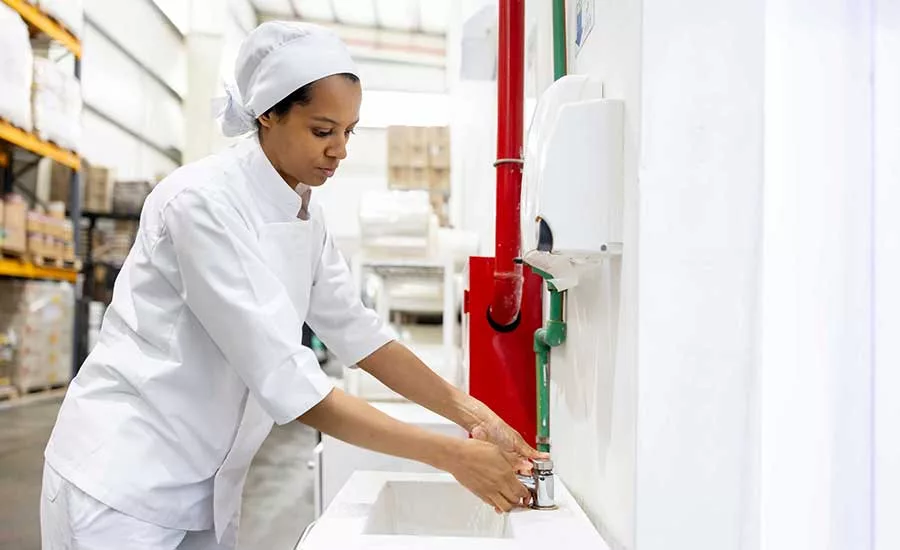
  • woman washing hands

    Building a Culture of Hygiene in the Food Processing Plant

    Everyone entering a food processing facility needs to...
    Sanitation
    By: Richard F. Stier, M.S.
  • graphical representation of earth over dirt

    Climate Change and Emerging Risks to Food Safety: Building Climate Resilience

    This article examines the multifaceted threats to food...
    Best Practices
    By: Maria Cristina Tirado Ph.D., D.V.M. and Shamini Albert Raj M.A.
Manage My Account
  • Join Food Safety Magazine
  • Manage My Preferences
  • Customer Service

More Videos

Sponsored Content

Sponsored Content is a special paid section where industry companies provide high quality, objective, non-commercial content around topics of interest to the Food Safety Magazine audience. All Sponsored Content is supplied by the advertising company and any opinions expressed in this article are those of the author and not necessarily reflect the views of Food Safety Magazine or its parent company, BNP Media. Interested in participating in our Sponsored Content section? Contact your local rep!

close
  • pre-packaged salads, noodles, and prepared meals stocked on multi-tier grocery store refrigerator shelves
    Sponsored byCorbion

    How Many Days of Shelf Life Are You Leaving on the Table?

  • Top view portrait of two factory workers standing by conveyor belt during quality inspection at food production, copy space
    Sponsored byFlexXray

    Foreign Material By the Numbers: What the 2026 Benchmark Report Reveals

  • a conveyorized industrial metal detector system that appears to resemble a Loma Systems IQ4 Metal Detector setup with an integrated conveyor belt and control panel for food or package inspection.
    Sponsored byMettler Toledo

    Beyond Detection: How to Avoid Physical Contamination in Food Through a Smarter Inspection Strategy

Popular Stories

supermarket freezers

Another Wave of Refrigerator Cyberattacks Sweeps European Grocery Stores, Causing More Food Losses

dino nuggets and ketchup

WHO Proposes Food Profiling Model to Inform Regulation of Ultra-Processed Foods

Cleaning floor drain during wet sanitation

Practical Guidelines for Choosing Between Dry and Wet Sanitation

allergens ebook

Events

November 12, 2026

From Data Overload to Actionable Food Safety Risk Intelligence

Live: November 12, 2026 at 11:00 am EST: This webinar explores how data integration, advanced analytics, and digital technologies can help transform disparate information into meaningful risk intelligence.

November 17, 2026

Are You Getting the Most from Your Food Safety Testing?

Live: November 17, 2026 at 11:00 am EST: Attend this webinar to explore practical ways food processors can modernize sanitation verification and microbiological testing while keeping workflows simple and effective.

December 2, 2026

Beyond Surface Clean: Tackling Biofilms and Persistent Pathogens

Live: December 2, 2026 at 11:00 am EST: Attend this webinar to understand why chlorine dioxide is not chlorine, and what “ultra-pure” means for residues, byproducts, and effectiveness.

View All

Products

Global Food Safety Microbial Interventions and Molecular Advancements

Global Food Safety Microbial Interventions and Molecular Advancements

See More Products

Related Articles

  • orange-ish pinkish juice splash

    Campbell’s Company to End Use of Synthetic Food Dyes

    See More
  • RBI logos

    Restaurant Brands International, Chick-Fil-A Pledge to End Use of PFAS

    See More
  • epidemiologist in lab

    Experts Set Record Straight on FoodNet, CDC Cuts as Senators Press RFK Jr. for Answers Amid Cyclospora Outbreak

    See More

Related Products

See More Products
  • 9781498721776.jpg

    Handbook of Food Processing: Food Safety, Quality, and Manufacturing Processes

  • 1444333348.jpg

    Handbook of Food Safety Engineering

  • 9781138070912.jpg

    Trends in Food Safety and Protection

See More Products

Related Directories

  • Institute of Food Technologists

    Founded in 1939, the Institute of Food Technologists (IFT) has grown into a global community working across industry, academia, and government reaching thousands of professionals at more than 3,000 companies, 500 universities, and 90 countries. Our story is rooted in a simple belief: food science matters. It matters for public health. It matters for sustainability. It matters for innovation, equity, and trust in the food system. And progress happens faster when experts are connected.
  • Association of Food and Drug Officials (AFDO)

    The consensus that AFDO develops is key to advancing uniform laws, regulations, and guidelines that result in more efficient regulation and less confusion among industry in the marketplace. AFDO develops support for its positions by interfacing with high-level regulatory officials, industry representatives, trade associations, and consumer organizations. This continues to have a significant impact on regulations at the federal, state and local level.
  • Saldesia 'Goddess of Food Safety'

    Saldesia is a distributor of Food Safety products and solutions. We are focused on supplying the Quality, Production, Safety and Sanitation departments. Product lines include Color Coded, Metal Detectable, Antimicrobial Flooring & Mats, Workwear, Footwear, Spray Nozzles, and more!
×

Never miss the latest news and trends shaping the food safety industry

Newsletters | Website | FSM Features Collection

JOIN TODAY!
  • RESOURCES
    • Advertise
    • Contact Us
    • Directories
    • Store
  • JOIN TODAY
    • Create Account
    • FSM Features Collection
    • Newsletters
    • Customer Service
    • Manage Preferences
  • SERVICES
    • Marketing Services
    • Reprints
    • Market Research
    • List Rental
    • Survey/Respondent Access
  • STAY CONNECTED
    • LinkedIn
    • Facebook
    • Instagram
    • X (Twitter)
    • YouTube
  • PRIVACY
    • PRIVACY POLICY
    • TERMS & CONDITIONS
    • DO NOT SELL MY PERSONAL INFORMATION
    • PRIVACY REQUEST
    • ACCESSIBILITY

Copyright ©2026. All Rights Reserved BNP Media, Inc. and BNP Media II, LLC.

Design, CMS, Hosting & Web Development :: ePublishing