Food Safety
search
Ask Food Safety AI
cart
facebook twitter linkedin
  • Sign In
  • Create Account
  • Sign Out
  • My Account
Food Safety
  • NEWS
    • Latest News
    • White Papers
  • PRODUCTS
  • TOPICS
    • Contamination Control
    • Food Types
    • Management
    • Process Control
    • Regulatory
    • Sanitation
    • Supply Chain
    • Testing and Analysis
  • PODCAST
  • EXCLUSIVES
    • Food Safety Five Newsreel
    • eBooks
    • FSM Distinguished Service Award
    • Interactive Product Spotlights
    • Videos
  • BUYER'S GUIDE
  • MORE
    • ENEWSLETTER >
      • Archive Issues
      • Subscribe to eNews
    • Store
    • Sponsor Insights
    • ASK FSM AI
  • WEBINARS
  • FOOD SAFETY SUMMIT
  • EMAG
    • eMagazine
    • Archive Issues
    • Editorial Advisory Board
    • Contact
    • Advertise
  • SIGN UP!
NewsContamination ControlRegulatoryTesting & AnalysisMicrobiologicalMicrobiologicalInternational Standards/Harmonization

New EU Regulation Requires WGS Analysis, Data Reporting for Important Foodborne Pathogens

By Food Safety Magazine Editorial Team
3D render of DNA strands on white background

Image credit: kjpargeter via Freepik

February 6, 2025

The EU has adopted a new regulation requiring Member States to conduct whole genome sequencing (WGS) on the isolates of five important pathogens during the investigations of foodborne illness outbreaks, and sets data-sharing parameters. Regulation (EU) 2025/179 aims to facilitate foodborne illness outbreak investigations and enable the timely detection of sources and causes.

The date after which the regulation will be applied is August 23, 2026.

Specifically, the regulation states that, during official controls at food and feed businesses suspected to be implicated in a foodborne illness outbreak, competent authorities within Member States must collect isolates of Salmonella enterica, Listeria monocytogenes, Escherichia coli, Campylobacter jejuni, and Campylobacter coli derived from food, animal, feed, and related environmental samples. Member States will be required to carry out WGS on those isolates.

Member States must transmit the WGS results to the European Food Safety Authority (EFSA), which developed a joint One Health system together with the European Center for Disease Prevention and Control (ECDC). Within the joint One Health system, EFSA will be able to compare WGS data for food-related isolates with WGS data from human isolates that are communicated to ECDC. Certain information is required to be sent with the WGS data, including:

  • A unique reference number of the genome sequence of the isolate from which the sequence has been generated
  • A unique reference number of the sample from which the pathogen has been isolated
  • The pathogen species
  • The description of the food, animal species, feed, or environment the isolate was derived from
  • The date of sampling
  • The Member State of sampling
  • If notified in the Rapid Alert System for Food and Feed (RASFF), the reference to the notification associated with the isolate
  • A unique reference number of the foodborne outbreak investigated at national level.

Looking for quick answers on food safety topics?
Try Ask FSM, our new smart AI search tool.
Ask FSM →


KEYWORDS: EFSA EU Europe European Commission outbreak investigations whole genome sequencing

Share This Story

Fsm purple logo 200x200

The Food Safety Magazine editorial team comprises Bailee Henderson, Digital Editor ✉; Adrienne Blume, M.A., Editorial Director; and Stacy Atchison, Publisher.

Recommended Content

JOIN TODAY
to unlock your recommendations.

Already have an account? Sign In

  • people holding baby chicks

    Serovar Differences Matter: Utility of Deep Serotyping in Broiler Production and Processing

    This article discusses the significance of Salmonella in...
    Food Type
    By: Nikki Shariat Ph.D.
  • woman washing hands

    Building a Culture of Hygiene in the Food Processing Plant

    Everyone entering a food processing facility needs to...
    Management
    By: Richard F. Stier, M.S.
  • graphical representation of earth over dirt

    Climate Change and Emerging Risks to Food Safety: Building Climate Resilience

    This article examines the multifaceted threats to food...
    Management
    By: Maria Cristina Tirado Ph.D., D.V.M. and Shamini Albert Raj M.A.
Manage My Account
  • eMagazine Subscription
  • Subscribe to eNewsletter
  • Manage My Preferences
  • Website Registration
  • Subscription Customer Service

More Videos

Sponsored Content

Sponsored Content is a special paid section where industry companies provide high quality, objective, non-commercial content around topics of interest to the Food Safety Magazine audience. All Sponsored Content is supplied by the advertising company and any opinions expressed in this article are those of the author and not necessarily reflect the views of Food Safety Magazine or its parent company, BNP Media. Interested in participating in our Sponsored Content section? Contact your local rep!

close
  • Salmonella bacteria
    Sponsored byThermoFisher

    Food Microbiology Testing Methods: Salmonella species

  • a diagram explaining indicator organisms
    Sponsored byHygiena

    How Proactive Listeria Testing Helps Prevent Six- and Seven-Figure Recalls

  • woman grocery shopping
    Sponsored byCorbion

    Designing Safety Into Every Bite: Proactive Risk Mitigation for Refrigerated Foods

Popular Stories

NRTE breaded stuffed chicken

USDA Indefinitely Delays Enforcement of Salmonella as Adulterant in Raw Breaded, Stuffed Chicken

digital map of europe

EU Publishes Food Fraud Tool Mapping Thousands of Cases Since 2016

non-conforming product

How to Handle Non-Conforming Product

Events

December 11, 2025

How to Develop and Implement an Effective Food Defense Strategy

Live: December 11, 2025 at 2:00 pm EDT: From this webinar, attendees will learn common areas where companies encounter challenges in their food defense strategies and how to address them.

May 11, 2026

The Food Safety Summit

Stay informed on the latest food safety trends, innovations, emerging challenges, and expert analysis. Leave the Summit with actionable insights ready to drive measurable improvements in your organization. Do not miss this opportunity to learn from experts about contamination control, food safety culture, regulations, sanitation, supply chain traceability, and so much more.

View All

Products

Global Food Safety Microbial Interventions and Molecular Advancements

Global Food Safety Microbial Interventions and Molecular Advancements

See More Products

Related Articles

  • scientist preparing WGS instrument

    Requirements for Mandatory Foodborne Pathogen WGS Analysis, Data Submission in EU

    See More
  • 3d rendering of orange dna helixes

    Draft EU Act Would Require WGS Analysis for Foodborne Illness Investigations

    See More
  • DNA WGS

    Guidelines for Reporting WGS Data to EFSA One Health System

    See More

Related Products

See More Products
  • 1118396308.jpg

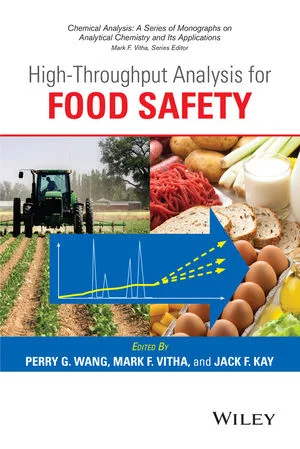
    High Throughput Analysis for Food Safety

  • food-safety-making.jpg

    Food Safety: Making Foods Safe and Free From Pathogens

  • 1119237963.jpg

    Food Safety in China: Science, Technology, Management and Regulation

See More Products
×

Never miss the latest news and trends driving the food safety industry

eNewsletter | Website | eMagazine

JOIN TODAY!
  • RESOURCES
    • Advertise
    • Contact Us
    • Directories
    • Store
    • Want More
  • SIGN UP TODAY
    • Create Account
    • eMagazine
    • eNewsletter
    • Customer Service
    • Manage Preferences
  • SERVICES
    • Marketing Services
    • Reprints
    • Market Research
    • List Rental
    • Survey/Respondent Access
  • STAY CONNECTED
    • LinkedIn
    • Facebook
    • Instagram
    • X (Twitter)
  • PRIVACY
    • PRIVACY POLICY
    • TERMS & CONDITIONS
    • DO NOT SELL MY PERSONAL INFORMATION
    • PRIVACY REQUEST
    • ACCESSIBILITY

Copyright ©2025. All Rights Reserved BNP Media.

Design, CMS, Hosting & Web Development :: ePublishing