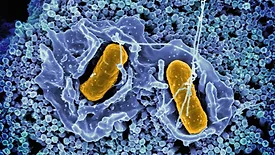
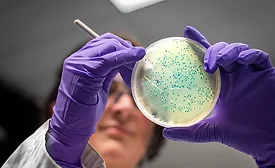
The project will evaluate the resulting assay's potential applications in relevant food matrices, including chicken, turkey, pork, and beef, with the broader objective of improving the identification of Salmonella strains associated with human illness and outbreaks.
CDC and USDA-FSIS researchers analyzed 50 salmonellosis outbreaks linked to pork and identified the most commonly implicated
products and serotypes, as well as the prevalence of antimicrobial resistance among isolates.
Developed in partnership with USDA-FSIS, the assay detects Salmonella spp. while targeting up to three proprietary genetic markers associated with pathogenicity, supporting surveillance and research into risk-based approaches to Salmonella control.
USDA and University of Arkansas researchers concluded that the plant-derived antimicrobial compound could possibly offer a natural disinfection solution for controlling S. Infantis biofilms on plastic and stainless steel surfaces in poultry and food processing facilities.
Three Salmonella Enteritidis outbreak clusters potentially associated with imported eggs, one of which is part of a broader EU-wide outbreak, are under investigation. There is no evidence implicating UK-produced eggs. UKHSA emphasized that the overall risk to the public is low.
Outbreak strains include STEC serotypes O26:H11, O103:H25, and O168:H8 and one strain of Salmonella Agona. Some people were infected with more than one outbreak strain. The implicated products were distributed by Everything Sprouts LLC of Minneapolis, Minnesota.
Four Salmonella Enteritidis ST11 outbreaks identified in France between May and July 2026 were linked to homemade egg-based foods and traced to a common egg distribution network in Poland. The same Polish food group was implicated in another multinational salmonellosis outbreak in 2016–2020.
In this bonus episode of Food Safety Matters, we speak to USDA's Under Secretary for Food Safety, Dr. Mindy Brashears,
and Administrator USDA-FSIS, Dr. Justin Ransom, about the future of food safety oversight at the agency, its emerging Salmonella strategy, evolving approach to Listeria control, the creation of a new scientific advisory panel, and the use of data, AI, and other technologies for inspection and risk identification.
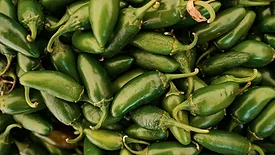
The fast-casual Mexican-style restaurant chain has pulled the jalapeños from its restaurants and replaced them with product from different growers, out of "an abundance of caution."
Patients have fallen ill in 17 states, with 26 hospitalizations. Laboratory, epidemiological, and traceback investigations point to eggs produced by Texas-based Midwest Poultry Services as the likely vehicle of illness.
On Demand:In this high-level, exclusive webinar, FDA Deputy Commissioner for Human Foods Kyle Diamantas and USDA Under Secretary for Food Safety Mindy Brashears, Ph.D. will share their agencies' regulatory priorities and work plans for 2026 and beyond.
On Demand:This session explores the role of continuous airborne pathogen control technology in supporting sanitation and environmental monitoring programs within food processing environments.
On Demand: Attend this webinar to learn how environmental monitoring, rapid pathogen detection, and risk-based testing strengthen seafood safety programs.