With two proposed rules issued on May 18, the Trump EPA followed through on its stated intent to rescind or extend the compliance date for Biden-era drinking water limits for several “forever chemicals” of concern.
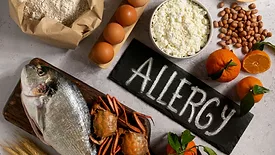
During the 49th Meeting of the Codex Committee on Food Labeling (CCFL49), guidelines on risk-based precautionary allergen labeling, labeling for multipack foods, and emergency flexible labeling were recommended for adoption. CCFL also declined a proposal to initiate work related to ultra-processed foods.
Dr. Prater is taking over the position as the previous Deputy Commissioner for Human Foods, Kyle Diamantas, is elevated to the FDA Commissioner role, replacing Dr. Marty Makary.
Breading mixtures may be reused for different foods in foodservice operations. An FDA-supported study found that both shrimp and cod allergens accumulate in reused breading and transfer to subsequent foods, although the cod cross-contact risk was much greater.
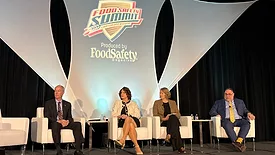
On Thursday morning, officials from FDA, USDA-FSIS, CDC, and AFDO took the stage at the 2026 Food Safety Summit Town Hall to talk about the current developments and priorities at their respective agencies.
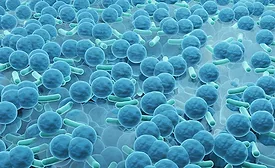
Researchers achieved microbial reductions of 1.56–1.64 log CFU/cm2 by applying plasma-activated water and water–chemical solutions to dual-species E. coli biofilms on stainless steel, suggesting the technology’s potential as a sustainable, safe alternative to traditional sanitizer treatments.
In a new peer-reviewed article, researchers make a case for linking data from both routine foodservice establishment inspections and foodborne illness surveillance, while acknowledging existing challenges, like inconsistent adoption of FDA’s Food Code and electronic data collection systems.
Marty Makary, M.D., has been ousted as FDA Commissioner. He will reportedly be replaced by the agency’s Deputy Commissioner for Human Foods, Kyle Diamantas, J.D.
New Mexico has published a final rule enforcing the New Mexico PFAS Protection Act, outlining a staggered prohibition on the sale of products containing intentionally added PFAS, and describing a PFAS warning label for products still containing the chemicals.
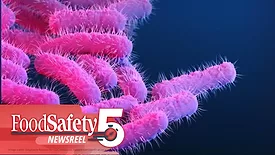
This episode of Food Safety Five discusses several foodborne pathogens that have been recently highlighted by researchers due to their unusual nature, emergence, and increasing public health significance, including a rare Salmonella strain, an STEC/ETEC hybrid, Group B Streptococcus, and drug-resistant Shigella.