The newly announced Stand-Up funding program is the latest in a series of Trump Administration actions, including a Presidential Executive Order and the Ranchers First initiative, to expand regional processing capacity and cut “red tape” at the federal inspection level.
The company will pay the U.S. and states for “knowingly manufacturing infant formula purchased with taxpayer dollars [under state Medicaid and WIC programs] in an environment that put the products at unacceptable risk of microbial contamination.”
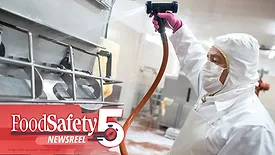
This episode of Food Safety Five covers new research on the impact of spray application on sanitizer efficacy, ROI of WGS for foodborne pathogen surveillance, effect of common food additives on gut health and implications for safety assessment, and contribution of industrial poultry farming to global Campylobacter spread.
CDC has declared the unprecedented Cyclospora outbreak linked to Taylor Farms iceberg lettuce over. FDA continues its root cause investigation of the current outbreak as well as investigations into other U.S. cyclosporiasis outbreak clusters.
The order, aimed at expanding market access for U.S. meat producers, focuses on growing existing state inspection programs and state–federal agreements. It also calls for “sharpening inspection to focus on core food safety” and removing “overly prescriptive” USDA-FSIS requirements.
After reviewing a study suggesting that glyphosate causes cancer even at levels below those considered “safe” by EU regulatory agencies, the European Chemicals Agency stood by its 2022 hazard assessment decision that the herbicide does not warrant a classification for carcinogenicity.
The commitment aligns with FDA’s and Secretary Robert F. Kennedy Jr.’s efforts to facilitate an industry-led, voluntary phase-out of synthetic FD&C-certified food dyes from the U.S. food supply.
Acrylamide is a harmful contaminant that forms during thermal processing. An analysis of 17 years of EU RASFF data showed that UPFs accounted for 85 percent of related notifications. Cereals, baked goods, and potato chips were most frequently implicated.
In August 28 social media posts, President Trump and USDA Secretary Rollins alluded to plans to give ranchers and farmers the ability to process their own meats and other efforts to cut “red tape.” Industry groups said these actions would jeopardize food safety and consumer confidence.
Regulation (EU) 2025/179, which came into effect on August 23, requires EU Member States to conduct WGS on five key pathogens during foodborne illness outbreak investigations. An interview with EFSA’s Dr. Frank Verdonck unpacks the new rule and previews the upcoming Science Meets Policy conference.