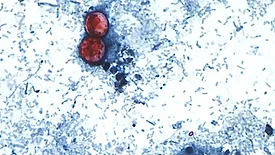
By the same time last year, CDC had only reported 249 confirmed, domestically acquired Cyclospora infections across the entire U.S. States’ reports may include both probable and confirmed cases.
This episode of Food Safety Five highlights new research on cold storage practices for fresh-cut produce, food safety perspectives among small-scale produce growers exempt from FDA's FSMA Produce Safety Rule, and water management strategies that reduce arsenic in rice.
Between 1,600 and 5,000 people are sick in a five-state cyclosporiasis outbreak, according to CDC and Michigan officials. Iceberg lettuce supplied by Taylor Farms of Mexico to companies like Taco Bell and Walmart has been identified as the vehicle of infection. FDA has rescinded a previous positive product sample finding.
The outbreak cluster includes more than 1,600 people in Indiana, Kentucky, Michigan, Ohio, and West Virginia. Outside of the outbreak cluster, Michigan and other parts of the U.S. continue to experience elevated rates of Cyclospora infections compared to previous years.
Public health experts say the ongoing cyclosporiasis situation exposes growing weaknesses in national foodborne illness surveillance, highlighting how funding and program cuts and CDC staff attrition could undermine outbreak detection and delay response, affecting public health communication and consumer confidence in food safety.
More than 400 cases in Michigan, Ohio, Kentucky, and West Virginia appear to be epidemiologically linked, although a food source has not been confirmed. Michigan alone reports more than 3,300 Cyclospora infections.
The letter to industry was issued in response to the botulism outbreaks linked to Nara Organics and ByHeart formulas, which identified Clostridia in the whole milk powder ingredient supply chain, as well as the global formula recall due to cereulide-contaminated arachidonic acid oil.
Per CDC, 843 domestically acquired cyclosporiasis cases have been confirmed in 31 states, plus another 1,500 pending analysis. Michigan alone has reported more than 2,600 cases and is looking at lettuce as a potential vehicle of illness.
The Keep Food Containers Safe from PFAS Act (H.R. 9593) would amend the Federal Food, Drug, and Cosmetic Act to prohibit food packaging containing intentionally added per- and polyfluoroalkyl (PFAS) substances, a.k.a. “forever chemicals.”
Cyclosporiasis is surging across the U.S., with CDC and state public health officials reporting a growing number of cases. Michigan alone has reported more than 1,200 Cyclospora infections since June, resulting in at least 44 hospitalizations.