Food Safety
search
Ask Food Safety AI
cart
facebook twitter linkedin instagram youtube
  • Sign In
  • Create Account
  • Sign Out
  • My Account
Food Safety
  • NEWS
    • Latest News
    • White Papers
  • PRODUCTS
  • TOPICS
    • Contamination Control
    • Food Types
    • Management
    • Process Control
    • Regulatory
    • Sanitation
    • Supply Chain
    • Testing and Analysis
  • PODCAST
  • EXCLUSIVES
    • Food Safety Five Newsreel
    • eBooks
    • FSM Distinguished Service Award
    • Interactive Product Spotlights
    • Videos
  • BUYER'S GUIDE
  • MORE
    • NEWSLETTERS >
      • Archive Issues
      • Subscribe to eNews
    • Store
    • Sponsor Insights
    • ASK FSM AI
  • WEBINARS
  • FOOD SAFETY SUMMIT
  • EMAG
    • eMagazine
    • Archive Issues
    • Editorial Advisory Board
    • Contact
    • Advertise
  • SIGN UP!
Home » Topics » Food Safety Top Stories

Food Safety Top Stories
Food Safety Top Stories RSS Feed RSS

information sharing

What Exactly is "Information Sharing?"

Threat information should be disseminated as rapidly as possible, and is encouraged between businesses that may otherwise be restricted by anti-competitive laws or regulations
Robert Norton
Robert A. Norton Ph.D.
Marcus (Marc) Sachs P.E.
June 12, 2023

Threat information should be disseminated as rapidly as possible, especially between businesses that may otherwise be restricted by anti-competitive laws or regulations. This article discusses the nature of the information that should be and is typically shared by businesses participating in an Information Sharing and Analysis Center (ISAC).


Read More
food safety and quality organization

Critical Attributes of a Successful Food Safety and Quality Organization: FSQA on the Floor

What does it take to have an extremely effective FSQA technician team on the production floor?
Bob Lijana M.Sc.
June 12, 2023

What does it take to have an extremely effective Food Safety and Quality Assurance (FSQA) technician team on the production floor? This article shares practiced perspective on "what it takes." Attributes for success are identified and explained. How they are integrated within a FSQA team on the floor will go a long way to galvanizing the success of that team. For food and beverage companies, "success" means effective risk identification and management, protection of public health, reduced costs of poor quality, and the manufacture and sale of high-quality food and beverage ingredients and products.


Read More
sanitation

New Uses for Existing Technologies to Reduce the Risk of Persistent Pathogens on Surfaces in Retail Foodservice

The need remains for a continuous means of sanitizing and disinfecting high-touch and other environmental surfaces where persistent microbial pathogens can be found
Hal King
Hal King Ph.D.
James Marsden Ph.D.
June 12, 2023

New uses for existing technologies are being deployed in foodservice establishments to prevent persistent pathogens like Salmonella, and viral pathogens like norovirus and Hepatitis A, on surfaces where continuous sanitation and disinfection is needed. 


Read More
truck toy picking up FDA tiles

Food Safety Priorities—Your Thoughts on FDA's Proposed Reorganization

Food processors weigh in on the proposed reorganization of FDA's Human Foods program and the most important changes the agency should make with this transformation
Bob Ferguson
Bob Ferguson
June 12, 2023

In food safety, multiple issues always need to be addressed. To get things done, however, food safety professionals need to prioritize certain projects over others. What are those priorities now? The Food Safety Magazine audience shares their views on a number of topical issues to give an idea of where their focus will be in the coming months and years.


Read More
food packaging

Extended Producer Responsibility Programs for Food Packaging: Balancing Source Reduction with Food Safety

EPR programs shift responsibility for management and disposal of consumer products to producers and distributors—and are gaining ground in the U.S.
George Misko
George G. Misko J.D.
June 12, 2023

Extended Producer Responsibility (EPR) programs are a policy approach where producers are given a significant responsibility for the treatment of post-consumer products. They involve building the cost of disposal into the cost of the product. These programs are meant to boost collection and recycling. They can also result in increased reusable and refillable packaging and encourage material reduction in packages. Any EPR program for food packaging needs to take into account food safety requirements and comply with applicable food packaging regulations. Any changes in food packaging must continue to protect the food after filling, during transportation and storage, and throughout its shelf life. Currently, four states—Maine, Oregon, Colorado, and California—have food packaging EPR laws, with more states expected to follow. However, EPR laws impacting food packaging are still in their infancy. States are looking for the most efficient ways to meet the requirements in the statues.


Read More
barn

Food Safety for Food Security—How FDA and State Agriculture Departments Meet Global Food Safety and Supply Needs

The NASDA Foundation works with FDA and state agencies under a cooperative agreement to improve produce safety
Erik Mettler, M.P.A., M.P.H. Joe Reardon Richard A. Ball
June 12, 2023

The National Association of State Departments of Agriculture (NASDA) Foundation has partnered with the U.S. Food and Drug Administration (FDA) to approach implementing food safety regulation in a novel way. Through the spirit of "education before regulation," implementation of the groundbreaking Food Safety Modernization Act (FSMA) has been a success.


Read More
ATP Monitoring

Optimize Accuracy of Results with ATP Monitoring

Robert W. Powitz Ph.D., M.P.H., RS, CFSP
June 12, 2023

Cleaning program validation that primarily relies on adenosine triphosphate (ATP) monitoring can yield poor results if a few basic strategies are not incorporated into the sampling program to eliminate bias. These include probability sampling, uniformity of the sample, as well as understanding the limitation of the test instrument and the interpretation of results.


Read More
Transporting Food

Reducing Food Safety Risks in Transporting Food

Although many challenges affect transporting food safely, two stand out across industries: cross-contamination and food defense
Ryan Brown Sean Leighton, M.B.A., M.Sc.
June 12, 2023

In a dynamic shipping environment, the need to anticipate and reduce food safety risks across the supply chain requires innovation, strategic leadership, and strong partnerships between food and transportation companies. This article will provide a brief history of food safety in transportation, a review of current trends, and insights into strategies and cultural expectations to prevent and control food safety risks in transportation.


Read More
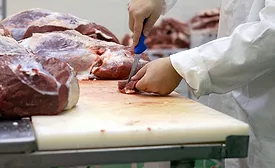
slicing meat

Keeping It Clean—Can Sanitizing Be More Sustainable?

When implementing water-saving initiatives or using more environmentally friendly chemicals, care must be taken to avoid compromising hygiene
Anette Granly Koch M.Sc., Ph.D. Gry Carl Terrell M.Sc. Freja Lea Lüthje Rikke Hjort Hansen Emma Bildsted Petersen
June 12, 2023

A variety of actions, spanning from simply changing a nozzle to implementing AI technology, can contribute to making sanitizing procedures more sustainable. The authors dive into some of these actions and look at the effectiveness, implementation challenges, and consequences for the end products.


Read More
lab cultivated meat

From Lab Bench to Consumer: The Regulatory and Safety Challenges of Cultivated Meat

Regulatory and food safety hurdles must be overcome for cultivated meat to reach the commercial market
Erik Hedrick Ph.D.
June 12, 2023

Cultivated meat (i.e., cell-cultured meat) has been promoted as an alternative to the livestock industry as a more sustainable, safer, and healthier means of food production. However, several regulatory and safety hurdles must be addressed for cultivated meat to reach the commercial market, as it has not yet been declared safe for consumption in the U.S. Safety considerations for cell-cultured meat include the components utilized (the raw ingredients, the source of cells, scaffolds, and bioreactors), the introduction of adventitious agents, and the presence of drug/chemical residues in the final food product. 


Read More
Previous 1 2 … 26 27 28 29 30 31 32 33 34 … 51 52 Next
Manage My Account
  • eMagazine Subscription
  • Subscribe to Newsletters
  • Manage My Preferences
  • Website Registration
  • Subscription Customer Service

More Videos

Sponsored Content

Sponsored Content is a special paid section where industry companies provide high quality, objective, non-commercial content around topics of interest to the Food Safety Magazine audience. All Sponsored Content is supplied by the advertising company and any opinions expressed in this article are those of the author and not necessarily reflect the views of Food Safety Magazine or its parent company, BNP Media. Interested in participating in our Sponsored Content section? Contact your local rep!

close
  • The image displays a person selecting packaged fresh chicken meat from a supermarket display cooler.
    Sponsored byCorbion

    Developing a Future-Proof Food Safety Strategy for Meat and Poultry Products

  • The image shows a variety of fresh produce packaged in plastic trays and wrap.
    Sponsored byWaters Corporation

    PFAS-Free Food Packaging by August 2026

  • This image displays a multi-stage water filtration system designed to remove contaminants from drinking water.
    Sponsored byWaterdrop Filter

    The 4.0 ppt Era: Future-Proofing Your Food Supply Chain Against 'Forever Chemicals'

Popular Stories

half shredded block of cheddar cheese and pile of cheese shreds on wooden cutting board

Patient Count in Raw Farm E. coli Outbreak Grows, Majority are Young Children

RAW FARM-brand raw cheddar cheese shreds

Amid E. coli Outbreak, Congress Urges FDA to Mandate Raw Cheese Recall

smiling employee in bottling factory looking at camera with arms crossed in front of production line

GFSI Unveils Updated Food Safety Culture Framework

foreign material webinar


Events

April 8, 2026

Foreign Material Contamination: Why In-Line Reinspection Isn't Enough

Live: April 8, 2026, at 11:00 am EDT: From this webinar, attendees will learn why reinspecting with in-line equipment is not sufficient when it comes to potential foreign material contamination.

April 16, 2026

Recordkeeping and Document Management for Food Safety Compliance

Live: April 16, 2026, at 2:00 pm EDT: From this webinar, attendees will learn why recordkeeping and document control are essential to food safety and business management.

May 11, 2026

The Food Safety Summit

Stay informed on the latest food safety trends, innovations, emerging challenges, and expert analysis. Leave the Summit with actionable insights ready to drive measurable improvements in your organization. Do not miss this opportunity to learn from experts about contamination control, food safety culture, regulations, sanitation, supply chain traceability, and so much more.

View All

Products

Global Food Safety Microbial Interventions and Molecular Advancements

Global Food Safety Microbial Interventions and Molecular Advancements

See More Products

Never miss the latest news and trends driving the food safety industry

Newsletters | Website | eMagazine

JOIN TODAY!
  • RESOURCES
    • Advertise
    • Contact Us
    • Directories
    • Store
    • Want More
  • SIGN UP TODAY
    • Create Account
    • eMagazine
    • Newsletters
    • Customer Service
    • Manage Preferences
  • SERVICES
    • Marketing Services
    • Reprints
    • Market Research
    • List Rental
    • Survey/Respondent Access
  • STAY CONNECTED
    • LinkedIn
    • Facebook
    • Instagram
    • X (Twitter)
  • PRIVACY
    • PRIVACY POLICY
    • TERMS & CONDITIONS
    • DO NOT SELL MY PERSONAL INFORMATION
    • PRIVACY REQUEST
    • ACCESSIBILITY

Copyright ©2026. All Rights Reserved BNP Media, Inc. and BNP Media II, LLC.

Design, CMS, Hosting & Web Development :: ePublishing