Respondents generally reported sanitation practices intended to minimize water introduction, but opportunities remained to improve relative humidity management, standardize understanding of sanitation breaks, and better characterize the relationship between moisture management and microbial contamination risks.
Slipnot Sweep was developed to address challenges associated with cleaning traditional slip-resistant flooring in facilities where wet washdowns or power washing may be limited or restricted, supporting sanitation and worker safety.
Taking place October 13–15, 2026 in State College, Pennsylvania, the opportunity is geared toward those developing in-house food safety programs who want to enhance their knowledge of the science and technology of cleaning, sanitizing, and pest control.
Synexis’ DHP technology will be offered through Zee Company as an additional intervention that food and beverage processors can incorporate alongside existing sanitation and pathogen control programs.
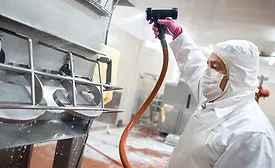
Longer application times, shorter nozzle distances, and spray patterns that deliver sufficient physical force to surfaces may contribute to improved microbial reduction. Sanitizer efficacy experiments could misrepresent real-world sanitation outcomes when shear stress and application time are not considered.
Intended for professional sanitarians, food safety leaders, hygienic design specialists, and managers working in low-moisture food manufacturing, the event will take place October 26–27, 2026 in Beloit, Wisconsin.
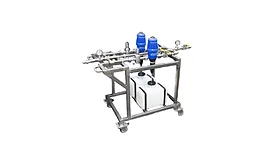
The solution includes a clean-in-place (CIP) spray header and can be used to apply sanitizing chemicals to food processing equipment such as conveyors, hoppers, bins, mixers, and other production areas.
Studies funded by the Center for Produce Safety (CPS) are investigating ways to improve produce packinghouse brush sanitation, including the use of antimicrobial light and choosing the best time to replace brushes.
Researchers have developed and validated a rapidly vaporizing antimicrobial liquid designed for dry sanitization, which, after further optimization and regulatory approvals, could offer a potential alternative to highly flammable alcohol-based solutions.
 RSS
RSS