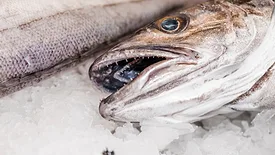
A new European Commission report identified inconsistencies in how EU Member States conduct official controls for histamine (scombrotoxin) in fishery products, highlighting gaps in inspection procedures, staff training, and harmonization of testing methods.
According to the Canadian Food Inspection Agency's (CFIA’s) 2024–2025Food Fraud Annual Report, CFIA tested 886 food samples for authenticity and conducted 362 label verifications. Olive oil had the lowest authenticity compliance rate.
The Danish Annual Report on Zoonoses summarizes trends in foodborne disease, zoonotic pathogens, and surveillance activities across humans, animals, food, and the environment.
New Zealand Food Safety has issued new guidance for verifying multi-site food businesses, establishing consistent onsite sampling recommendations for verifiers, intended to reduce costs and increase certainty for industry while ensuring food safety.
Effective July 1, the amended Regulation (EU) 2073/2005 on the microbiological criteria for foods expands the requirements for food business operators regarding Listeria monocytogenes in ready-to-eat (RTE) foods.
Based on the findings, researchers recommended targeted food safety messaging for older adults that raises awareness of age-related susceptibility to foodborne illness and the potential severity of infection, and acknowledges the effects of health, financial, and environmental realities on food safety practices.
The EU has implemented increased checks on certain food imports at the border, and has also introduced new certificate requirements for shipments of oysters, clams, mussels, scallops, and other aquaculture products from the U.S. due to veterinary drug use restrictions.
Following the adoption of EU regulations in 2021 that set food safety culture requirements for food business operators, a European Commission survey conducted in 2025 showed that countries’ progress and approach toward culture official controls are varied, with significant difficulties reported.
The WHO Advisory Group on Pesticide Specifications supports the evaluation of scientific dossiers to inform the development of WHO specifications for public health pesticides.
 RSS
RSS