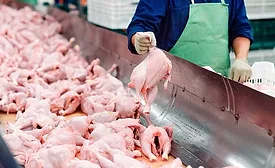
Based on survey responses from food processors, part 2 of this column series explores industry perspectives on USDA's changing regulatory approach to Salmonella in raw poultry products and how it may affect processors' operations. The article also delves into processors' top priorities for their food safety programs in 2025.
This article examines the health risks of PFAS migration from food packaging, and how food and beverage companies can go about phasing out their use to comply with U.S. Food and Drug Administration (FDA) regulations and state laws.
Even though the rules seem to state that food safety is all about documentation, in principle, all of the regulations and guidelines point to a requirement for behavior change
Which comes first: generating standard operating procedures (SOPs) to drive improvements in quality and food safety behavior, or improving behaviors and then generating the appropriate SOPs? Does the SQF/GFSI process drive the first approach or the second? The answer to both questions is: yes.
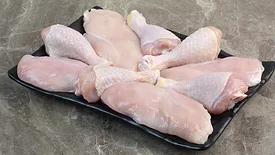
A partisan House bill sponsored by U.S. Representatives Tracey Mann (R-KS) and Steve Womack (R-AK) aims to block USDA from using federal funds to implement its proposed regulatory framework for Salmonella in raw poultry products, the goal of which is to reduce foodborne salmonellosis cases.
A recent study has characterized the challenges of ensuring food safety in “dark kitchens”—which sell food for takeout or delivery solely via online platforms and may operate out of shared kitchens—from the perspectives of both environmental health officers and the business operators themselves.
This article examines food recall trends for 2024, including USDA and FDA guidance expanding the scope of recalls and class action lawsuits filed in response to foodborne illness and recall events. The author discusses what these trends mean for industry, and if they are expected to continue into the future.
This article provides a regulatory perspective on some of the technical challenges that growing cannabis markets face, specifically focusing on product standardization, quality control testing, and consumer education and awareness amid a rapidly developing industry.
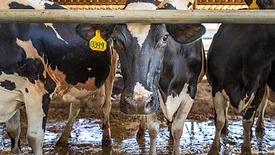
As a result of Nevada state tracing and investigation following positive silo testing results under USDA’s National Milk Testing Strategy, USDA laboratories have confirmed through whole genome sequencing the first detection of a second genotype of Highly Pathogenic Avian Influenza H5N1 (HPAI H5N1) in dairy cattle.
The EU has adopted a new regulation requiring Member States to conduct whole genome sequencing (WGS) on the isolates of five important pathogens during the investigations of foodborne illness outbreaks, and sets data-sharing parameters.
Recently reintroduced to Congress, the bipartisan Protect Infant Formula From Contamination Act aims to strengthen FDA’s oversight of infant formula manufacturers by expanding certain authorities, allowing the agency to better ensure the safety and resiliency of the country’s infant formula supply.
 RSS
RSS