The amendments to European food hygiene regulations would provide food business operators with greater flexibility in the storage of fresh meat from domestic ungulates (i.e., cattle, sheep, pigs) before freezing, based on a recent EFSA scientific opinion.
The researchers determined that probabilistic modeling could help food businesses capitalize on existing scientific data to map processing and formulation conditions for controlling non-proteolytic C. botulinum in refrigerated, processed foods of extended durability.
Over a more than three-decade career, Dr. Jaykus has advanced scientific understanding of foodborne viruses while helping the frozen food industry address complex food safety challenges.
Responding to recent listeriosis outbreaks and recognizing that consumers do not always handle or cook ready-to-heat meals in accordance with package instructions, the Food Safety Authority of Ireland (FSAI) encourages businesses to implement recommended practices to better control L. monocytogenes.
The information gathered will be used to support FAO/WHO scientific advice intended to inform future Codex Alimentarius discussions on frozen food handling guidance.
In an analysis of domestic refrigerator swabs, researchers discovered complex microbial communities harboring foodborne pathogens and antimicrobial resistance (AMR). The findings also suggested that regular cleaning is possibly more important than temperature control in managing these communities.
The scientific opinion was published to provide a scientific basis for possible amendments to existing requirements in EU legislation for food business operators on the freezing of meat.
The deadly multistate outbreak of Listeria monocytogenes infections linked to prepared pasta meals involving Nate’s Fine Foods, Freshrealm Inc., and California Ranch Food Company has grown, with seven new illnesses and two additional deaths.
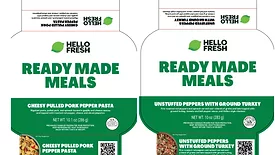
Since June, FreshRealm has been involved in an ongoing, deadly foodborne illness outbreak, as the producer of prepared pasta meals that were made with Listeria monocytogenes-tainted pasta (supplied by Nate’s Fine Foods Inc.) and distributed nationwide under various brand names. Now, FreshRealm has alerted USDA that it detected L. monocytogenes in spinach used to make meals distributed by HelloFresh.
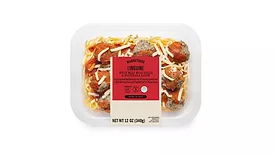
An ongoing outbreak of Listeria monocytogenes infections linked to prepared pasta meals has expanded to 15 states, causing 20 illnesses, 19 hospitalizations, and four deaths. The meals were sold under various brand names at Walmart, Kroger, and Trader Joe’s stores.
 RSS
RSS