The agency is particularly interested in input from commercial vendors on serogroup-independent solutions and methods compatible with meat-based microbiology testing.
The company is seeking strategic partners to fund further development and help gain regulatory clearances for consumer testing products using its platform. The device could enable consumer testing for foodborne pathogens like Escherichia coli, Listeria monocytogenes, and Salmonella.
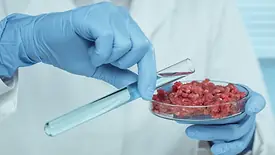
The project will evaluate the resulting assay's potential applications in relevant food matrices, including chicken, turkey, pork, and beef, with the broader objective of improving the identification of Salmonella strains associated with human illness and outbreaks.
Whole genome sequencing is a mature, reliable technology with significant potential for the food industry, but realizing its benefits requires organizations to strategically weigh risks, applications, and persistent legal and regulatory barriers to adoption.
After further optimization and validation, the approach could possibly offer an alternative to conventional culture-based screening methods that typically require three to five days. The bacteriophage amplification strategy, which was tested against Salmonella on chicken meat, could be adapted to detect other viable foodborne bacteria.
MicroTally’s MicroCap sampler grabs microorganisms from product surfaces as finished product passes through the weigh station. The device can operate unattended for up to two hours.
Developed in partnership with USDA-FSIS, the assay detects Salmonella spp. while targeting up to three proprietary genetic markers associated with pathogenicity, supporting surveillance and research into risk-based approaches to Salmonella control.
The program, which was explored after the Boar’s Head outbreak of 2024 spurred the agency to reevaluate its inspection and Listeria monitoring protocols, was piloted in FY 2026 and will be expanded to FSIS districts nationwide.
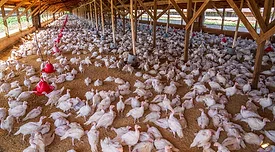
The researchers concluded that integrating multiple sampling matrices and detection methods could improve understanding of Campylobacter occurrence in commercial broiler production and support preharvest surveillance.
The researchers analyzed cost and sequencing-volume data from 23 FDA and FDA partner GenomeTrakr laboratories. Findings suggested that WGS-based genomic surveillance is a cost-effective public health investment.
 RSS