MicroTally’s MicroCap sampler grabs microorganisms from product surfaces as finished product passes through the weigh station. The device can operate unattended for up to two hours.
Developed in partnership with USDA-FSIS, the assay detects Salmonella spp. while targeting up to three proprietary genetic markers associated with pathogenicity, supporting surveillance and research into risk-based approaches to Salmonella control.
The program, which was explored after the Boar’s Head outbreak of 2024 spurred the agency to reevaluate its inspection and Listeria monitoring protocols, was piloted in FY 2026 and will be expanded to FSIS districts nationwide.
The researchers concluded that integrating multiple sampling matrices and detection methods could improve understanding of Campylobacter occurrence in commercial broiler production and support preharvest surveillance.
The researchers analyzed cost and sequencing-volume data from 23 FDA and FDA partner GenomeTrakr laboratories. Findings suggested that WGS-based genomic surveillance is a cost-effective public health investment.
In-house quality control teams and third-party laboratories can use the GENE-UP PROBIOTIC SPECIES ID assay to identify 18 commonly used probiotic species in 90 minutes or less.
According to the company, the GENE-UP TYPER SLM assay specifically targets S. enterica, the subspecies most commonly associated with human salmonellosis and foodborne illness.
ByHeart-commissioned research shows the currently accepted “gold standard” for Clostridium botulinum detection in powdered formula, SRC enumeration, may fail to catch contamination. It is used by many formula brands, including Nara Organics, another company linked to an infant botulism outbreak. Following this finding, third-party IEH Labs developed a novel detection method.
As the agency continues to delay enforcement of Salmonella verification testing for not-ready-to-eat, breaded and stuffed chicken products, Consumer Reports is asking for evidence to support USDA-FSIS’ assertion that currently available test methods are not suitable, which contradicts the agency’s previous stance.
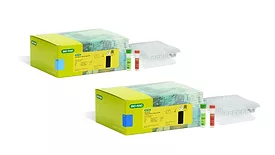
The certification confirms that the performance of the Bio-Rad method used in its EZ-Check Listeria and EZ-Check Listeria monocytogenes Kits is equivalent to that of the reference method according to ISO 16140-2 standards.
 RSS
RSS