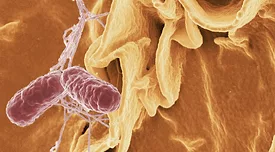
The European Food Safety Authority (EFSA) recently published a scientific opinion that identified the most relevant persistent microorganisms in food and feed production environments to be Salmonella, Listeria monocytogenes, and Cronobacter sakazakii, as well as risk factors and interventions associated with these pathogens.
Auto-Chlor System® recently announced the latest addition to its advanced dishwashing technology range, the AC TALL Space Maker Dish Machine, featuring a compact footprint of just 22 inch (in.) by 24 in.
The Alliance for Advanced Sanitation is hosting monthly Sanitation Development Group meetings for sanitation professionals to learn, share information, and teach each other, featuring different speakers and topics each month.
Kimberly-Clark Professional™ has launched its new Kimtech™ Polaris™ Nitrile Exam Gloves for use in laboratory settings; are also suitable for manufacturing and safe for food contact; and provide high levels of protection, durability, and comfort.
Scientists from the U.S. Department of Agriculture’s Agricultural Research Service (USDA’s ARS) have provided new insight into the ability of Salmonella to survive and adapt in food processing facilities through interactions with environmental biofilms.
Custom Stainless Enclosures Inc. has been awarded ISO 9001 certification for its custom-built stainless steel electrical enclosures for extreme indoor and outdoor environments.
Idaho Central District Health (CDH) recently published a webpage offering a plethora of resources for foodservice managers to help them practice active managerial control (AMC), which involves actively leading employees in food handling practices to reduce the occurrence of foodborne illness risk factors.
With each passing year, new and emerging technologies and techniques that have promise for advancing food safety are developed and validated. This article summarizes the top food safety innovations of 2023, based on audience interest.
General cleaning/sanitizing elements of Standard Operating Procedures (SOPs) should not be integrated into the "regulatory" requirements of Sanitation SOPs (SSOPs), but should be maintained as a separate plant operational set of documents. To further explain this the rationale for keeping these separate, this article reviews SSOPs to define their requirements and how these differ from general SOPs.
 RSS
RSS