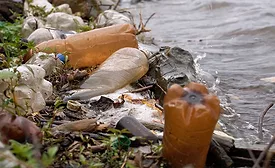
Per- and polyfluoroalkyl substances (PFAS) are ubiquitous in food, cosmetics, and pharmaceuticals. This article discusses different PFAS, their connection to microplastics, and their global impacts on public health and the environment.
In this episode of Food Safety Matters, we speak to Alex Truelove, Legislation and Policy Manager at the Biodegradable Products Institute (BPI), about a California law that makes big changes to compliance on compostable products, including food packaging, in the state. The law, which goes into effect in 2026, could have a "ripple effect" on the rest of the country.
The Trump administration released its "Make America Healthy Again" (MAHA) Report on May 22, laying a foundation for the overhaul of government policy on childhood nutrition, food chemicals, environmental toxins found in food contact materials, and other concerns.
In this episode of Food Safety Matters, we speak to industry attorney Alfredo Fernández about what the new Toxic Substances Control Act and emerging state legislation mean for food manufacturers, importers, and businesses regarding compliance with U.S. requirements for per- and polyfluoroalkyl substances (PFAS) in food contact materials and packaging.
Duravant’s Key Technology and PPM Technologies have jointly introduced a new, fully integrated nut processing line that automates all nut processing steps, from post-shelling to packaging.
Harmonization of precautionary allergen labeling (PAL) requires the acceptance of reference doses for priority allergens. A new study found that PAL based on specific FAO/WHO-recommended thresholds would only elicit mild to moderate reactions in a small proportion of the allergic population.
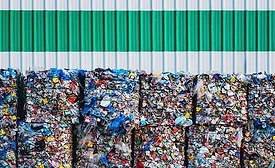
State-level Extended Producer Responsibility (EPR) can push a circular economy, move the overall recycling effort forward, and lead to an increase in the use of recycled material
This article discusses Extended Producer Responsibility (EPR) programs and how the federal government is responding to state activity on EPR, as well as the food safety aspects of EPR packaging program requirements.
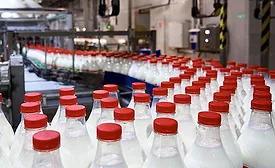
The need for packaging materials that preserve the quality of products while preventing microbial contamination has become a critical focus for the beverage and dairy industries
This article looks at the use of UV-C light in combination with hydrogen peroxide (H2O2) to disinfect packages in the extended shelf life of milk and plant-based products.
A paper authored by experts associated with ILSI Europe asserts that global food safety would benefit from the harmonization of risk assessment protocols for food contact materials used by different regulatory bodies, and suggests a path forward for working toward harmonization.
The updated Fifth Edition of FDA’s Food Allergen Q&A Guidance has been published in a searchable webpage format. Revisions include the addition of sesame as a major food allergen, as well as the removal of some tree nuts, including coconut, from the list of major food allergens.
 RSS
RSS