Based on the results of testing more than 125,000 food samples collected across Europe, compliance with EU pesticide maximum residue levels remains high, reported the European Food Safety Authority (EFSA).
This episode of Food Safety Five discusses several foodborne pathogens that have been recently highlighted by researchers due to their unusual nature, emergence, and increasing public health significance, including a rare Salmonella strain, an STEC/ETEC hybrid, Group B Streptococcus, and drug-resistant Shigella.
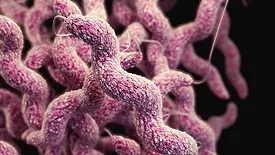
The action plan would outline strategies to mitigate Campylobacter and reduce cases of foodborne illness. Those who are interested in contributing to the development of the action plan are invited to register to receive communications about stakeholder engagement.
Responding to growing consumer and regulatory demand for “natural” foods, the decision builds on Aldi’s removal of 13 synthetic colorants from its portfolio more than ten years ago. The grocer announced this ban while Congress, states, and industry debate ingredient oversight.
The findings, based on a novel approach and published in Nature Health, suggest that traditional chemical safety assessments may overlook combined exposures and real-life environmental conditions. Transcriptomic analysis implicated a non-genotoxic mode of action by which pesticides interfere with normal cell function and identity processes.
The E. coli outbreak involving Raw Farm unpasteurized dairy products has ended with one raw cheese sample matching isolates from a different 2025 outbreak. In an April 29 hearing, Congresspeople questioned whether U.S. Health Secretary Kennedy influenced FDA’s failure to mandate a recall.
Samples were tested for arsenic, cadmium, lead, mercury, PFAS, pesticides, and phthalates/plasticizers. When toxic heavy metals were detected in some samples, it was at levels far below EPA drinking water limits.
The draft bill proposes sweeping reforms to FDA’s food safety oversight, including GRAS process changes, infant and baby food safety provisions, and federal preemption of state laws. Consumer groups say the FRESH Act’s GRAS reforms and federal preemption language would weaken U.S. food safety.
 RSS
RSS