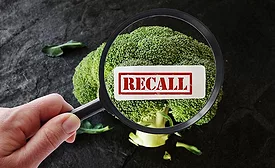
When regulatory stakeholders effectively collaborate at the local, state, and federal levels and understand each other’s roles, resources, and authorities, food recalls can be processed more efficiently. This results in a more agile recall response down to the consumer level, benefitting everyone in the farm-to-fork continuum and potentially reducing additional exposures and illnesses.
Food safety stories are essential to communicate lessons learned and share the practical experiences of food safety professionals to enhance the effectiveness of food safety training.
The Retail Food Safety Regulatory Association Collaborative has worked to develop diverse strategic priorities, such as improving the regulatory approach, competency, and food safety culture in the regulatory community and enhancing the sharing of best practices among retail food protection partners.
This article outlines the identification of and responses to these outbreaks, the actions taken to prevent future outbreaks, the challenges encountered, possible contamination routes, and how current regulations may affect sprout safety.
The majority of foodborne illnesses and outbreaks are frequently attributed to foodservice establishments and are triggered by inconsistency in safe food handling practices and behaviors. Learn how to address these challenges.
A mysterious outbreak in October 2007, which affected about 450 people of all ages, was traced to table salt in which sodium chloride somehow had been replaced by sodium bromide, suggesting that food should be considered as a potential vehicle until it can be explicitly ruled out.
Food safety stories are essential to communicate lessons learned and share the practical experiences of food safety professionals to enhance the effectiveness of food safety training.
Food safety stories are essential to communicate lessons learned and share the practical experiences of food safety professionals to enhance the effectiveness of food safety training.
The coronavirus disease 2019 (COVID-19) pandemic has dramatically disrupted the typical number of food safety-related recalls. What will this mean moving forward?
After a foodborne outbreak is identified, specific food vehicles may become the focus of an investigation based on the pathogen implicated and past outbreaks linked to the pathogen.
 RSS