


By examining global standards such as HACCP, GFSI, and SQF, this article explores the gaps in current competency assessments and the risks posed by these gaps. It also provides actionable strategies to empower frontline leaders and quality assurance teams to improve where necessary.
This article discusses the results of a survey of food processors worldwide regarding food safety culture and the preventive controls-aligned key performance indicators (KPIs) used to measure daily operations and continuous improvement.
The third installment of the second FDA-Stop Foodborne Illness Food Safety Culture Webinar Series, titled, “Measure the Power of Declared Values,” will be held on December 17.
Canadian-based Culture Advisory Group Inc. (CAG) and U.S.-based Food Safety Leadership Group (FSLG) have forged a partnership that offers a full spectrum of integrated solutions that enable global companies to build a food safety culture that touches all levels of the organization.
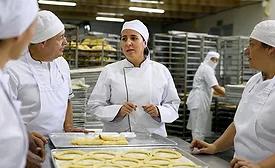
Quality assurance professionals and frontline leaders must ensure that food handlers learn and apply food safety principles on the job. Effective food safety training should be action-oriented, engaging, and designed to build competence.
The event focused on the alignment and intersection of food safety culture and best practices to control Listeria monocytogenes and prevent foodborne illness.
The Food Safety Authority of Ireland (FSAI) has published a new resource to assist food businesses in meeting food safety culture requirements, and to provide a framework for inspectors to assess food safety culture.
Small businesses show positive signs of managerial engagement and understanding of food safety principles but face challenges in implementing formal Food Safety Management Systems
This article discusses the results of a survey conducted by the Association of Food and Drug Officials (AFDO) on the states of food safety culture and the use of food safety management systems among smaller-scale foodservice establishments in the U.S.
By joining the Alliance to Stop Foodborne Illness, the Meat Institute will promote food safety best practices and engage in other efforts to prevent foodborne illness on behalf of meat and poultry companies.
With Dubai receiving about nine million metric tons of food annually, having over 26,000 food establishments, and being home to more than 200 nationalities, the scale—and the stakes—for food safety are enormous.