Foodborne illness prevention does not happen by chance. It depends on a workforce that is trained, credentialed, data-enabled, and supported by coordinated federal investment. These are the conditions that allow prevention to occur consistently across jurisdictions and over time—and current workforce research suggests each is under pressure.
A new FAO technical brief explains how plastic pollution moves through agrifood systems and creates interconnected risks to food safety and human, animal, plant, and environmental health.
The question is no longer whether AI will enter food safety and GMP environments; it already has. The more important question is how it can be used without weakening the controls on which these systems depend.
Root cause analysis can turn routine food safety deviations into opportunities to identify systemic weaknesses, strengthen preventive controls, and reduce the likelihood of recurrence.
In a new publication, FAO authors argued that robust scientific evidence and clear risk communication are essential to effective food safety decision-making, and highlighted challenges posed by emerging technologies like AI, social media misinformation, and the framing of scientific information.
The 60-slide course on food safety, personal hygiene, and Good Manufacturing Practices basics is designed to help food businesses efficiently meet FSMA training requirements for personnel involved in food production, packaging, and storage.
Taking place October 13–15, 2026 in State College, Pennsylvania, the opportunity is geared toward those developing in-house food safety programs who want to enhance their knowledge of the science and technology of cleaning, sanitizing, and pest control.
Penn State Extension will offer a series of in-person and virtual training sessions for Pennsylvania fruit and vegetable growers on the Food Safety Modernization Act (FSMA) Produce Safety Rule (PSR), Good Agricultural Practices (GAPs), and the co-management of natural resources and food safety.
Developing an effective HACCP program requires more than following the seven principles. Management commitment, document control, prerequisite programs, training, and other foundational elements are essential to building and maintaining a robust HACCP system.
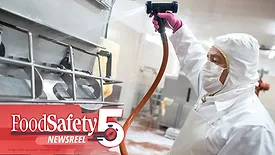
This episode of Food Safety Five covers new research on the impact of spray application on sanitizer efficacy, ROI of WGS for foodborne pathogen surveillance, effect of common food additives on gut health and implications for safety assessment, and contribution of industrial poultry farming to global Campylobacter spread.
 RSS
RSS