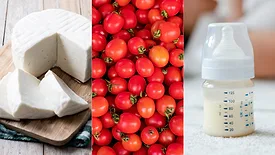
The Alert and Cooperation Network (ACN), which enables EU Member States to exchange information and coordinate responses to food safety incidents, processed a record 10,490 notifications. Notable incidents included a Listeria outbreak linked to French cheese, Salmonella in Italian tomatoes, and cereulide in infant formula.
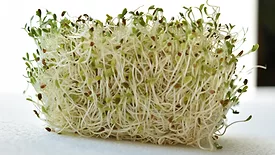
Traceability investigations identified a common seed supplier, with implicated alfalfa seeds imported from India and distributed throughout Europe. Available evidence suggested the seeds were likely contaminated before entering the EU.
Four European research and innovation projects—SecureFood, EFF-CoP, ACT4FOOD, and DEFENSEFOOD—will host a joint webinar on July 3, titled, "Advancing Food System Security: From Early Signals to Systemic Resilience.”
The EU has implemented increased checks on certain food imports at the border, and has also introduced new certificate requirements for shipments of oysters, clams, mussels, scallops, and other aquaculture products from the U.S. due to veterinary drug use restrictions.
Following the adoption of EU regulations in 2021 that set food safety culture requirements for food business operators, a European Commission survey conducted in 2025 showed that countries’ progress and approach toward culture official controls are varied, with significant difficulties reported.
Following a high-profile, global recall of infant formulas due to cereulide contamination in early 2026, the European Commission is drafting an act that would introduce additional checks for the toxin in formulas.
Dioxins and dioxin-like polychlorinated biphenyls (DL-PCBs) are environmental contaminants generated as byproducts of industrial processes and waste incineration. EFSA’s risk assessment resulted in a lower tolerable weekly intake, which Europeans generally exceed.
Drawing from EFSA risk assessments, OpenFoodTox provides structured summaries of hazard information for thousands of individual substances, including food additives and flavorings, pesticides, contaminants, and food contact materials.
Strengthening food system resilience requires not only technological innovation, but also an improved societal understanding of food system dynamics and risks.