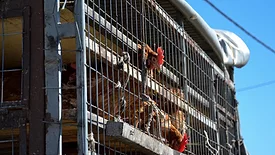
The Sensor4Food research project will develop five photonic sensing technologies intended to identify pathogenic contamination, animal disease, and meat quality issues at critical points in poultry production, possibly supporting a digital “poultry passport” to link information about poultry production, transport, welfare, and processing.
The Safe Food, One Future Conference, taking place in Parma, Italy in the fall, will mark the European Food Safety Authority’s (EFSA’s) 25th anniversary and the launch of its new Strategy 2034.
A new paper outlines the scientific capabilities and investments that will be necessary to keep pace with food system innovation, emerging risks, and changing EU policy while supporting risk assessment. The paper will inform EFSA's forthcoming Strategy 2034.
A new Scoping Paper lays the groundwork for expert European Commission advisory bodies to deliver opinions on the scientific and ethical considerations that should underpin potential EU policies on ultra-processed foods (UPFs).
A new study characterized mycotoxin-related RASFF food safety notifications by mycotoxin type, product category, country of origin, risk level, and notification type. The researchers also contextualized notification trends dating back to 2012.
The amendments to European food hygiene regulations would provide food business operators with greater flexibility in the storage of fresh meat from domestic ungulates (i.e., cattle, sheep, pigs) before freezing, based on a recent EFSA scientific opinion.
The German Federal Institute for Risk Assessment (BfR) said the EU health-based guidance value for acute glycerol exposure from beverages can also be applied to solid foods, adding to recent discussions around glycerol intoxication in young children and safe levels of exposure.
Prompted by a global food safety incident and infant formula recalls spanning 99 countries, the European Commission has drafted a regulation that would set a limit of 1 µg/kg cereulide toxin in dried formula products. The draft regulation is open for public feedback.
Regulation (EU) 2026/1825 expands MLs for 3-monochloropropanediol (3-MCPD) and glycidyl fatty acid esters, and Regulation (EU) 2026/1890 establishes new MLs for furan, 2-methylfuran, and 3-methylfuran.
Acrylamide is a harmful contaminant that forms during thermal processing. An analysis of 17 years of EU RASFF data showed that UPFs accounted for 85 percent of related notifications. Cereals, baked goods, and potato chips were most frequently implicated.