Food Safety
search
Ask Food Safety AI
cart
facebook twitter linkedin instagram youtube
  • Sign In
  • Create Account
  • Sign Out
  • My Account
Food Safety
  • NEWS
    • Latest News
    • White Papers
  • PRODUCTS
  • TOPICS
    • Contamination Control
    • Food Types
    • Management
    • Process Control
    • Regulatory
    • Sanitation
    • Supply Chain
    • Testing and Analysis
  • PODCAST
  • EXCLUSIVES
    • Food Safety Five Newsreel
    • eBooks
    • FSM Distinguished Service Award
    • Interactive Product Spotlights
    • Videos
  • BUYER'S GUIDE
  • MORE
    • NEWSLETTERS >
      • Archive Issues
      • Subscribe to eNews
    • Store
    • Sponsor Insights
    • ASK FSM AI
  • WEBINARS
  • FOOD SAFETY SUMMIT
  • EMAG
    • eMagazine
    • Archive Issues
    • Editorial Advisory Board
    • Contact
    • Advertise
  • SIGN UP!
NewsContamination ControlChemical

EU Food Supply Remains Largely Compliant with Veterinary Drug Residue Limits
By Food Safety Magazine Editorial Team
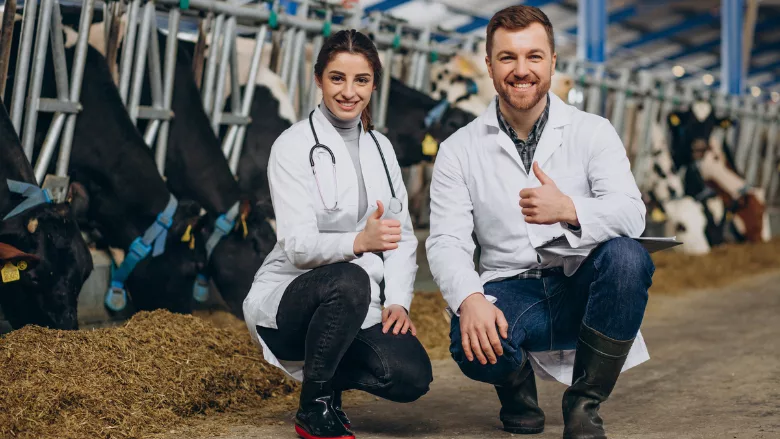
two farm vets in white coats squatting on ground in front of cows in a pen smiling at the camera with thumbs up
Image credit: senivpetro via Freepik
February 11, 2026

The European Food Safety Authority (EFSA) has published its latest annual report on veterinary drug residues in food-producing animals and their products, covering the year 2024.

Specifically, the report looks at the presence of authorized and banned pharmacologically active chemicals (e.g., hormones and steroids, beta-agonists, antibacterials, anti-parasitics, insect repellents, etc.) and their residues in food derived from animals, including meat (farmed and game), dairy products, eggs, or honey. Data for the report were submitted by EU Member States, Iceland, and Norway.

Overall, a high level of compliance with official limits for veterinary drug residues was found, consistent with previous years. Only 0.13 percent of samples were non-compliant (629 of 493,664 samples) in 2024, which is comparable with the 0.11 percent non-compliance rate seen in 2023.

The highest proportion of non-compliant samples were collected under the national randomized surveillance plan (0.22 percent), followed by the national risk-based control plan for third-country imports (0.20 percent) and the national risk-based control plan for production in Member States (0.16 percent).

Of the sampled product groups, the highest proportion of non-compliance was found in casings (0.91 percent) followed by aquaculture products (0.48 percent) and milk (0.42 percent). The number of samples collected for each of these groups were 334 (casings) 7,026 (aquaculture) and 15,841 (milk).

The product groups with the greatest number of samples collected were pigs (274,254), bovines (109,034), and poultry (59,683). These groups had non-compliance rates of 0.05 percent, 0.26 percent, and 0.07 percent, respectively.

An interactive dashboard visualizing the data from the report can be accessed here.

Looking for quick answers on food safety topics?
Try Ask FSM, our new smart AI search tool.
Ask FSM →


KEYWORDS: EFSA EU veterinary drugs

Share This Story

Fsm purple logo 200x200

The Food Safety Magazine editorial team comprises Bailee Henderson, Digital Editor ✉; Adrienne Blume, M.A., Editorial Director; and Stacy Atchison, Publisher.

Recommended Content

JOIN TODAY
to unlock your recommendations.

Already have an account? Sign In

  • people holding baby chicks

    Serovar Differences Matter: Utility of Deep Serotyping in Broiler Production and Processing

    This article discusses the significance of Salmonella in...
    Contamination Control
    By: Nikki Shariat Ph.D.
  • woman washing hands

    Building a Culture of Hygiene in the Food Processing Plant

    Everyone entering a food processing facility needs to...
    Management
    By: Richard F. Stier, M.S.
  • graphical representation of earth over dirt

    Climate Change and Emerging Risks to Food Safety: Building Climate Resilience

    This article examines the multifaceted threats to food...
    Contamination Control
    By: Maria Cristina Tirado Ph.D., D.V.M. and Shamini Albert Raj M.A.
Manage My Account
  • eMagazine Subscription
  • Subscribe to Newsletters
  • Manage My Preferences
  • Website Registration
  • Subscription Customer Service

More Videos

Sponsored Content

Sponsored Content is a special paid section where industry companies provide high quality, objective, non-commercial content around topics of interest to the Food Safety Magazine audience. All Sponsored Content is supplied by the advertising company and any opinions expressed in this article are those of the author and not necessarily reflect the views of Food Safety Magazine or its parent company, BNP Media. Interested in participating in our Sponsored Content section? Contact your local rep!

close
  • Salmonella bacteria
    Sponsored byThermoFisher

    Food Microbiology Testing Methods: Salmonella species

  • a diagram explaining indicator organisms
    Sponsored byHygiena

    How Proactive Listeria Testing Helps Prevent Six- and Seven-Figure Recalls

  • woman grocery shopping
    Sponsored byCorbion

    Designing Safety Into Every Bite: Proactive Risk Mitigation for Refrigerated Foods

Popular Stories

plate of RTE deli meats and sausages

Boar’s Head Reopens Production Facility Behind Fatal Listeriosis Outbreak

natural blue food coloring powder

FDA Allows Foods with ‘Natural’ Food Dyes to Claim ‘No Artificial Colors’

person on clipboard in processing environment

Preventive Maintenance: A Complex Prerequisite Program

Events

February 25, 2026

How to Manage Food Safety and Regulatory Risks in Your Supply Chain

Live: February 25, 2026 at 2:00 pm EST: From this webinar, attendees will learn how large food manufacturing organizations can successfully manage their supply chain, food safety, and regulatory risks.

March 3, 2026

FDA/USDA Regulatory Updates: Food Safety Work Plans for 2026

Live: March 3, 2026 at 2:00 pm EST: In this high-level, exclusive webinar, FDA Deputy Commissioner for Human Foods Kyle Diamantas and USDA Under Secretary for Food Safety Mindy Brashears, Ph.D. will share their agencies' regulatory priorities and work plans for 2026 and beyond.

May 11, 2026

The Food Safety Summit

Stay informed on the latest food safety trends, innovations, emerging challenges, and expert analysis. Leave the Summit with actionable insights ready to drive measurable improvements in your organization. Do not miss this opportunity to learn from experts about contamination control, food safety culture, regulations, sanitation, supply chain traceability, and so much more.

View All

Products

Global Food Safety Microbial Interventions and Molecular Advancements

Global Food Safety Microbial Interventions and Molecular Advancements

See More Products

Related Articles

  • goat on a farm

    Rates of Non-Compliance With EU Veterinary Drug Residue Limits Remain Minimal in Food Animals

    See More
  • glass testing beakers

    Canadian Food Supply Nearly 100 Percent Compliant With Chemical Residue Standards

    See More
  • white round pills on blue background

    EFSA: Veterinary Drug Residues Remain Low in EU Food Animals, Foods of Animal Origin

    See More

Related Products

See More Products
  • 1119053595.jpg

    Food Safety for the 21st Century: Managing HACCP and Food Safety throughout the Global Supply Chain, 2E

  • 9781498721776.jpg

    Handbook of Food Processing: Food Safety, Quality, and Manufacturing Processes

  • food safety.jpg

    Food Safety Contaminants and Risk Assessment

See More Products

Related Directories

  • North American Chemical Residue Workshop

    NACRW) formerly the Florida Pesticide Residue Workshop conducts an annual meeting for scientists particularly interested in trace level analysis of pesticides, veterinary drug residues, and other chemicals in food, animal feed, and environmental samples. The purpose of the meeting is to provide training, develop and improve technical knowledge, facilitate development and distribution of new analysis methods and techniques, and establish networking to promote professional cooperation between scientists of these interests.
  • FoodChain ID

    Our mission is to make it easier to keep the food supply chain safe, compliant and transparent. We serve 30,000+ customers in over 100 countries. We offer five key service areas: Regulatory Compliance, Product Development Solutions, Food Safety Solutions, Product Certifications, Testing Solutions
×

Never miss the latest news and trends driving the food safety industry

Newsletters | Website | eMagazine

JOIN TODAY!
  • RESOURCES
    • Advertise
    • Contact Us
    • Directories
    • Store
    • Want More
  • SIGN UP TODAY
    • Create Account
    • eMagazine
    • Newsletters
    • Customer Service
    • Manage Preferences
  • SERVICES
    • Marketing Services
    • Reprints
    • Market Research
    • List Rental
    • Survey/Respondent Access
  • STAY CONNECTED
    • LinkedIn
    • Facebook
    • Instagram
    • X (Twitter)
  • PRIVACY
    • PRIVACY POLICY
    • TERMS & CONDITIONS
    • DO NOT SELL MY PERSONAL INFORMATION
    • PRIVACY REQUEST
    • ACCESSIBILITY

Copyright ©2026. All Rights Reserved BNP Media.

Design, CMS, Hosting & Web Development :: ePublishing