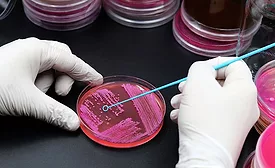
Developed in partnership with USDA-FSIS, the assay detects Salmonella spp. while targeting up to three proprietary genetic markers associated with pathogenicity, supporting surveillance and research into risk-based approaches to Salmonella control.
The researchers concluded that integrating multiple sampling matrices and detection methods could improve understanding of Campylobacter occurrence in commercial broiler production and support preharvest surveillance.
This article explores how rapid detection technologies are transforming environmental monitoring programs for L. monocytogenes in dairy plants. It also discusses how faster detection supports quicker sanitation verification, improved risk-based monitoring, and more effective decision-making during contamination events.
In-house quality control teams and third-party laboratories can use the GENE-UP PROBIOTIC SPECIES ID assay to identify 18 commonly used probiotic species in 90 minutes or less.
According to the company, the GENE-UP TYPER SLM assay specifically targets S. enterica, the subspecies most commonly associated with human salmonellosis and foodborne illness.
Using metagenomic sequencing and qPCR, the study analyzed bacteria from produce, chicken meat, and RTE deli meats sold at retail stores in Tennessee. A high abundance and diversity of antibiotic resistance genes were identified, potentially contributing to the persistence and spread of antimicrobial resistance (AMR) in the food supply.
Two research projects are investigating several novel techniques for detecting hepatitis A virus that eliminate false positives produced by inactivated, non-infectious RNA fragments—an issue that limits the usefulness of existing methods for indicating actual food safety risk.
New research has demonstrated a low overall prevalence of Campylobacter on retail chicken meat; however, recovered C. jejuni strains did not match known poultry-associated genotypes, suggesting the need for sensitive detection methods and expanded genomic surveillance.
Bio-Rad Laboratories’ new EZ-Check Salmonella Kit is a rapid, polymerase chain reaction (PCR)-based detection method for Salmonella in food and environmental matrices.