When Minutes Matter: Rapid Detection of Listeria in Dairy Processing Environments
In Listeria control, the difference between detection and action is often measured in time

A positive Listeria result in a dairy plant is rarely just a microbiology report. A swab taken from a drain, filler, or processing area can quickly raise important questions for the food safety team. Is the contamination contained? Did it spread to nearby areas? What needs to be done before we can start production again?
This uncertainty makes Listeria monocytogenes difficult to control in the dairy environment. Although listeriosis is less commonly reported than many other foodborne illnesses, it is a major public health problem because the infection can be severe. According to the World Health Organization, the mortality rates reported for listeriosis range from 20–30 percent.1 The populations at highest risk include people who are pregnant, elderly, or immunocompromised.
The concern with this pathogen goes beyond its mere presence in a product. The ability of L. monocytogenes to survive in diverse environments contributes to its continued significance as a food safety concern.2 It can grow over a long period of time in refrigerated areas, moist surfaces, equipment niches, and areas with accumulated residues at the production site.
Pasteurization remains a useful control step to prevent contamination. However, challenges still remain for dairy processors. Once products enter the post-processing environment, the potential for contamination can recur. Contact with contaminated surfaces or equipment areas, or poor handling practices, could lead to reintroduction of L. monocytogenes.
This is why time is a critical factor in Listeria control. Delayed results may influence decisions about product release, sanitation activities, and additional investigation. Early detection of an issue gives facilities a better chance to react to the problem before it escalates.
Rapid detection methods do not substitute for sanitation, hygienic design, or a strong food safety program. Their role is to provide information faster so that the concerned authorities can make decisions when they matter most. In Listeria control, the difference between detection and action is often measured in time.
Listeria Persistence in Dairy Processing Environments
Managing L. monocytogenes inside a dairy plant remains challenging because the organism is well adapted to survive under conditions that limit many other microorganisms. Refrigeration, moisture, and accumulated product residues can support its persistence in drains, conveyor components, fillers, gaskets, and other difficult-to-clean equipment niches.
Looking for quick answers on food safety topics?
Try Ask FSM, our new smart AI search tool.
Ask FSM →
Biofilm formation further complicates control efforts. Once established on surfaces, these microbial communities can reduce sanitation effectiveness and contribute to recurring environmental issues and the spread of contamination.3
Within the production area, equipment design, personnel movement, and sanitation practices all influence the risk of reintroduction. For this reason, dairy processors rely on hygienic zoning and site monitoring programs to identify contamination sources and target corrective actions.
A negative product result should not be viewed as assurance of a lack of contamination. Listeria may persist in hidden locations long before it appears in finished products. This is where rapid detection becomes particularly valuable, providing earlier visibility into potential problems and allowing intervention before contamination becomes more difficult to contain.
Limitations of Traditional Testing Timelines
For many years, culture-based testing has served as the foundation for detecting L. monocytogenes in dairy products and production establishments. These methods provide dependable confirmation, but they require several steps.
The process usually begins with enrichment to allow recovery of stressed or low-level cells. This is followed by selective plating and confirmation testing to verify the result. The complete process may take 4–5 days before final results are available.4
For a dairy processor, those days matter. Production does not simply stop while waiting for a laboratory result. Decisions must be made about product storage, equipment sanitation, additional sampling, and future production schedules. This gap between sampling and confirmation is where rapid detection methods provide value.
Evolution of Rapid Listeria Detection Technologies
When test results take several days to confirm, dairy manufacturers may be forced to make operational decisions without a complete picture of potential contamination risks. During this delay, production may continue, products may move further through the supply chain, and sanitation opportunities may be missed. Faster detection reduces this uncertainty by allowing facilities to respond closer to the time when contamination is identified.
The delay between sample collection and confirmed results has driven the adoption of rapid tools for L. monocytogenes monitoring. Traditional culture-based methods remain the standard for reliable confirmation; however, rapid approaches are changing how food safety teams access critical information. By shortening the time required to detect potential contamination, these technologies support more proactive decision-making and strengthen overall facility surveillance programs.
Molecular Detection Technologies
Molecular methods have changed how food safety professionals investigate potential Listeria contamination. These approaches identify specific genetic markers of the organism, allowing identification in less time than conventional testing methods. Polymerase chain reaction (PCR), quantitative PCR (qPCR), multiplex PCR, isothermal amplification methods, and nucleic acid-based lateral flow assays are commonly used for screening dairy products and environmental samples (Figure 1).5 In addition, emerging CRISPR-based platforms are gaining attention because of their ability to combine highly specific target recognition with rapid signal generation, offering potential opportunities for future pathogen detection applications in the food industry.
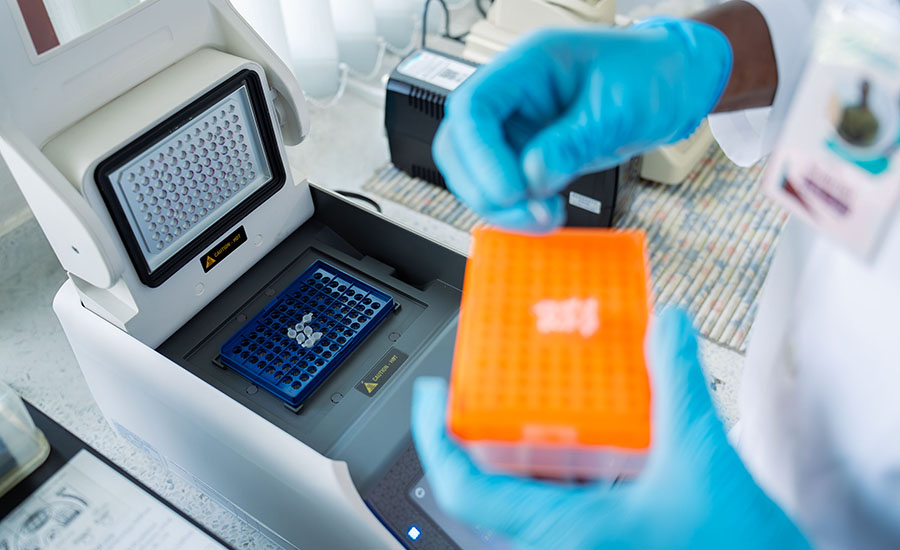
Each approach provides different capabilities depending on the testing need. PCR-based methods allow targeted identification of specific organisms, while qPCR can provide information about the amount of genetic material detected. Multiplex formats allow multiple targets to be analyzed within a single reaction, and isothermal amplification methods simplify testing by operating at a constant temperature. Nucleic acid-based lateral flow assays combine molecular recognition with a simple visual format, making them useful for rapid interpretation.
Even with these improvements, obtaining a result is not always immediate. Low contamination levels, stressed cells, and complex environmental samples may still require enrichment before analysis. As a result, the practical value of these technologies lies not only in their sensitivity but also their ability to support earlier investigation and decision-making when potential contamination is identified.
Immunological Detection Methods
Immunological techniques offer another option for Listeria screening by using the specific interaction between antibodies and microbial targets.6 Approaches such as immunoassays and lateral flow immunoassay strips provide a simple format that supports faster preliminary assessment and easier application in monitoring programs. However, detecting very low levels of contamination may still require additional preparation steps. Therefore, these tools are most effective when combined with broader food safety and facility monitoring strategies rather than used as replacements for existing systems.
Biosensor and Nanotechnology-Based Approaches
Biosensor and nanotechnology-based approaches are moving Listeria detection toward smaller, faster, and more adaptable platforms. Electrochemical, optical, and fluorescence-based biosensors are being explored for their ability to recognize biological targets and convert them into measurable signals. The development of portable devices may bring testing closer to the production floor, reducing complete reliance on laboratory-based analysis.7 Nanomaterials further support these advances by improving signal strength and sensitivity.
Although many approaches are still being optimized for routine industry application, they represent progress toward more connected and responsive monitoring strategies.
Rapid Hygiene Assessment and Digital Verification Tools
Rapid decision-making in dairy plants extends beyond pathogen detection. Tools such as adenosine triphosphate (ATP) bioluminescence provide instant feedback on sanitation effectiveness by measuring remaining biological material on surfaces after cleaning.8 Although ATP testing does not directly detect L. monocytogenes, it helps identify areas that may require further attention.
Digital monitoring systems further support environmental programs by tracking results over time, allowing facilities to recognize patterns, recurring problem areas, and opportunities for preventive action. The future of Listeria control depends not only on obtaining results faster but also the use of timely information to understand risks and respond before contamination spreads.
Environmental Monitoring Programs: Turning Detection Into Action
L. monocytogenes can survive in hidden locations and remain unnoticed until conditions allow it to spread. This is why environmental monitoring programs (EMPs) are focused on prevention rather than reaction. The goal is not only to detect Listeria, but also trace its source and understand how it moves through the processing environment. Effective monitoring helps eliminate potential harborage sites before they compromise product safety. This approach forms the foundation of industry hygiene strategy.
Routine swabbing provides insight into areas where problems are most likely to occur. Routine monitoring helps identify Listeria persistence and track contamination patterns throughout the processing facility. When a positive finding occurs, additional sampling around the affected area can help trace contamination routes and determine whether the issue is isolated. Repeated positives from the same location may indicate a persistent source requiring changes in sanitation procedures, equipment maintenance, or operational practices.
This is where time becomes critical. Earlier results allow food safety teams to begin investigations, modify sanitation procedures, and apply corrective measures before the issue expands. Findings from EMPs also support daily decisions such as product holds, temporary production adjustments, intensified cleaning, or stronger separation between different processing zones.
Over time, environmental data provides a clearer picture of plant conditions. Tracking recurring patterns helps identify sanitation gaps, equipment concerns, and areas needing long-term improvement. Rapid detection can accelerate this process, but technology alone cannot control Listeria. Its greatest value comes when faster results are combined with hygienic design, effective sanitation, trained staff, and a mature food safety culture.
Challenges and Limitations of Rapid Detection Technologies
Rapid testing has transformed monitoring systems in dairy processing, but "rapid" does not necessarily mean instantaneous detection. A shorter testing time is valuable only when the information generated is accurate, properly interpreted, and supported by a strong food safety program.
One challenge is that Listeria may be present at very low levels, especially in samples collected after sanitation or from areas where microbial recovery is difficult. In these situations, pre-enrichment may still be needed before analysis. Dairy matrices and plant samples can also contain fats, proteins, cleaning residues, or other materials that may interfere with test performance and influence interpretation.
Reliability remains an important consideration for any rapid approach. False positives may lead to unnecessary investigations, while false negatives can delay corrective actions. Some technologies may also detect genetic material from cells that are no longer viable, making it difficult to determine whether the finding represents an active risk. Similarly, organisms protected within biofilms or hidden equipment niches may be missed if sampling does not target the appropriate locations.
Successful implementation depends on more than selecting a faster method. Equipment requirements, operator training, validation needs, and cost must also be considered, especially for smaller operations. Sampling strategies, sanitation effectiveness, facility design, and personnel practices all influence the overall success of a monitoring program. Rapid detection works best as a tool that supports existing food safety systems by providing earlier information for timely decisions and effective control actions.
Future Directions in Dairy Environmental Surveillance
The future of dairy environmental surveillance is moving from responding to individual contamination events toward identifying risks before they become larger problems. Advances in rapid detection, digital tools, and data analysis are supporting a more predictive approach where available information can be used to guide earlier preventive actions.
AI-assisted monitoring is creating new opportunities to analyze environmental results, sanitation records, facility trends, and movement patterns within production areas.9 Combined with predictive contamination mapping, these tools may help identify recurring concerns, potential harborage locations, and areas requiring greater attention. Smart sensors and portable diagnostic platforms may further support this transition by bringing faster assessments closer to the production floor rather than relying only on centralized laboratory testing.
Sequencing-based surveillance is also improving the understanding of contamination sources and microbial movement within food processing environments.10 These approaches can help determine whether repeated findings are linked to new introductions or persistent strains. At the same time, integrated digital food safety systems that combine monitoring data, sanitation records, corrective actions, and production information can provide quality assurance teams with a more complete view of plant performance.
Despite these advances, technology alone cannot prevent Listeria contamination. Effective control will continue to depend on sanitation practices, hygienic design, employee involvement, and a strong food safety culture. The future direction of dairy safety is not only to detect Listeria faster but also develop systems that recognize risks earlier and support prevention before problems reach the product.
Takeaway
L. monocytogenes control remains a continuous challenge for dairy processors because of the organism's ability to survive in areas where contamination may remain unnoticed. Managing this risk requires more than identifying its presence; it requires finding concerns early enough to prevent further spread.
Rapid detection technologies are changing how facilities respond to potential contamination events by reducing the time between sampling and decision-making. Earlier access to information enables food safety teams to investigate sources, improve corrective actions, and respond before small issues become larger food safety concerns.
However, technology alone cannot provide complete protection. Effective Listeria management still depends on hygienic facility design, strong environmental monitoring programs, effective sanitation practices, and a committed food safety culture. In dairy facilities where Listeria can persist and spread, faster information is no longer just an advantage; it is becoming an essential part of preventive food safety management.
References
- World Health Organization. "Listeriosis." February 20, 2018. https://www.who.int/news-room/fact-sheets/detail/listeriosis.
- Divanshi, M., J. Tarak, S. Saha, et al. "Detection of Listeria monocytogenes using anti-internalin antibodies generated through epitope prediction." Journal of Microbiological Methods 244 (May 2026): 107445. https://www.sciencedirect.com/science/article/abs/pii/S0167701226000576.
- Arthur, M., E.L. Afari, E.-A. Alexa, et al. "Recent advances in examining the factors influencing the efficacy of biocides against Listeria monocytogenes biofilms in the food industry: A systematic review." Comprehensive Reviews in Food Science and Food Safety 24, no. 1 (January 2025): e70083. https://doi.org/10.1111/1541-4337.70083.
- Fan, C., Y. Wang, T. Zheng, et al. "Rapid detection of Listeria monocytogenes in ready-to-eat foods using a one-tube recombinase polymerase amplification and photosensitization colorimetric assay." Sensors and Actuators B: Chemical 444, Pt. 2 (December 2025): 138489. https://www.sciencedirect.com/science/article/abs/pii/S0925400525012651.
- Ye, Y., L. Li, Y. Chen, B. Li, and Z. Xu. (2025). "Molecular methods for rapid detection and identification of foodborne pathogenic bacteria." World Journal of Microbiology and Biotechnology 41, no. 5 (May 2025): 175. https://link.springer.com/article/10.1007/s11274-025-04396-6
- Osek, J., B. Lachtara, and K. Wieczorek. "Listeria monocytogenes in foods—From culture identification to whole-genome characteristics." Food Science & Nutrition 10, no. 9 (May 2022): 2825–2854. https://pubmed.ncbi.nlm.nih.gov/36171778/.
- Kumar, H., K. Kuča, S.K. Bhatia, et al. "Applications of nanotechnology in sensor-based detection of foodborne pathogens." Sensors 20, no. 7 (1966). https://doi.org/10.3390/s20071966.
- Hewage, S.N., P. Makawita, K.E. Gibson, et al. "Relationship between ATP bioluminescence measurements and microbial assessments in studies conducted in food establishments: A systematic literature review and meta-analysis." Journal of Food Protection 85, no. 12 (December 2022): 1855–1864. https://www.sciencedirect.com/science/article/pii/S0362028X2211077X.
- Kader, A. "Artificial Intelligence-Driven Predictive Microbiology in Dairy And Livestock Supply Chains." International Journal of Scientific Interdisciplinary Research 4, no. 4 (December 2023): 286–335. https://ijsir.org/index.php/IJSIR/article/view/62.
- Tigrero-Vaca, J., B. Díaz, G. Gu, and J.M. Cevallos-Cevallos. (2025). "Next-generation sequencing applications in food science: fundamentals and recent advances." Frontiers in Bioengineering and Biotechnology 13 (2025): 1638957. https://www.frontiersin.org/journals/bioengineering-and-biotechnology/articles/10.3389/fbioe.2025.1638957/full.