Taking a page out of the pharmaceutical industry's pharmacovigilance playbook, this article discusses why Food Safety and Quality Assurance (FSQA) teams need to monitor product performance after reformulation or process changes—and how to start.
Once seen primarily as compliance enforcers, QA teams are now expected to be strategic business partners, shaping food safety culture, driving skills development, and leveraging risk and data analytics to enable continuous improvement.
The guidance was developed to help manufacturers and laboratories in the design, conduct, evaluation, and reporting of Protein Efficiency Ratio (PER) studies.
In this episode of Food Safety Matters, we speak to Dr. Carolyn Ross, Professor at Washington State University (WSU) and Director of the WSU Sensory Science Center, about emerging sensory perception technologies and their potential applications for food safety and quality assurance.
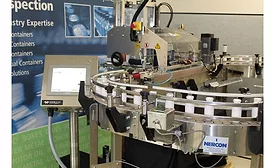
A recent project report published by the UK Food Standards Agency reflects the potential of advanced technologies and data analytics—such as artificial intelligence (AI) and imaging methods—for improving meat inspection processes.
Corrective actions in food safety require quality assurance tools to inform written procedures for identifying and correcting problems, reducing the likelihood of reoccurrence, and preventing affected food from entering commerce.
The data age is here to stay, and we know dairy companies that don't take advantage of it will be less successful than those that do in this highly competitive, and often volatile, market environment.
The air around your product should be maintained just like all equipment and product itself. The air intake system should be part of your sanitary design program, evaluating the design to ensure inspection and cleaning hatches are installed at various points for proper maintenance.