Food Safety
search
Ask Food Safety AI
cart
facebook twitter linkedin
  • Sign In
  • Create Account
  • Sign Out
  • My Account
Food Safety
  • NEWS
    • Latest News
    • White Papers
  • PRODUCTS
  • TOPICS
    • Contamination Control
    • Food Types
    • Management
    • Process Control
    • Regulatory
    • Sanitation
    • Supply Chain
    • Testing and Analysis
  • PODCAST
  • EXCLUSIVES
    • Food Safety Five Newsreel
    • eBooks
    • FSM Distinguished Service Award
    • Interactive Product Spotlights
    • Videos
  • BUYER'S GUIDE
  • MORE
    • ENEWSLETTER >
      • Archive Issues
      • Subscribe to eNews
    • Store
    • Sponsor Insights
    • ASK FSM AI
  • WEBINARS
  • FOOD SAFETY SUMMIT
  • EMAG
    • eMagazine
    • Archive Issues
    • Editorial Advisory Board
    • Contact
    • Advertise
  • SIGN UP!
News

FDA Encourages Manufacturers to Clearly Declare All Uses of Sesame in Ingredient List on Food Labels

November 12, 2020

The U.S. Food and Drug Administration (FDA) has issued a draft guidance encouraging food manufacturers to voluntarily declare sesame in the ingredient list on food labels.

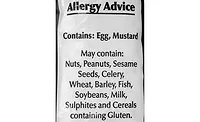
“Many Americans are allergic or sensitive to sesame, and they need the ability to quickly identify products that might contain sesame,” said Susan Mayne, Ph.D., director of the FDA’s Center for Food Safety and Applied Nutrition. “While most products containing sesame declare it as an ingredient, there are times when sesame is not required to be declared by name on the label, such as when it is used as a ‘flavor’ or ‘spice.’ Other ingredients, like ‘tahini,’ are made by grinding sesame into a paste, but not all consumers are aware that tahini is made from sesame. In these instances, sesame may not be declared by name in the ingredient list on a product’s label. We are encouraging food manufacturers to voluntarily list sesame as an ingredient whenever a product has been made with sesame.”

On Oct. 30, 2018, the FDA issued a notice inviting data and information on the occurrence and severity of sesame allergies in the U.S. and the prevalence of sesame-containing foods in the U.S. that are not required to disclose sesame as an ingredient. While the exact frequency of sesame allergies in the U.S. is unknown, it is estimated in some recent studies to be more than 0.1 percent, which is similar to allergies to soy and fish. The responses that the FDA received indicated that some allergic reactions, such as hives, vomiting, wheezing and anaphylaxis, may be occurring from products with undeclared sesame or products that contain ingredients like tahini.

Federal law requires that foods containing one of the eight “major food allergens”—milk, eggs, fish, shellfish, tree nuts, peanuts, wheat and soybeans—declare the food source of the allergen using its common or usual name on the label. The Food Allergen Labeling and Consumer Protection Act (FALCPA) imposes strict requirements that foods containing one of these eight major allergens be clearly marked for the presence of these allergens. The FDA works closely with manufacturers to quickly recall such products from the market if they are mislabeled. While sesame is not one of the eight major allergens, the FDA, through this draft guidance, is encouraging food manufacturers to voluntarily label their products if they contain sesame, even when not required to do so.

Additionally, the FDA continues to assess allergens of public health importance, including potential science-based options to empower consumers with information about these allergens.

The FDA, an agency within the U.S. Department of Health and Human Services, protects the public health by assuring the safety, effectiveness, and security of human and veterinary drugs, vaccines and other biological products for human use, and medical devices. The agency also is responsible for the safety and security of our nation’s food supply, cosmetics, dietary supplements, products that give off electronic radiation, and for regulating tobacco products.


Author(s): FDA

Looking for quick answers on food safety topics?
Try Ask FSM, our new smart AI search tool.
Ask FSM →


KEYWORDS: FDA

Share This Story

Recommended Content

JOIN TODAY
to unlock your recommendations.

Already have an account? Sign In

  • people holding baby chicks

    Serovar Differences Matter: Utility of Deep Serotyping in Broiler Production and Processing

    This article discusses the significance of Salmonella in...
    Meat/Poultry
    By: Nikki Shariat Ph.D.
  • woman washing hands

    Building a Culture of Hygiene in the Food Processing Plant

    Everyone entering a food processing facility needs to...
    Personal Hygiene/Handwashing
    By: Richard F. Stier, M.S.
  • graphical representation of earth over dirt

    Climate Change and Emerging Risks to Food Safety: Building Climate Resilience

    This article examines the multifaceted threats to food...
    Risk Assessment
    By: Maria Cristina Tirado Ph.D., D.V.M. and Shamini Albert Raj M.A.
Manage My Account
  • eMagazine Subscription
  • Subscribe to eNewsletter
  • Manage My Preferences
  • Website Registration
  • Subscription Customer Service

More Videos

Sponsored Content

Sponsored Content is a special paid section where industry companies provide high quality, objective, non-commercial content around topics of interest to the Food Safety Magazine audience. All Sponsored Content is supplied by the advertising company and any opinions expressed in this article are those of the author and not necessarily reflect the views of Food Safety Magazine or its parent company, BNP Media. Interested in participating in our Sponsored Content section? Contact your local rep!

close
  • Salmonella bacteria
    Sponsored byThermoFisher

    Food Microbiology Testing Methods: Salmonella species

  • a diagram explaining indicator organisms
    Sponsored byHygiena

    How Proactive Listeria Testing Helps Prevent Six- and Seven-Figure Recalls

  • woman grocery shopping
    Sponsored byCorbion

    Designing Safety Into Every Bite: Proactive Risk Mitigation for Refrigerated Foods

Popular Stories

newborn earing from bottle

Infants Nationwide Hospitalized With Botulism After Consuming ByHeart Formula

U.S. currency on scale

Shutdown Deal Restricts Funds for FSMA 204, Produce Safety Rule Enforcement

dates

Codex Commission Adopts New International Food Standards at 48th Session

Events

November 18, 2025

Dry Sanitation and Cleaning Techniques for Facilities and Equipment

Live: November 18, 2025 at 12:00 pm EDT: From this webinar, attendees will learn best practices employed by dry/low-moisture food processors for dry sanitation and equipment cleaning.

November 20, 2025

New U.S. Additive Bans: How to Prepare and Protect Your Brand

Live: November 20, 2025 at 11:00 am EST: From this webinar, attendees will learn the impact of ingredient restrictions on product development, sourcing, labeling, and market access.

December 4, 2025

Beyond Detection: How Integrated PCR Diagnostics Strengthen Food Safety in RTE Manufacturing

Live: December 4, 2025 at 2:00 pm EST: From this webinar, attendees will learn best practices for prevention of FM contamination at the corporate and plant levels.

View All

Products

Global Food Safety Microbial Interventions and Molecular Advancements

Global Food Safety Microbial Interventions and Molecular Advancements

See More Products

Related Articles

  • allergen labeling

    How to manage food labels to ensure allergens are clearly noted on any product

    See More
  • sesame crackers

    Thanks, Sesame: U.S. Food Recalls Due to Undeclared Allergens Skyrocketed in 2023, Causing Half of All Food Recalls

    See More
  • Grand Strand chicken salad sandwich recall

    Tip Top Poultry, FDA release growing list of retailers, labels in listeria recall

    See More

Related Products

See More Products
  • 9781498721776.jpg

    Handbook of Food Processing: Food Safety, Quality, and Manufacturing Processes

  • 1119237963.jpg

    Food Safety in China: Science, Technology, Management and Regulation

  • 9781138070912.jpg

    Trends in Food Safety and Protection

See More Products

Related Directories

  • Haynes Manufacturing Co.

    Haynes Lubricants is the world's leading manufacturer of premium food grade lubricants serving the food and related industries since 1936. Haynes offers a wide range of lubricants including petroleum, synthetic and vegetable-based products in stock and ready to ship. The lubricants are NSF registered H1 and/or 3H, Kosher Certified, Halal Certified and the ingredients are FDA accepted.
  • Wenda Ingredients

    Natural curing, yield and texture improvement, shelf-life extension, color retention, and pathogen control. Wenda Ingredients' portfolio of clean-label ingredients provides brands and processors with the most advanced solutions.
×

Never miss the latest news and trends driving the food safety industry

eNewsletter | Website | eMagazine

JOIN TODAY!
  • RESOURCES
    • Advertise
    • Contact Us
    • Directories
    • Store
    • Want More
  • SIGN UP TODAY
    • Create Account
    • eMagazine
    • eNewsletter
    • Customer Service
    • Manage Preferences
  • SERVICES
    • Marketing Services
    • Reprints
    • Market Research
    • List Rental
    • Survey/Respondent Access
  • STAY CONNECTED
    • LinkedIn
    • Facebook
    • Instagram
    • X (Twitter)
  • PRIVACY
    • PRIVACY POLICY
    • TERMS & CONDITIONS
    • DO NOT SELL MY PERSONAL INFORMATION
    • PRIVACY REQUEST
    • ACCESSIBILITY

Copyright ©2025. All Rights Reserved BNP Media.

Design, CMS, Hosting & Web Development :: ePublishing