Food Safety
search
Ask Food Safety AI
cart
facebook twitter linkedin
  • Sign In
  • Create Account
  • Sign Out
  • My Account
Food Safety
  • NEWS
    • Latest News
    • White Papers
  • PRODUCTS
  • TOPICS
    • Contamination Control
    • Food Types
    • Management
    • Process Control
    • Regulatory
    • Sanitation
    • Supply Chain
    • Testing and Analysis
  • PODCAST
  • EXCLUSIVES
    • Food Safety Five Newsreel
    • eBooks
    • FSM Distinguished Service Award
    • Interactive Product Spotlights
    • Videos
  • BUYER'S GUIDE
  • MORE
    • ENEWSLETTER >
      • Archive Issues
      • Subscribe to eNews
    • Store
    • Sponsor Insights
    • ASK FSM AI
  • WEBINARS
  • FOOD SAFETY SUMMIT
  • EMAG
    • eMagazine
    • Archive Issues
    • Editorial Advisory Board
    • Contact
    • Advertise
  • SIGN UP!
SanitationTesting & AnalysisEnvironmental MonitoringSSOPsLaboratory ManagementMicrobiological

Environmental Monitoring for Cleanliness and Pathogen Detection
February 1, 2017

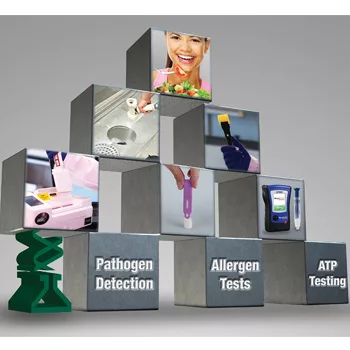
The Food Safety Modernization Act (FSMA) is changing, or has changed, the way many processors and producers approach food safety in their operations. The FSMA implementation deadlines are here, and food companies are actively managing plans designed to prevent specific threats to the safety or quality of their products, starting with identification of the specific risks that each operation faces. Food safety test kit and equipment manufacturers have responded to this need in the market and have developed quick, easy and accurate tests to help producers and processors understand the risks their operations face and how they can be mitigated using sanitation monitoring, pathogen detection and foodborne allergen testing.

“Over the years, we have worked with all types of food companies as they evaluate and improve their food safety programs to ensure compliance or meet requirements,” says Neogen’s Gerry Broski. “Given the gamut of food products, the unique manufacturing processes and the requirements of particular producers, evaluation involves determining what material could conceivably contaminate the products and then defining what steps can be taken to reduce the risk of that contamination ever occurring. Sanitation monitoring is an obvious place to start, as suboptimal sanitation efforts will impact related efforts to ensure the safety and quality of their food products.”

Adenosine triphosphate (ATP) systems have become standard tools in the food industry for sanitation/hygiene monitoring. They are a good solution to verify the effectiveness of critical sanitation protocols needed to help ensure the safety and quality of food products. Many facilities now rely on ATP system results to move forward with production runs and make critical decisions on personnel performance, equipment serviceability, part or machine replacement, equipment selection and modifications to their Sanitation Standard Operating Procedures.

Neogen’s AccuPoint® Advanced ATP Hygiene Monitoring System is an example of the latest generation of ATP systems. The system features precision-engineered samplers with liquid-stable chemistry to more consistently collect any residues left on a surface after sanitation. The enhanced compact instrument works with the samplers to detect the residue collected by the samplers. User-friendly data management software helps organize and analyze the test results.

“ATP results are a good measure of sanitation effectiveness, which is critical to the safety and quality of food products; however, that information is only one part of an integrated environmental monitoring program,” says Broski. “Pathogens, such as Listeria and Salmonella, can exist within an acceptable threshold for even the best ATP test systems. Because of this fact, it’s critical that food producers also monitor production environments for the presence of specific pathogens of concern to their operation as a critical step in reducing the risks posed by these pathogens.”  

The newest pathogen testing platforms use simplified DNA- amplification methods that enable almost anyone to produce accurate detection results for a variety of pathogens, including Salmonella, Listeria spp. and others. These test systems combine molecular-level accuracy with a low-cost instrument and methodologies that can be easily incorporated into a laboratory’s existing workflow. As compact systems, they fit easily on a benchtop and use simple procedures and advanced software to facilitate integration into a standard laboratory setting.

Neogen’s isothermal ANSR® is one example, offering assays for Salmonella, Escherichia coli O157:H7, Listeria spp., Listeria monocytogenes or Campylobacter. These assays each involve an enrichment step and a short test time, with total time to results between 10–32 hours. All of the company’s ANSR assays are validated through the AOAC Research Institute.

The latest “breakthrough” technology is genetic sequencing of various organisms (both pathogenic and spoilage), which not only identifies the organism but can also be used to track and trace the source of the organism. Genomic testing of food is being used by the U.S. Food and Drug Administration, the U.S. Centers for Disease Control and Prevention and public health labs to determine the sources of pathogen outbreaks. This genetic testing technology is gradually finding its way into the private sector as a tool to prevent contamination before food products are shipped from the factory.   

Neogen’s NeoSeek genomic testing service currently offers three specific services: STEC confirmation from an enrichment culture for the seven deadly STEC E. coli strains—O26, O45, O103, O111, O121, O145 and O157. The second NeoSeek service product provides molecular Salmonella serotype determination from a colony isolate in 72 hours. NeoSeek testing is also available for meat species identification to detect adulteration in raw or cooked samples at as little as 0.1% or 1% horse, pig, chicken, beef or sheep in 48 hours. Neogen intends to expand its genomic testing service offering as market demand grows. If you have a need for a specific test, contact Neogen.

For more information, please contact Neogen at 800-234-5333 or 517-372-9200 or visit its website, Neogen.com.


Author(s): Neogen

Looking for quick answers on food safety topics?
Try Ask FSM, our new smart AI search tool.
Ask FSM →


Share This Story

Recommended Content

JOIN TODAY
to unlock your recommendations.

Already have an account? Sign In

  • people holding baby chicks

    Serovar Differences Matter: Utility of Deep Serotyping in Broiler Production and Processing

    This article discusses the significance of Salmonella in...
    Methods
    By: Nikki Shariat Ph.D.
  • woman washing hands

    Building a Culture of Hygiene in the Food Processing Plant

    Everyone entering a food processing facility needs to...
    Training
    By: Richard F. Stier, M.S.
  • graphical representation of earth over dirt

    Climate Change and Emerging Risks to Food Safety: Building Climate Resilience

    This article examines the multifaceted threats to food...
    Management
    By: Maria Cristina Tirado Ph.D., D.V.M. and Shamini Albert Raj M.A.
Manage My Account
  • eMagazine Subscription
  • Subscribe to eNewsletter
  • Manage My Preferences
  • Website Registration
  • Subscription Customer Service

More Videos

Sponsored Content

Sponsored Content is a special paid section where industry companies provide high quality, objective, non-commercial content around topics of interest to the Food Safety Magazine audience. All Sponsored Content is supplied by the advertising company and any opinions expressed in this article are those of the author and not necessarily reflect the views of Food Safety Magazine or its parent company, BNP Media. Interested in participating in our Sponsored Content section? Contact your local rep!

close
  • Salmonella bacteria
    Sponsored byThermoFisher

    Food Microbiology Testing Methods: Salmonella species

  • a diagram explaining indicator organisms
    Sponsored byHygiena

    How Proactive Listeria Testing Helps Prevent Six- and Seven-Figure Recalls

  • woman grocery shopping
    Sponsored byCorbion

    Designing Safety Into Every Bite: Proactive Risk Mitigation for Refrigerated Foods

Popular Stories

NRTE breaded stuffed chicken

USDA Indefinitely Delays Enforcement of Salmonella as Adulterant in Raw Breaded, Stuffed Chicken

non-conforming product

How to Handle Non-Conforming Product

spoonfuls of food ingredients

FDA’s Developing Rule to Tighten GRAS Oversight Moves to White House

Events

December 11, 2025

How to Develop and Implement an Effective Food Defense Strategy

Live: December 11, 2025 at 2:00 pm EDT: From this webinar, attendees will learn common areas where companies encounter challenges in their food defense strategies and how to address them.

May 11, 2026

The Food Safety Summit

Stay informed on the latest food safety trends, innovations, emerging challenges, and expert analysis. Leave the Summit with actionable insights ready to drive measurable improvements in your organization. Do not miss this opportunity to learn from experts about contamination control, food safety culture, regulations, sanitation, supply chain traceability, and so much more.

View All

Products

Global Food Safety Microbial Interventions and Molecular Advancements

Global Food Safety Microbial Interventions and Molecular Advancements

See More Products

Related Articles

  • Environmental Monitoring for Cleanliness and Pathogen Detection

    See More
  • Advanced Technology for Rapid Pathogen Detection

    See More
  • Environmental monitoring programs (EMPs)

    Challenges for Evaluation of Your Environmental Monitoring Program

    See More

Related Products

See More Products
  • 1119160553.jpg

    Food Safety: Innovative Analytical Tools for Safety Assessment

  • 1118396308.jpg

    High Throughput Analysis for Food Safety

  • 1119053595.jpg

    Food Safety for the 21st Century: Managing HACCP and Food Safety throughout the Global Supply Chain, 2E

See More Products

Events

View AllSubmit An Event
  • May 1, 2025

    Avoiding Sanitation Pitfalls: Challenges and Opportunities for Your Environmental Monitoring Program

    On Demand: During this webinar, attendees will learn environmental sanitation pitfalls to avoid, and how to ensure biological safety inside your plant
View AllSubmit An Event

Related Directories

  • CDG Environmental

    CDG Solution 3000TM is a ready-to-use liquid chlorine dioxide product designed to control microorganisms over a wide spectrum of applications. Compared to traditional anti-microbials, CDG Solution 3000TM offers ease of application, safety in handling, and superior effectiveness. CDG Solution 3000 is a patented, EPA approved hard-surface disinfectant.
×

Never miss the latest news and trends driving the food safety industry

eNewsletter | Website | eMagazine

JOIN TODAY!
  • RESOURCES
    • Advertise
    • Contact Us
    • Directories
    • Store
    • Want More
  • SIGN UP TODAY
    • Create Account
    • eMagazine
    • eNewsletter
    • Customer Service
    • Manage Preferences
  • SERVICES
    • Marketing Services
    • Reprints
    • Market Research
    • List Rental
    • Survey/Respondent Access
  • STAY CONNECTED
    • LinkedIn
    • Facebook
    • Instagram
    • X (Twitter)
  • PRIVACY
    • PRIVACY POLICY
    • TERMS & CONDITIONS
    • DO NOT SELL MY PERSONAL INFORMATION
    • PRIVACY REQUEST
    • ACCESSIBILITY

Copyright ©2025. All Rights Reserved BNP Media.

Design, CMS, Hosting & Web Development :: ePublishing