Food Safety
search
Ask Food Safety AI
cart
facebook twitter linkedin instagram youtube
  • Sign In
  • Create Account
  • Sign Out
  • My Account
Food Safety
  • NEWS
    • Latest News
    • Sponsored Insights
    • Sponsored White Papers
  • PRODUCTS
  • TOPICS
    • Contamination Control
    • Food Types
    • Management
    • Process Control
    • Regulatory
    • Sanitation
    • Supply Chain
    • Testing and Analysis
  • PODCAST
  • EXCLUSIVES
    • Food Safety Five Newsreel
    • eBooks
    • FSM Distinguished Service Award
    • Interactive Product Spotlights
    • Videos
  • BUYER'S GUIDE
  • MORE
    • NEWSLETTERS >
      • Archive Issues
      • Subscribe to eNews
    • Store
    • ASK FSM AI
  • WEBINARS
  • FOOD SAFETY SUMMIT
  • EMAG
    • eMagazine
    • Archive Issues
    • Editorial Advisory Board
    • Contact
    • Advertise
  • SIGN UP!
Contamination ControlProcess ControlMicrobiological ControlCross-ContaminationIntervention Controls

Mycotoxins: A Food Safety Crisis

February 3, 2015

While about a billion people in this world are starving, unimaginable amounts of food are unsuitable for consumption because of molds that produce toxins, such as aflatoxin. The Food and Agriculture Organization estimated that about a quarter of the world’s agricultural produce is contaminated with mycotoxins,[1] and, in the last 10 years, mycotoxins have accounted for 30–60% of food and feed rejections at European Union borders.

There are ways to reduce the growth of molds in staple foods, particularly during storage, but also in the field, such as using curved mirrors to direct sunlight to too-moist areas. In India and other countries where the food is grown on small patches of land, solar energy is used on a small scale to reduce losses. Although not perfect, largely because of extraordinary rainfall or monsoons during harvest, these approaches help reduce mold growth, and some companies are developing tailor-made installations for this purpose. Food that is not needed by the grower can be sold to companies that use solar technology for drying. In parallel, however, this problem has also stimulated use (not genetically modified) of varieties that are more resistant to mold and, thus, less risk of mycotoxin contamination.[2]

If products are stored in silos that are not insulated, the temperature difference between the sides in the sun and in the shadow will cause moisture to migrate from the warmer side (higher partial water vapor pressure) to the cooler side where it will condense and encourage growth of (toxigenic) molds. Thermal insulation will reduce or eliminate this problem, but this approach needs a good business plan: In the longer term, the initial investment term will pay back because of reduced losses. In practice, however, existing knowledge that would reduce losses is not applied, primarily because people do not have access to this information.

Many countries have regulations specifying the maximum allowed concentration of mycotoxins, but there are no regulations requiring measures to reduce contamination. If not legally required, producers are reluctant to invest in approaches that would reduce mold growth. Considerable effort, however, is spent on quantifying mycotoxins in food and on developing methods that are able to detect increasingly lower concentrations. Perhaps now is the time to divert some of these efforts towards methods that reduce the problem, specifically preventing mold growth and affordable methods to eliminate mycotoxins from contaminated food. These also require education and training of those who need to apply the knowledge.

The Global Harmonization Initiative (GHI) Working Group on Mycotoxins is developing proposals aimed at reducing mycotoxins in staple food, and helping make farmers and industries more aware of the potential. Ultimately, the goal is to make measures reducing mold growth compulsory worldwide.

Initially, the focus will be on three issues:

• Grains, lead by Prof. Hamid Ezzatpanah

• Nuts and dried foods, lead by Prof. Karina Grigoryan

• Spices, lead by Prof. Naresh Magan.  

Other working parties will investigate dairy products, fruits and vegetables, and other foods in the future.

Anyone interested in joining the Working Group on Mycotoxins and/or one of the working groups is invited to contact Prof. Mark Shamtsyan (mark.shamtsyan@yandex.ru) or Karina Grigoryan (foodlab@inbox.ru).

Huub Lelieveld is president of the Global Harmonization Initiative, a member of the Executive Committee and past president of the European Federation of Food Science and Technology. He is a member of the Editorial Advisory Board of Food Safety Magazine.

References
1. Wu, F. 2007. Measuring the economic impacts of fusarium toxins in animal feeds. Anim Feed Sci Technol 137(3-4):363–374.
2. V. Prakash, personal communication.


Author(s): Huub Lelieveld

Looking for quick answers on food safety topics?
Try Ask FSM, our new smart AI search tool.
Ask FSM →


Share This Story

Recommended Content

JOIN TODAY
to unlock your recommendations.

Already have an account? Sign In

  • people holding baby chicks

    Serovar Differences Matter: Utility of Deep Serotyping in Broiler Production and Processing

    This article discusses the significance of Salmonella in...
    Testing & Analysis
    By: Nikki Shariat Ph.D.
  • woman washing hands

    Building a Culture of Hygiene in the Food Processing Plant

    Everyone entering a food processing facility needs to...
    Training
    By: Richard F. Stier, M.S.
  • graphical representation of earth over dirt

    Climate Change and Emerging Risks to Food Safety: Building Climate Resilience

    This article examines the multifaceted threats to food...
    Best Practices
    By: Maria Cristina Tirado Ph.D., D.V.M. and Shamini Albert Raj M.A.
Manage My Account
  • eMagazine Subscription
  • Subscribe to Newsletters
  • Manage My Preferences
  • Website Registration
  • Subscription Customer Service

More Videos

Sponsored Content

Sponsored Content is a special paid section where industry companies provide high quality, objective, non-commercial content around topics of interest to the Food Safety Magazine audience. All Sponsored Content is supplied by the advertising company and any opinions expressed in this article are those of the author and not necessarily reflect the views of Food Safety Magazine or its parent company, BNP Media. Interested in participating in our Sponsored Content section? Contact your local rep!

close
  • Man In Warehouse
    Sponsored byRentokil

    Mitigating Hidden Rodent Risks in Food Facilities

  • an industrial manufacturing or processing facility
    Sponsored bybioMérieux

    Get Ahead of Spoilage in Food Manufacturing with Metagenomics for Preventive Monitoring

  • an automated industrial production line used in a modern food factory
    Sponsored byIFC

    A Formula for Food Processing Pest Management

Popular Stories

Cyclospora cayetanensis oocysts

FDA Begins Inspection at Taylor Farms Mexico as Official Cyclospora Outbreak Case Count Nears 10,000

pouring yellow canned beverage

FDA Proposes Mandatory GRAS Notifications for Ingredients Introduced to U.S. Food Supply

wheat grain and bread

Bill Introduced to Amend FD&C Act to Require Gluten Labeling for Barley, Rye, Oats

building a skilled workforce ebook

Events

August 25, 2026

Don’t Wing It: Bird Control for Food Processing Facilities

Live: August 25, 2026 at 2:00 pm EDT: This webinar will cover why managing bird activity should be a priority for your business, the complexities involved in effective bird control, and proactive strategies to help protect your facility.

September 1, 2026

Seafood Under the Microscope: FDA HACCP, Pathogen Risk, and Modern Testing Strategies

Live: September 1, 2026 at 2:00 pm EDT: Attend this webinar to learn how environmental monitoring, rapid pathogen detection, and risk-based testing strengthen seafood safety programs.

September 2, 2026

From Crisis to Control: A Listeria Elimination Journey in Food Manufacturing

Live: September 2, 2026 at 2:00 pm EDT: This webinar shares a real-world case study of a food processing facility that solved a persistent Listeria challenge after standard protocols fell short.

View All

Products

Global Food Safety Microbial Interventions and Molecular Advancements

Global Food Safety Microbial Interventions and Molecular Advancements

See More Products

Related Articles

  • The Future of Food: How to Correct and Prevent a Food Safety Crisis

    See More
  • Food Safety Summit

    Food Safety Summit: How to Prepare for, Manage and Survive a High-Profile Food Safety Crisis

    See More
  • wheat up close

    Mycotoxins in Wheat: A Growing Food Safety Threat Across Europe

    See More

Related Products

See More Products
  • 1119053595.jpg

    Food Safety for the 21st Century: Managing HACCP and Food Safety throughout the Global Supply Chain, 2E

  • 9781138198463.jpg

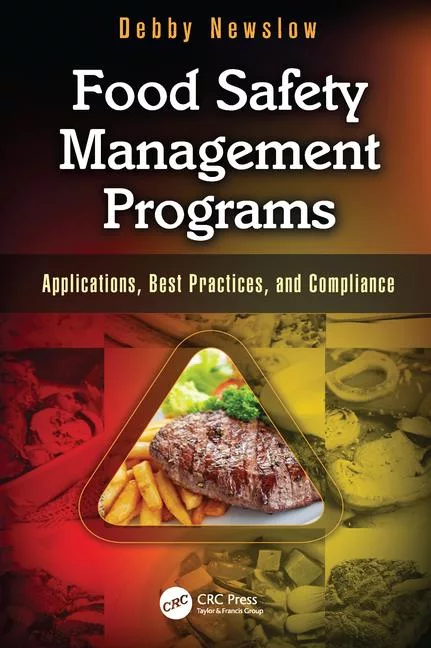
    Food Safety Management Programs: Applications, Best Practices, and Compliance

  • food safety.jpg

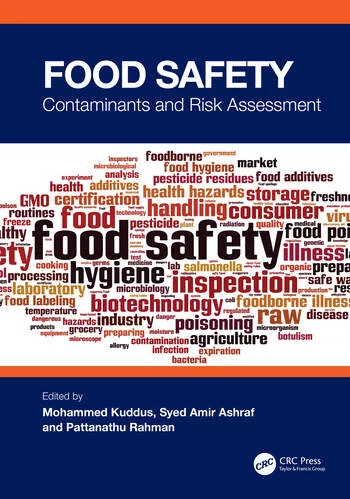
    Food Safety Contaminants and Risk Assessment

See More Products

Related Directories

  • Schneider Food Safety Services

    We are a boutique regulatory (FDA/USDA) consulting firm, and we support companies with FSMA 204 traceability compliance and other regulated processes.
  • Active Food Safety

    Active Food Safety consists of an experienced team of food safety professionals who are thought-leaders in the food industry, and have each led enterprise level food safety management programs in several of the most well-known and respected brands in the food industry. We continuously help our clients ensure food safety based on proven business best practices designed specifically to the brand - to maximize risk reduction to prevent foodborne disease illnesses and outbreaks, to meet all government regulatory requirements, and to improve sales and brand reputation.
  • Food Safety News

    Food Safety News advances public health by delivering timely, accurate, and comprehensive coverage of foodborne illness outbreaks, recalls, and regulatory developments that impact the safety of our global food supply.
×

Never miss the latest news and trends driving the food safety industry

Newsletters | Website | eMagazine

JOIN TODAY!
  • RESOURCES
    • Advertise
    • Contact Us
    • Directories
    • Store
    • Want More
  • SIGN UP TODAY
    • Create Account
    • eMagazine
    • Newsletters
    • Customer Service
    • Manage Preferences
  • SERVICES
    • Marketing Services
    • Reprints
    • Market Research
    • List Rental
    • Survey/Respondent Access
  • STAY CONNECTED
    • LinkedIn
    • Facebook
    • Instagram
    • X (Twitter)
  • PRIVACY
    • PRIVACY POLICY
    • TERMS & CONDITIONS
    • DO NOT SELL MY PERSONAL INFORMATION
    • PRIVACY REQUEST
    • ACCESSIBILITY

Copyright ©2026. All Rights Reserved BNP Media, Inc. and BNP Media II, LLC.

Design, CMS, Hosting & Web Development :: ePublishing