Food Safety
search
Ask Food Safety AI
cart
facebook twitter linkedin instagram youtube
  • Sign In
  • Create Account
  • Sign Out
  • My Account
Food Safety
  • NEWS
    • Latest News
    • White Papers
  • PRODUCTS
  • TOPICS
    • Contamination Control
    • Food Types
    • Management
    • Process Control
    • Regulatory
    • Sanitation
    • Supply Chain
    • Testing and Analysis
  • PODCAST
  • EXCLUSIVES
    • Food Safety Five Newsreel
    • eBooks
    • FSM Distinguished Service Award
    • Interactive Product Spotlights
    • Videos
  • BUYER'S GUIDE
  • MORE
    • NEWSLETTERS >
      • Archive Issues
      • Subscribe to eNews
    • Store
    • Sponsor Insights
    • ASK FSM AI
  • WEBINARS
  • FOOD SAFETY SUMMIT
  • EMAG
    • eMagazine
    • Archive Issues
    • Editorial Advisory Board
    • Contact
    • Advertise
  • SIGN UP!
News

Scientists Develop Antibiotic ‘Smart Bomb’ That Targets Specific Bacteria Strains

January 31, 2014

Source: North Carolina State University

Researchers from North Carolina State University have developed a de facto antibiotic “smart bomb” that can identify specific strains of bacteria and sever their DNA, eliminating the infection. The technique offers a potential approach to treat infections by multi-drug resistant bacteria.

“Conventional antibiotic treatments kill both ‘good’ and ‘bad’ bacteria, leading to unintended consequences, such as opportunistic infections,” said Chase Beisel, an assistant professor of chemical and biomolecular engineering at NC State and senior author of a paper describing the work. “What we’ve shown in this new work is that it is possible to selectively remove specific strains of bacteria without affecting populations of good bacteria.”

The new approach works by taking advantage of a part of an immune system present in many bacteria called the CRISPR-Cas system. The CRISPR-Cas system protects bacteria from invaders such as viruses by creating small strands of RNA called CRISPR RNAs, which match DNA sequences specific to a given invader. When those CRISPR RNAs find a match, they unleash Cas proteins that cut the DNA.

The NC State researchers have demonstrated that designing CRISPR RNAs to target DNA sequences in the bacteria themselves causes bacterial suicide, as a bacterium’s CRISPR-Cas system attacks its own DNA.

“In lab testing, we found that this approach removes the targeted bacteria,” Beisel said. “We’re still trying to understand precisely how severing the DNA leads to elimination of the bacteria. However, we’re encouraged by the ease in specifically targeting different bacteria and the potency of elimination.”

The researchers tested the approach in controlled cultures with different combinations of bacteria present, and were able to eliminate only the targeted strain. “For example, we were able to eliminate Salmonella in a culture without affecting good bacteria normally found in the digestive tract,” Beisel said.

Looking for quick answers on food safety topics?
Try Ask FSM, our new smart AI search tool.
Ask FSM →

The researchers were also able to demonstrate the precision of the technique by eliminating one strain of a species, but not another strain of the same species which shares 99 percent of the same DNA.

Another benefit of the approach, Beisel said, is that “by targeting specific DNA strands through the CRISPR-Cas system, we’re able to bypass the mechanisms underlying the many examples of antibiotic resistance.”

The researchers are currently working to develop effective methods for delivering the CRISPR RNAs in clinical settings.

“This sets the stage for next-generation antibiotics using programmable CRISPR-Cas systems,” said Rodolphe Barrangou, an associate professor of food, bioprocessing and nutrition sciences at NC State and co-author of the manuscript.

The paper, “Programmable removal of bacterial strains by use of genome-targeting CRISPR-Cas systems,” is published online in the journal mBio. The paper is open access. Lead author of the paper is Ahmed Abdelshafy Gomaa, a Ph.D. student at NC State. Co-authors include Heidi Klumpe, a former undergraduate at NC State, and Michelle Luo and Kurt Selle, Ph.D. students at NC State.


Share This Story

Recommended Content

JOIN TODAY
to unlock your recommendations.

Already have an account? Sign In

  • people holding baby chicks

    Serovar Differences Matter: Utility of Deep Serotyping in Broiler Production and Processing

    This article discusses the significance of Salmonella in...
    Meat/Poultry
    By: Nikki Shariat Ph.D.
  • woman washing hands

    Building a Culture of Hygiene in the Food Processing Plant

    Everyone entering a food processing facility needs to...
    Personal Hygiene/Handwashing
    By: Richard F. Stier, M.S.
  • graphical representation of earth over dirt

    Climate Change and Emerging Risks to Food Safety: Building Climate Resilience

    This article examines the multifaceted threats to food...
    Best Practices
    By: Maria Cristina Tirado Ph.D., D.V.M. and Shamini Albert Raj M.A.
Manage My Account
  • eMagazine Subscription
  • Subscribe to Newsletters
  • Manage My Preferences
  • Website Registration
  • Subscription Customer Service

More Videos

Sponsored Content

Sponsored Content is a special paid section where industry companies provide high quality, objective, non-commercial content around topics of interest to the Food Safety Magazine audience. All Sponsored Content is supplied by the advertising company and any opinions expressed in this article are those of the author and not necessarily reflect the views of Food Safety Magazine or its parent company, BNP Media. Interested in participating in our Sponsored Content section? Contact your local rep!

close
  • The image displays a person selecting packaged fresh chicken meat from a supermarket display cooler.
    Sponsored byCorbion

    Developing a Future-Proof Food Safety Strategy for Meat and Poultry Products

  • The image shows a variety of fresh produce packaged in plastic trays and wrap.
    Sponsored byWaters Corporation

    PFAS-Free Food Packaging by August 2026

  • This image displays a multi-stage water filtration system designed to remove contaminants from drinking water.
    Sponsored byWaterdrop Filter

    The 4.0 ppt Era: Future-Proofing Your Food Supply Chain Against 'Forever Chemicals'

Popular Stories

half shredded block of cheddar cheese and pile of cheese shreds on wooden cutting board

Patient Count in Raw Farm E. coli Outbreak Grows, Majority are Young Children

smiling employee in bottling factory looking at camera with arms crossed in front of production line

GFSI Unveils Updated Food Safety Culture Framework

spinach strawberries and blueberries, foods on the 2026 Dirty Dozen

EWG Publishes 2026 ‘Dirty Dozen’ List of ‘Pesticide-Contaminated’ Produce—but is it Scientifically Sound?

foreign material webinar


Events

April 8, 2026

Foreign Material Contamination: Why In-Line Reinspection Isn't Enough

Live: April 8, 2026, at 11:00 am EDT: From this webinar, attendees will learn why reinspecting with in-line equipment is not sufficient when it comes to potential foreign material contamination.

April 16, 2026

Recordkeeping and Document Management for Food Safety Compliance

Live: April 16, 2026, at 2:00 pm EDT: From this webinar, attendees will learn why recordkeeping and document control are essential to food safety and business management.

May 11, 2026

The Food Safety Summit

Stay informed on the latest food safety trends, innovations, emerging challenges, and expert analysis. Leave the Summit with actionable insights ready to drive measurable improvements in your organization. Do not miss this opportunity to learn from experts about contamination control, food safety culture, regulations, sanitation, supply chain traceability, and so much more.

View All

Products

Global Food Safety Microbial Interventions and Molecular Advancements

Global Food Safety Microbial Interventions and Molecular Advancements

See More Products

Related Articles

  • researcher holding test tube in water

    Scientists Develop New Species-Specific Method for Detecting Fecal Contamination in Water

    See More
  • Kao Corporation antimicrobial hand coating infographic

    Scientists Develop Formulation That Boosts Antimicrobial Properties of Natural Hand Barrier

    See More
  • hand holding small cup of water

    Scientists Develop Test That Detects PFAS in Food Packaging, Water, Soil in Under Three Minutes

    See More

Related Products

See More Products
  • 9781138198463.jpg

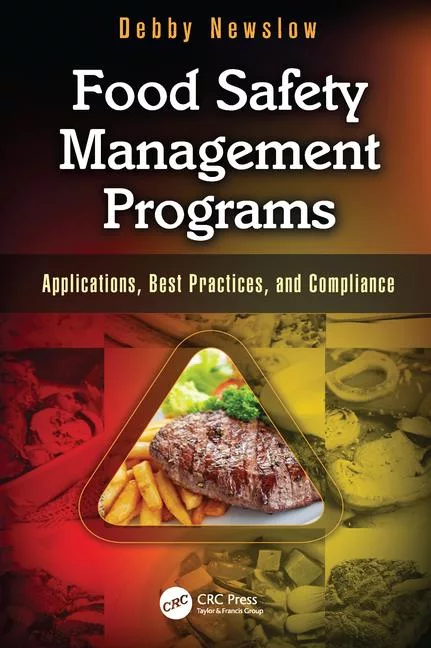
    Food Safety Management Programs: Applications, Best Practices, and Compliance

  • 1119258073.jpg

    FSMA and Food Safety Systems: Understanding and Implementing the Rules

  • shelf life.jpg

    Shelf Life and Food Safety

See More Products

Events

View AllSubmit An Event
  • August 12, 2025

    Systematic Approach to Hazard Analysis: Considering Product- and Process-Specific Risks

    On Demand: From this webinar, attendees will learn where and why hazard analysis can fail, especially for high-risk products like leafy greens and meat/poultry.
View AllSubmit An Event

Related Directories

  • On Target Packaging

    On Target Packaging is a production/maintenance servicer for combination and check weighers. We do not sell or process food, but provide service/repairs, and equipment for the food industry
×

Never miss the latest news and trends driving the food safety industry

Newsletters | Website | eMagazine

JOIN TODAY!
  • RESOURCES
    • Advertise
    • Contact Us
    • Directories
    • Store
    • Want More
  • SIGN UP TODAY
    • Create Account
    • eMagazine
    • Newsletters
    • Customer Service
    • Manage Preferences
  • SERVICES
    • Marketing Services
    • Reprints
    • Market Research
    • List Rental
    • Survey/Respondent Access
  • STAY CONNECTED
    • LinkedIn
    • Facebook
    • Instagram
    • X (Twitter)
  • PRIVACY
    • PRIVACY POLICY
    • TERMS & CONDITIONS
    • DO NOT SELL MY PERSONAL INFORMATION
    • PRIVACY REQUEST
    • ACCESSIBILITY

Copyright ©2026. All Rights Reserved BNP Media, Inc. and BNP Media II, LLC.

Design, CMS, Hosting & Web Development :: ePublishing