Cold Plasma Shows Promise for Sesame Seed Decontamination Without Sacrificing Quality
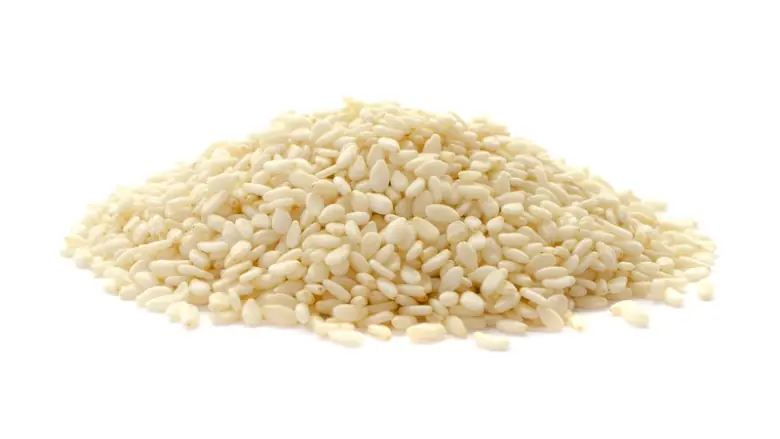
A new study has demonstrated the potential of atmospheric cold plasma (ACP) treatment to reduce Escherichia coli contamination on sesame seeds without significantly affecting key physical quality attributes.
Published in Food Bioscience, the study was conducted by researchers from Ajayi Crowther University and Stellenbosch University in South Africa, in collaboration with the Agricultural Research Council of South Africa.
The researchers investigated ACP as a nonthermal decontamination technology for sesame seeds, which have been implicated in foodborne illness outbreaks. Conventional thermal treatments can compromise seed quality, while chemical decontamination methods may present concerns about residues.
Using a plasma jet system, the researchers treated sesame seeds at nozzle-to-sample distances of 6, 12, 18, and 24 millimeters (mm) for exposure times of 1, 2, and 4 minutes. They evaluated the effects on naturally occurring bacterial and fungal populations, moisture content, firmness, and color. Additional experiments used sesame seeds inoculated with nonpathogenic E. coli as a surrogate for Salmonella.
ACP treatment significantly reduced microbial contamination, with efficacy dependent on exposure time and distance. Statistical optimization identified 12–18 mm and 2–4 minutes as favorable treatment conditions.
In the inoculation experiments, ACP treatment for 2 minutes at 12 and 18 mm achieved E. coli reductions of 0.57 and 0.51 log, respectively. Extending treatment to 4 minutes achieved a 0.67-log reduction at both distances.
However, the researchers noted that, while the reductions were promising, they did not correspond to large log reductions and were less than the 5-log reduction expected for validated pathogen control in commercial food processing. They called for future studies to investigate the impact of other cold plasma delivery systems, such as the Dielectric Barrier Discharge System, which allows a wider surface area to be exposed to ACP.
Looking for quick answers on food safety topics?
Try Ask FSM, our new smart AI search tool.
Ask FSM →
Regarding quality attributes, ACP treatment did not significantly affect seed firmness. However, some treatments reduced seed lightness, and exposure at 24 mm significantly decreased moisture content.
The researchers concluded that ACP could offer a chemical-free approach to reducing microbial contamination while largely preserving sesame seed quality. Still, further research is needed to evaluate treatment efficacy against Salmonella, effects on nutritional composition and oil quality, and the scalability of ACP systems for commercial processing.