Food Safety
search
Ask Food Safety AI
cart
facebook twitter linkedin instagram youtube
  • Sign In
  • Join Today
  • Sign Out
  • My Account
Food Safety
  • NEWS
    • Latest News
    • Food Safety Five Newsreel
  • PRODUCTS
  • TOPICS
    • Contamination Control
    • Food Types
    • Management
    • Process Control
    • Regulatory
    • Sanitation
    • Supply Chain
    • Testing and Analysis
  • PODCAST
  • EXCLUSIVES
    • eBooks
    • Sponsored Insights
    • Sponsored White Papers
    • FSM Distinguished Service Award
    • Interactive Product Spotlights
    • Videos
  • MORE
    • BUYER'S GUIDE
    • NEWSLETTERS >
      • Archive Issues
    • Store
    • ASK FSM AI
  • WEBINARS
  • FOOD SAFETY SUMMIT
  • FSM FEATURES
    • FSM Features Collection
    • eMag Archives
    • Op-Eds
    • Editorial Advisory Board
    • Contact
    • Advertise
  • JOIN
NewsContamination ControlRegulatoryChemical Control

EPA Launches PFAS TECH Strategy to Develop Remediation Technologies, Following Deregulatory Actions
By Bailee Henderson
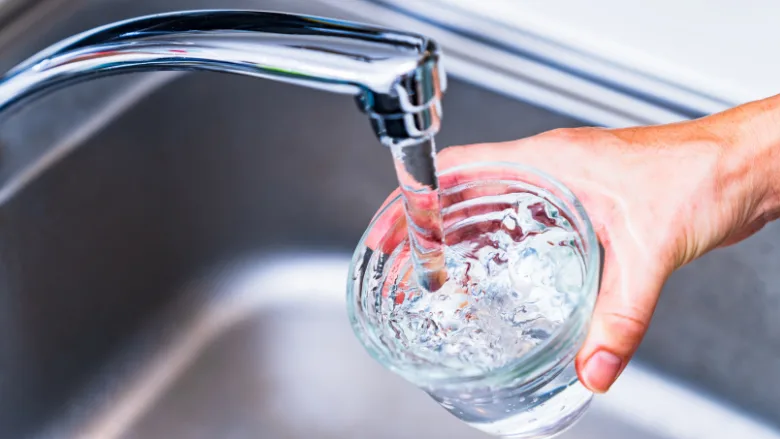
filling cup of water from the sink
Image credit: show999/iStock/Getty Images Plus via Getty Images
October 29, 2026

The U.S. Environmental Protection Agency (EPA) has announced its first agency-wide PFAS Technology Evaluation, Coordination, and Harmonization (PFAS TECH) Strategy, outlining actions to accelerate research, development, and deployment of technologies for the removal and destruction of per- and polyfluoroalkyl substances (PFAS), also known as “forever chemicals” due to their persistence in the environment and humans.

PFAS have come under increasing scrutiny in recent years as evidence of their health harms continues to mount, with exposure to certain compounds linked to higher cholesterol, increased risk of some cancers, developmental complications, liver damage, and immune system effects.

Although EPA Administrator Lee Zeldin said the new PFAS TECH Strategy exemplifies how “the Trump EPA is laser-focused on Making America Healthy Again [MAHA],” the announcement comes as the agency continues to receive criticism for the Administration’s history of decisions to back off PFAS regulation.

New PFAS TECH Strategy Focuses on Destruction and Removal Technologies

Announced October 26, 2026, the strategy outlines initiatives EPA intends to advance over the next two years, emphasizing collaboration with federal agencies, states, local governments, universities, water utilities, and the private sector.

The strategy focuses on three priorities:

  • Advancing research and development: Supporting emerging PFAS treatment and destruction technologies through public-private partnerships, research funding, and laboratory and field evaluations. Technologies under investigation include foam fractionation, supercritical water oxidation, hydrothermal alkaline treatment, and novel sorbents. EPA also plans to make research funding available through its Science to Achieve Results (STAR) and Small Business Innovation Research (SBIR) grant programs.
  • Demonstrating technologies through pilot projects: Conducting pilot- and full-scale evaluations at Superfund sites, military facilities, wastewater treatment plants, and drinking water systems to assess treatment effectiveness, feasibility, and scalability under real-world conditions. EPA is already partnering with approximately 40 drinking water utilities nationwide through its Removing Emerging Contaminants through Engineering and Science Solutions (RECESS) program to evaluate treatment technologies.
  • Translating research into practical applications: Developing technical guidance, providing funding and assistance to water systems, and launching the PFAS Break the Bond Navigator, a planned public-facing, searchable tool to help states and local decision-makers identify appropriate PFAS removal and destruction technologies.

The strategy also highlights ongoing EPA research, including evaluations of supercritical water oxidation that have achieved greater than 99.99 percent PFAS destruction efficiency in aqueous film-forming foam using an industrial-scale system. Additional projects are investigating PFAS remediation in contaminated soil, groundwater, biosolids, and drinking water.

To support implementation, EPA plans to leverage existing federal water infrastructure funding programs and provide technical assistance to drinking water and wastewater systems, particularly small and disadvantaged communities.

Trump EPA’s PFAS Track Record

Most notably, EPA officially rolled back Biden-era maximum limits for certain PFAS chemicals in drinking water in May. The now-weakened rule would have set the first-ever national, legally enforceable drinking water standard to reduce Americans’ exposure to six PFAS known to be harmful to human health. Trump’s EPA decided to retain only the maximum limits for PFOS and PFOA, while providing a two-year extension pathway for drinking water systems. Alongside the rollback, however, Trump’s EPA said it was working on a proposed rule for limitations and standards for PFAS discharge.

Looking for quick answers on food safety topics?
Try Ask FSM, our new smart AI search tool.
Ask FSM →

Most recently, in September, an internal memo withdrew guidance that encouraged states and wastewater utilities to use existing Clean Water Act authorities to prevent PFAS from entering waterways and drinking water systems. The Trump Administration’s EPA has also abandoned a risk assessment of PFAS contamination in sludge used as fertilizer on farmland.

On the other hand, the agency announced that it is adding PFAS to the Sixth Contaminant Candidate List (CCL 6) for drinking water. Contaminants listed on the CCL may require future regulation under the Safe Drinking Water Act, but the CCL itself does not impose any requirements on public water systems. EPA uses the CCL to identify priority contaminants for regulatory decision-making and information collection.


KEYWORDS: EPA PFAS water water safety

Share This Story

1786925983615

Bailee Henderson is the Director of Content Strategy for Food Safety Magazine. In the day-to-day, she covers industry-relevant current events, regulatory affairs, and scientific developments. She also produces the Food Safety Five Newsreel, edits the twice-weekly Food Safety Digest newsletter, and manages the brand's social media channels. Notably, Bailee's coverage for Food Safety Magazine has been featured in national televised news segments including CBS Sunday Morning and MSNBC's Rachel Maddow Show. She can be reached at hendersonb@bnpmedia.com.

Recommended Content

JOIN TODAY
to unlock your recommendations.

Already have an account? Sign In

  • people holding baby chicks

    Serovar Differences Matter: Utility of Deep Serotyping in Broiler Production and Processing

    This article discusses the significance of Salmonella in...
    Contamination Control
    By: Nikki Shariat Ph.D.
  • woman washing hands

    Building a Culture of Hygiene in the Food Processing Plant

    Everyone entering a food processing facility needs to...
    Facilities
    By: Richard F. Stier, M.S.
  • graphical representation of earth over dirt

    Climate Change and Emerging Risks to Food Safety: Building Climate Resilience

    This article examines the multifaceted threats to food...
    Risk Assessment
    By: Maria Cristina Tirado Ph.D., D.V.M. and Shamini Albert Raj M.A.
Manage My Account
  • Join Food Safety Magazine
  • Manage My Preferences
  • Customer Service

More Videos

Sponsored Content

Sponsored Content is a special paid section where industry companies provide high quality, objective, non-commercial content around topics of interest to the Food Safety Magazine audience. All Sponsored Content is supplied by the advertising company and any opinions expressed in this article are those of the author and not necessarily reflect the views of Food Safety Magazine or its parent company, BNP Media. Interested in participating in our Sponsored Content section? Contact your local rep!

close
  • pre-packaged salads, noodles, and prepared meals stocked on multi-tier grocery store refrigerator shelves
    Sponsored byCorbion

    How Many Days of Shelf Life Are You Leaving on the Table?

  • Top view portrait of two factory workers standing by conveyor belt during quality inspection at food production, copy space
    Sponsored byFlexXray

    Foreign Material By the Numbers: What the 2026 Benchmark Report Reveals

  • a conveyorized industrial metal detector system that appears to resemble a Loma Systems IQ4 Metal Detector setup with an integrated conveyor belt and control panel for food or package inspection.
    Sponsored byMettler Toledo

    Beyond Detection: How to Avoid Physical Contamination in Food Through a Smarter Inspection Strategy

Popular Stories

AI and Advanced Analytics eBook

eBook | AI and Advanced Analytics for Smarter Food Safety Management

man in suit inspector looking at documents in restaurant kitchen

FDA Issues 2026 Voluntary National Retail Food Regulatory Program Standards

Quality control in a food processing facility

Bridging the Gap Between Policy, Science, and Practice in Food Safety

AI and Advanced Analytics ebook

Events

December 2, 2026

Beyond Surface Clean: Tackling Biofilms and Persistent Pathogens

Live: December 2, 2026 at 11:00 am EST: Attend this webinar to understand why chlorine dioxide is not chlorine, and what “ultra-pure” means for residues, byproducts, and effectiveness.

December 3, 2026

How to Use AI to Improve Workforce Training

Live: December 3, 2026 at 11:00 am EST: This webinar will cover best practices for reviewing, refining, and governing AI-generated training content for accuracy and consistency.

December 8, 2026

Best Practices for Responding to a Foodborne Outbreak Investigation

Live: December 8, 2026 at 2:00 pm EST: Attendees will gain practical insight into the roles and expectations of industry and government during foodborne illness investigations, and how effective collaboration can support timely investigations and the best possible public health outcome.

View All

Products

Global Food Safety Microbial Interventions and Molecular Advancements

Global Food Safety Microbial Interventions and Molecular Advancements

See More Products

Related Articles

  • Neogen, Hinalea logos

    Neogen, Hinalea Partner to Develop Hyperspectral Imaging Tech for Food Safety

    See More
  • shopper reading label of muffin at grocery store

    Sweden to Develop a National Strategy for Food Allergies

    See More
  • aus flag up close

    Western AUS Department of Health Launches Strategy to Reduce Foodborne Campylobacteriosis

    See More

Related Products

See More Products
  • food safety.jpg

    Food Safety Contaminants and Risk Assessment

  • 9781498721776.jpg

    Handbook of Food Processing: Food Safety, Quality, and Manufacturing Processes

  • shelf life.jpg

    Shelf Life and Food Safety

See More Products

Events

View AllSubmit An Event
  • December 11, 2025

    How to Develop and Implement an Effective Food Defense Strategy

    On Demand: From this webinar, attendees will learn common areas where companies encounter challenges in their food defense strategies and how to address them.
  • May 12, 2026

    Leveraging AI for Food Safety: From Strategy to Impact

    On Demand: This dynamic workshop brings together leaders from industry, academia, and government to demonstrate how AI can be practically applied in food safety—from data strategy to daily execution.
View AllSubmit An Event

Related Directories

  • Enviro Tech

    Enviro Tech (ET) – an Arxada company – is a leading manufacturer and supplier of innovative bromine technologies and peroxyacetic acid formulations, delivers wide-ranging solutions that optimize operational efficiencies for keeping food and water safe and environments clean. ET partners with distributors to provide a complete line of EPA and FDA approved products for a variety of industries including industrial water treatment, meat and poultry processing, food & beverage, agriculture, animal health, wastewater treatment and more. ET holds 41 EPA registrations, 15 FDA Food Contact Notifications, and 14 U.S. patents.
  • Institute for Food Safety and Health (IFSH) - Illinois Tech

    IFSH is a one-of-a-kind applied food science research consortium comprised of the Illinois Tech, the U.S. FDA, and the food industry. In collaboration with the FDA, we provide stakeholders with the opportunity to develop and exchange knowledge, experience, and expertise in the areas of food safety, food defense, and nutrition.
×

Never miss the latest news and trends shaping the food safety industry

Newsletters | Website | FSM Features Collection

JOIN TODAY!
  • RESOURCES
    • Advertise
    • Contact Us
    • Directories
    • Store
  • JOIN TODAY
    • Create Account
    • FSM Features Collection
    • Newsletters
    • Customer Service
    • Manage Preferences
  • SERVICES
    • Marketing Services
    • Reprints
    • Market Research
    • List Rental
    • Survey/Respondent Access
  • STAY CONNECTED
    • LinkedIn
    • Facebook
    • Instagram
    • X (Twitter)
    • YouTube
  • PRIVACY
    • PRIVACY POLICY
    • TERMS & CONDITIONS
    • DO NOT SELL MY PERSONAL INFORMATION
    • PRIVACY REQUEST
    • ACCESSIBILITY

Copyright ©2026. All Rights Reserved BNP Media, Inc. and BNP Media II, LLC.

Design, CMS, Hosting & Web Development :: ePublishing