Researchers Characterize U.S. Pork-Associated Salmonella Outbreaks From 2012–2021
An analysis of ten years of Salmonella outbreaks linked to pork, conducted by researchers from the U.S. Centers for Disease Control and Prevention (CDC) and the U.S. Department of Agriculture’s Food Safety and Inspection Service (USDA-FSIS), has revealed which products are most associated with illnesses, frequently implicated serotypes, and the prevalence of antimicrobial resistance (AMR) among outbreak isolates.
Published in the Journal of Food Protection, the study analyzed 50 salmonellosis outbreaks associated with pork in the U.S. during 2012–2021, which caused 1,921 illnesses, 281 hospitalizations, and two deaths. The researchers examined outbreak characteristics using local and state surveillance data submitted to CDC’s Foodborne Disease Outbreak Surveillance System (FDOSS). AMR information was obtained from the National Antimicrobial Resistance Monitoring System (NARMS).
Antibiotic Resistance in Pork-Associated Salmonella Isolates
Of the 389 Salmonella isolates for which AMR data were available (representing 40 outbreaks), 64 percent (from 23 outbreaks) exhibited resistance to at least one antibiotic, 59 percent (from 20 outbreaks) exhibited clinically significant resistance, and 58 percent (from 19 outbreaks) exhibited multidrug resistance.
The most common serotype was Salmonella I 4,[5],12:i:-, which was implicated in 19 outbreaks (38 percent), followed by S. Typhimurium, which was implicated in seven outbreaks (14 percent).
Moreover, 97 percent of S. I 4,[5],12:i:- isolates and 65 percent of S. Typhimurium isolates exhibited resistance to at least one antibiotic.
The researchers noted that AMR among Salmonella isolates from pork-associated outbreaks was more common than resistance observed among nontyphoidal Salmonella infections in the U.S. overall.
Pork Types Implicated in Outbreaks
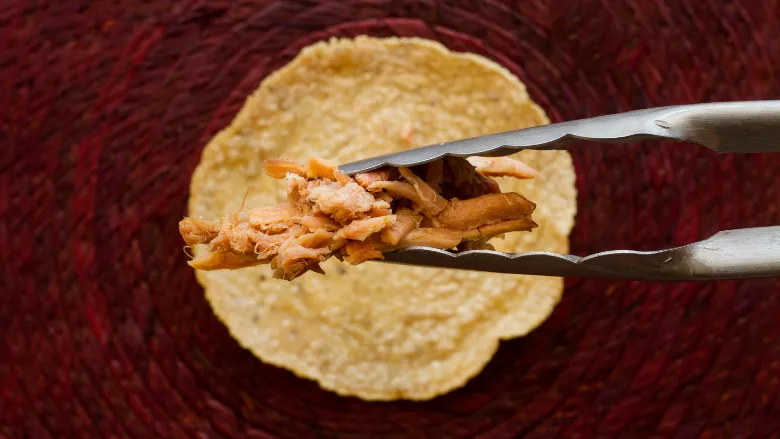
Pork roast or shoulder was associated with the greatest number of outbreaks (13, or 26 percent), with pulled pork or carnitas identified as the specific vehicle in 11 of these outbreaks.
Looking for quick answers on food safety topics?
Try Ask FSM, our new smart AI search tool.
Ask FSM →
Raw ground pork was implicated in only three outbreaks (6 percent) but accounted for the largest proportion of illnesses (444, or 23 percent).
Whole pigs were implicated in 11 outbreaks (22 percent), despite whole pig carcasses accounting for less than 1 percent of U.S. pork production. Of these 11 outbreaks, nine involved preparation in private homes. The researchers suggested that challenges associated with safely transporting, refrigerating, and evenly cooking whole pigs may increase the risk of outbreaks.
Additionally, restaurants and grocery stores were common preparation settings for implicated pulled pork and carnitas products, suggesting opportunities for further investigation of cooking, handling, and hot-holding practices.
Opportunities for Prevention
The researchers emphasized the importance of preharvest interventions targeting S. I 4,[5],12:i:- and S. Typhimurium, including improved swine disease prevention practices and potential vaccination strategies.
They also recommended further research and targeted food safety education addressing the preparation and handling of ground pork, pulled pork, carnitas, and whole pigs.