Food Safety
search
Ask Food Safety AI
cart
facebook twitter linkedin instagram youtube
  • Sign In
  • Create Account
  • Sign Out
  • My Account
Food Safety
  • NEWS
    • Latest News
    • Sponsored Insights
    • Sponsored White Papers
  • PRODUCTS
  • TOPICS
    • Contamination Control
    • Food Types
    • Management
    • Process Control
    • Regulatory
    • Sanitation
    • Supply Chain
    • Testing and Analysis
  • PODCAST
  • EXCLUSIVES
    • Food Safety Five Newsreel
    • eBooks
    • FSM Distinguished Service Award
    • Interactive Product Spotlights
    • Videos
  • BUYER'S GUIDE
  • MORE
    • NEWSLETTERS >
      • Archive Issues
      • Subscribe to eNews
    • Store
    • ASK FSM AI
  • WEBINARS
  • FOOD SAFETY SUMMIT
  • EMAG
    • eMagazine
    • Archive Issues
    • Editorial Advisory Board
    • Contact
    • Advertise
  • SIGN UP!
NewsFood TypeRegulatoryIngredientsInternational Standards/Harmonization

Hong Kong Proposes Updated Sweetener Regulations in Alignment with Codex Standards

By Food Safety Magazine Editorial Team
spoonful of sweetener

Image credit: Immo Wegmann via Unsplash

September 9, 2026

The Hong Kong Government has proposed significant amendments to its Sweeteners in Food Regulations (Cap. 132U), including bringing sugar alcohols under the regulations, expanding the number of permitted sweeteners, and establishing more than 900 maximum permitted levels (MPLs) for specific sweetener–food combinations. Public consultation on the proposed amendments is open through December 4, 2026.

The changes are intended to better protect public health and harmonize Hong Kong's requirements with Codex Alimentarius standards, supplemented where appropriate by applicable standards of mainland China.

Under existing regulations, polyhydric alcohols, also known as sugar alcohols, are excluded from the definition of a sweetener. The government has proposed bringing ten polyhydric alcohols under the regulations: erythritol, isomalt, lactitol, maltitol, maltitol syrup, mannitol, polyglycitol syrup, sorbitol, sorbitol syrup, and xylitol. Advantame and monk fruit extract would also be added to the list of allowed sweeteners, expanding the total number of permitted sweeteners from ten to 22.

The proposal would also establish more than 900 MPLs for specific sweetener-food combinations under a food category system based on the Codex General Standard for Food Additives. About 80 percent of the proposed MPLs were derived from Codex standards, with the remaining 20 percent based on mainland China standards. CFS said its risk assessment indicated that the proposed MPLs adopted from mainland standards would not pose a health concern based on local dietary intake.

Other changes would introduce a Codex-aligned carryover principle for sweeteners present through food ingredients and exempt sweeteners that naturally occur in foods (e.g., sorbitol in peaches) when they are not intentionally added.

CFS sampled and tested hundreds of foods from local retailers and found that approximately 98 percent complied with the proposed MPLs. Following consultation and completion of the legislative process, the Government has proposed an 18-month transitional period before full compliance with the amended regulations would be required.

Looking for quick answers on food safety topics?
Try Ask FSM, our new smart AI search tool.
Ask FSM →


KEYWORDS: additives Hong Kong

Share This Story

Fsm purple logo 200x200

The Food Safety Magazine editorial team comprises Bailee Henderson, Director of Content Strategy and news editor ✉, and Adrienne Blume, M.A., Director of Editorial and Industry Engagement.

Recommended Content

JOIN TODAY
to unlock your recommendations.

Already have an account? Sign In

  • people holding baby chicks

    Serovar Differences Matter: Utility of Deep Serotyping in Broiler Production and Processing

    This article discusses the significance of Salmonella in...
    Meat/Poultry
    By: Nikki Shariat Ph.D.
  • woman washing hands

    Building a Culture of Hygiene in the Food Processing Plant

    Everyone entering a food processing facility needs to...
    Training
    By: Richard F. Stier, M.S.
  • graphical representation of earth over dirt

    Climate Change and Emerging Risks to Food Safety: Building Climate Resilience

    This article examines the multifaceted threats to food...
    International
    By: Maria Cristina Tirado Ph.D., D.V.M. and Shamini Albert Raj M.A.
Manage My Account
  • eMagazine Subscription
  • Subscribe to Newsletters
  • Manage My Preferences
  • Website Registration
  • Subscription Customer Service

More Videos

Sponsored Content

Sponsored Content is a special paid section where industry companies provide high quality, objective, non-commercial content around topics of interest to the Food Safety Magazine audience. All Sponsored Content is supplied by the advertising company and any opinions expressed in this article are those of the author and not necessarily reflect the views of Food Safety Magazine or its parent company, BNP Media. Interested in participating in our Sponsored Content section? Contact your local rep!

close
  • Man In Warehouse
    Sponsored byRentokil

    Mitigating Hidden Rodent Risks in Food Facilities

  • an industrial manufacturing or processing facility
    Sponsored bybioMérieux

    Get Ahead of Spoilage in Food Manufacturing with Metagenomics for Preventive Monitoring

  • an automated industrial production line used in a modern food factory
    Sponsored byIFC

    A Formula for Food Processing Pest Management

Popular Stories

a label seal that says "California Certified Not Ultraprocessed" with the California Republic bear on it

California Passes Bill to Create Certification Seal for Non-Ultra-Processed Foods

Cattle ranch

Cattlemen’s Associations Oppose Trump’s Push to Allow On-Farm Meat Processing: ‘Food Safety is NOT Red Tape’

Beltsville Agricultural Research Center grounds

News That USDA Cyclospora Research Was Defunded in 2026 Emerges as Nation’s Largest-Ever Cyclosporiasis Outbreak Continues

allergens ebook

Events

September 10, 2026

Stop Rodents in Their Tracks!

Live: September 10, 2026 at 2:00 pm EDT: Attend this webinar to understand rodent behavior and innovative strategies for rodent management.

September 22, 2026

From EFSA to Enforcement: Managing the Growing Complexity of EU MRLs

Live: September 22, 2026 at 11:00 am EDT: Attend this webinar to evaluate best practices for monitoring regulatory changes and protecting market access.

September 24, 2026

Benchmarking Foreign Material Contamination in 2026: What the Data Shows

Live: September 24, 2026 at 2:00 pm EDT:  From this webinar, attendees will learn what is driving investment decisions, and the factors FSQA and ops leaders weigh when making the case for new prevention technology.

View All

Products

Global Food Safety Microbial Interventions and Molecular Advancements

Global Food Safety Microbial Interventions and Molecular Advancements

See More Products

Related Articles

  • auditors with tablet FDA logo overlay

    FDA Finds Four Major Third-Party Food Safety Auditing Standards to be in Alignment with FSMA Regulations

    See More
  • baby looking up while being bottle fed

    Singapore to Allow New Ingredients in Infant Formula, in Alignment with U.S., EU

    See More
  • Hong Kong flag

    Hong Kong Reports More Outbreaks But Fewer People Ill in 2020

    See More

Related Products

See More Products
  • 1119237963.jpg

    Food Safety in China: Science, Technology, Management and Regulation

  • 9781138070912.jpg

    Trends in Food Safety and Protection

  • 9781032369990 (1).webp

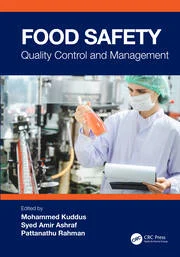
    Food Safety Quality Control and Management

See More Products

Events

View AllSubmit An Event
  • May 6, 2026

    Allergen Uncertainty: Risk Assessment, Reference Doses, and Codex Management Guidance

    On Demand: Attendees will gain insight into the importance of preparing for the industry's shift from detection-based methods to risk-based allergen management.
View AllSubmit An Event

Related Directories

  • Future Green Consulting Ltd.

    Future Green is a purpose-led consultancy and certified BCorp based in Hong Kong, serving clients globally. No matter their size or stage of growth, each client shares a common objective: to increase the output of high-value work at a faster pace. Future Green supports this by facilitating practical workshops that align teams around critical food sustainability change projects.
  • Gold Standard Diagnostics

    Gold Standard Diagnostics develops and markets rapid test kits and analyzers for a wide range of food contaminants including allergens, pathogens, patulin and mycotoxins, glyphosate and pesticides, VDRs, GMOs and more. Get accurate results in minutes on-site with Gold Standard Diagnostics test kits.
×

Never miss the latest news and trends driving the food safety industry

Newsletters | Website | eMagazine

JOIN TODAY!
  • RESOURCES
    • Advertise
    • Contact Us
    • Directories
    • Store
    • Want More
  • SIGN UP TODAY
    • Create Account
    • eMagazine
    • Newsletters
    • Customer Service
    • Manage Preferences
  • SERVICES
    • Marketing Services
    • Reprints
    • Market Research
    • List Rental
    • Survey/Respondent Access
  • STAY CONNECTED
    • LinkedIn
    • Facebook
    • Instagram
    • X (Twitter)
  • PRIVACY
    • PRIVACY POLICY
    • TERMS & CONDITIONS
    • DO NOT SELL MY PERSONAL INFORMATION
    • PRIVACY REQUEST
    • ACCESSIBILITY

Copyright ©2026. All Rights Reserved BNP Media, Inc. and BNP Media II, LLC.

Design, CMS, Hosting & Web Development :: ePublishing