OP-ED
The Missing Link in Outbreak Response: Why Distributors Need Real-Time Supplier Intelligence, Not Just Recall Notices
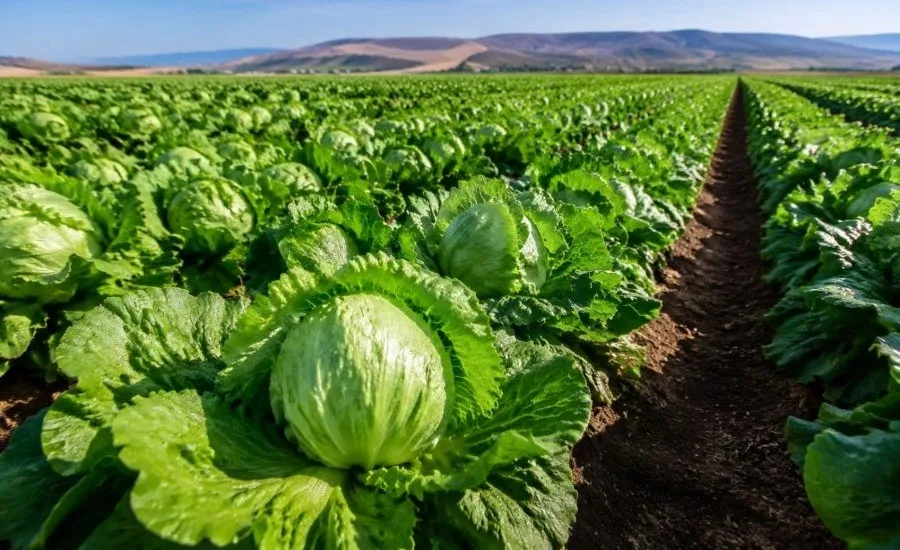
This summer's cyclosporiasis outbreak is one of the largest documented in U.S. history—more than 10,400 laboratory-confirmed cases have been reported by the U.S. Centers for Disease Control and Prevention (CDC) across 47 states as of August 5, including at least 6,358 illnesses and 278 hospitalizations tied specifically to iceberg lettuce in 15 states. By comparison, CDC typically records only about 200 to 1,000 cyclosporiasis cases nationwide in an entire year.
On July 17, Taylor Farms de Mexico recalled all iceberg lettuce sourced from central Mexico. Epidemiological and traceback data pointed to shredded iceberg lettuce from Taylor Farms de Mexico served at Taco Bell locations in Indiana, Kentucky, Michigan, Ohio, and West Virginia.
Just days later, in a twist that added confusion rather than clarity, the U.S. Food and Drug Administration (FDA) announced that one of the initially implicated lettuce samples was actually a false positive for Cyclospora cayetanensis.
FDA was careful to note that Taylor Farms remained epidemiologically implicated in the outbreak, regardless. That single clarification says a great deal about how uncertain outbreak response can be while it is unfolding—and how differently that uncertainty is felt depending on where a company sits in the supply chain.
Another important point is that Cyclospora is a parasite, not a bacterium. It does not show up on routine stool tests unless a physician specifically orders testing for it, which is a major reason official case counts in a Cyclospora outbreak tend to understate the true number of people affected. The parasite also isn't removed by standard produce washing, and typical sanitizers won't eliminate it—it takes cooking food to 158 °F (70 °C) to reliably kill it.
These infections can cause watery diarrhea and fatigue lasting for weeks, and they are prone to relapse—meaning the human and economic cost of a single case extends well past the initial illness itself.
For a commodity like leafy greens, sold fresh and rarely cooked, that combination of resilience and diagnostic difficulty is exactly what makes an outbreak like this one so hard to contain quickly.
Looking for quick answers on food safety topics?
Try Ask FSM, our new smart AI search tool.
Ask FSM →
The Layer Most Outbreak Coverage Skips
When news of an outbreak like this one surfaces, we usually hear about two things: the grower or supplier where contamination seems to have started, and the government investigation working to confirm it. Far less attention goes to the space in between. That space belongs to the wholesale distributor managing hundreds of active produce supplier relationships at once, trying to determine in real time which of them might be exposed. Meanwhile, retailers are asking the same question and looking to their distributor for a fast, confident answer (Figure 1).
Figure 1. When news of an outbreak surfaces, retailers look to their distributor for fast, confident answers
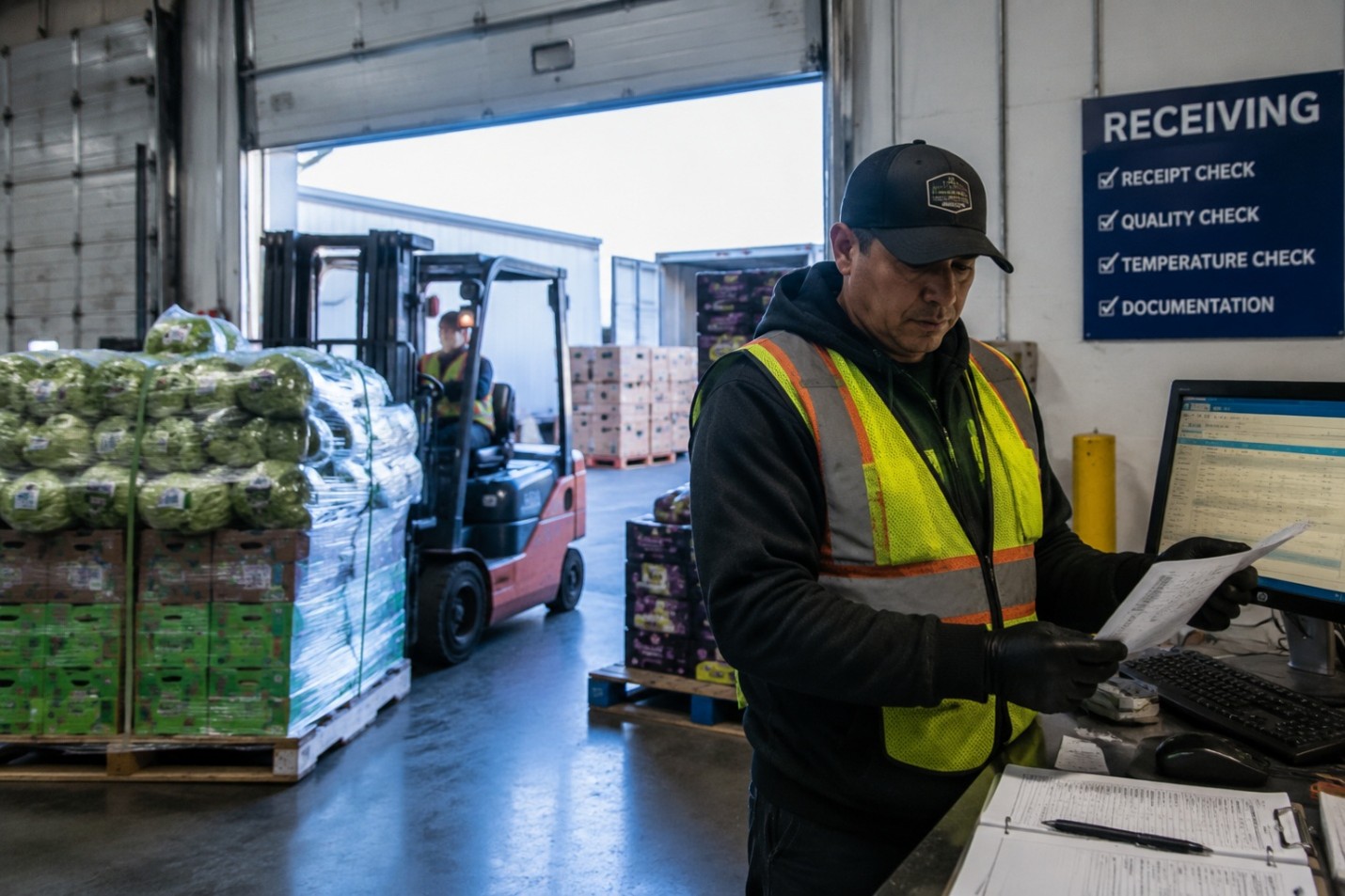 Image credit: Getty Images AI Generator, courtesy of Santoshi Muriki
I sit in that space every day at Affiliated Foods Inc., a member-owned wholesale grocery cooperative. My team manages food safety compliance across a supplier network of more than 1,000 vendors, including a produce category where a single outbreak can touch multiple suppliers at once—some implicated, most not, and the difference not always immediately clear.
When news of an outbreak surfaces, the question is not, "Does this affect us?"; rather, it is, "Which of our suppliers touch this commodity and this growing area, and what is the defensible answer we have for our retailers?"
Why Static Compliance Documentation Is Not Enough
The industry's standard toolkit for assessing and managing supplier risk has historically been heavily paper-based: GFSI certification, letters of indemnification, certificates of insurance, and recall notices filed after problems have already occurred (Figure 2). These documents matter, and remain foundational to any credible food safety program. At their best, however, they only report a supplier's status at a single point in time. They do not equip a distributor to identify elevated risk the moment a new illness emerges.
Figure 2. The industry's standard toolkit for assessing and managing supplier risk is heavily paper-based and encompasses GFSI certification, letters of indemnification, certificates of insurance, and recall notices
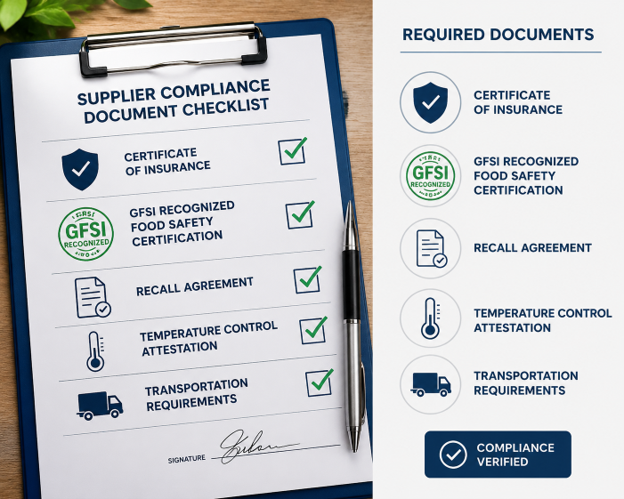 Image credit: Getty Images AI Generator, courtesy of Santoshi Muriki
Taylor Farms itself illustrates this limitation. The company has faced multiple recalls in recent years, including a March 2024 recall of ready-to-eat chicken salad bowls over an undeclared wheat allergen, and an October 2024 recall of yellow onions tied to an E. coli outbreak linked to quarter-pound hamburgers served at a quick service restaurant chain. Each of those events eventually generated a document in a supplier file. None of them would have flagged the company as elevated risk before the fact, because static compliance documentation is not predictive; it confirms what has already happened.
This gap is also why Section 204 of the Food Safety Modernization Act (i.e., FDA's Food Traceability Rule), matters so much to this conversation—and why its delay matters, too. Leafy greens are on FDA's Food Traceability List, and the rule will eventually require standardized, lot-level tracking with records deliverable to FDA within 24 hours of a request. Enforcement of the rule, originally set for January 2026, has been pushed back 30 months to July 20, 2028. That means for at least the next two years, distributors cannot rely on a federally mandated traceability backbone to close this gap. The tools to see and act on risk before it becomes a recall have to be built voluntarily, at the company level, in the meantime.
Building the Missing Layer
Over the past two years, my team at Affiliated Foods has moved away from a purely reactive model. We built a risk-tiered supplier compliance system for our produce vendors and applied the same framework across our entire supplier base of roughly 1,000 vendors. Suppliers are tiered based on volume, commodity risk, and compliance history, with automated escalation rules that flag critical documentation nearing expiration well before it lapses.
The system was originally built to solve a documentation-management problem, but it has produced unexpected benefits. It has cut manual follow-up by 60 percent and new supplier onboarding time by half, while maintaining 100 percent compliance on critical documents across the network. However, its real value shows in a moment like this one. When an outbreak happens, we already know which suppliers sit in our highest-risk tier for the implicated commodity, and we already have current documentation on file rather than having to chase it down under pressure. That is the shift distributors across the industry need to make.
The Better Question to Ask
Outbreak response inside a distribution company should not start the moment a recall notice arrives. It should start with a system that already knows where risk concentrates across the supplier base, so that when an event does occur, the question is not, "Who do we need to call first?" but rather, "Which of the suppliers we were already watching does this touch?" Automated, risk-tiered supplier monitoring does not prevent an outbreak or replace the traceback work done by FDA and CDC, but it changes how fast and how precisely a distributor can act while that investigation unfolds. That window is exactly where retailers, and ultimately consumers, are depending on someone in the supply chain to move quickly and get it right (Figure 3).
Figure 3. Retailers, and ultimately consumers, are depending on someone in the supply chain to move quickly and get it right
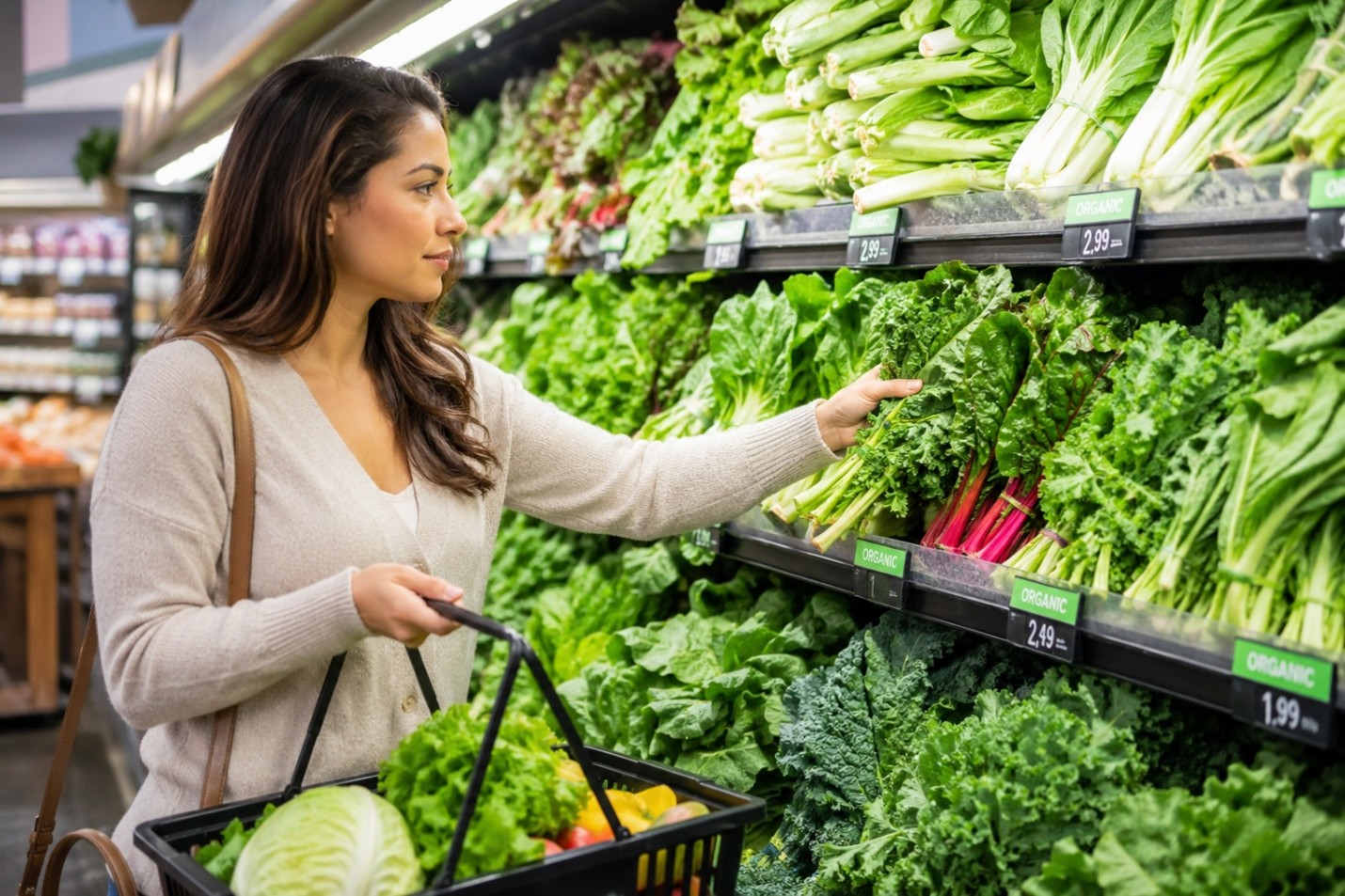 Image credit: Getty Images AI Generator, courtesy of Santoshi Muriki
As this Cyclospora outbreak continues to evolve, distributors have an opportunity to ask themselves a harder question than, "Were we affected?" The better question is: "Would we already know the answer before the recall notice even arrives?"