Jumpstart to Produce Safety Program Helps Small Growers with Practical Solutions, Free Resources
"The best proof that something is doable is watching a fellow farmer who has already done it."
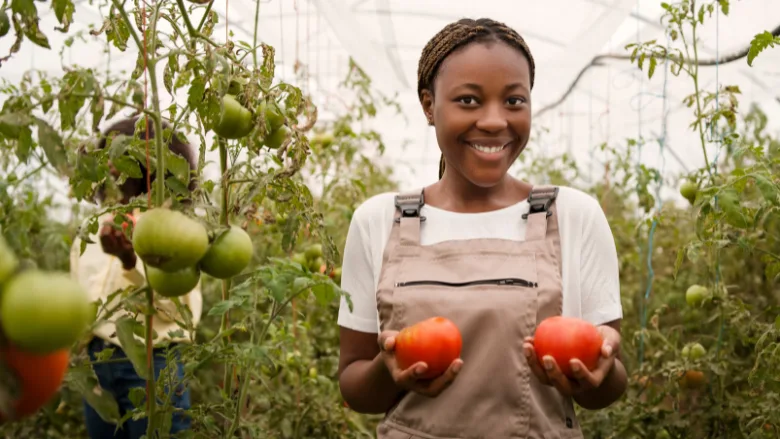
Small and mid-sized produce growers face unique challenges when striving to implement and improve food safety practices.
For example, a recent Purdue University survey of small Indiana growers found that, although smaller operations are committed to food safety, they must contend with limited resources and difficulty accessing guidance and technical assistance. Despite these hurdles, the survey also found that small growers are strongly committed to producing safe food; motivated by their personal values, as well as feelings of responsibility to consumers and their local communities. Based on their findings, the Purdue researchers concluded that food safety outreach for exempt growers should emphasize practical, trust-based support, and highlighted the need for expanded access to Extension services and decentralized information resources.
The Jumpstart to Produce Safety Program (Jumpstart Program) and resulting video resources, developed by the University of New Hampshire (UNH) and the University of Maine (UMaine) Extension with support from the U.S. Department of Agriculture’s National Institute of Food and Agriculture (USDA-NIFA's) Food Safety Outreach Program, addresses many of the same pain points and needs of small and mid-sized growers as those identified in the Purdue survey.
“The Purdue study painted a picture that felt very familiar to us: growers who genuinely want to do the right thing but are up against the daily challenges of limited labor and time, recordkeeping headaches, hard-to-find guidance, and not enough access to hands-on Extension support,” said Mary Saucier Choate, Food Safety Field Specialist with the UNH Cooperative Extension. “The researchers made a great point that what these growers need is practical, trust-based outreach. We couldn't agree more—and that's exactly the spirit behind the Jumpstart to Produce Safety microlearning video series.”
The Jumpstart to Produce Safety Program: On-Farm Training and Technical Assistance
The Jumpstart Program was designed to meet small and mid-sized produce farms “where they are” with a practical, relationship-based approach focused on incremental food safety risk reduction, Ms. Choate explained to Food Safety Magazine. Extension specialists worked with growers to provide practical, tailored produce safety technical assistance, and then produced a series of videos with participating growers who shared their learnings and real-world improvements, offering a free resource that growers nationwide can now access.
The program was carried out in three phases:
- Individualized On-Farm Assessment: Extension specialists conducted one-on-one farm visits (ten farms per state per year), walking through the full field-to-market flow to identify food safety risks specific to each operation.
- Tailored Technical Assistance: Following each assessment, specialists worked directly with farmers to develop customized produce safety “tweaks” such as Standard Operating Procedures (SOPs), cleaning checklists, improving wash-pack area flow, worker training logs, and guidance on selecting appropriate U.S. Environmental Protection Agency (EPA)-labeled sanitizers.
- Peer-to-Peer Microlearning Videos: Specialists and farmers collaborated to produce a library of more than 70 short videos (each under three minutes), in which real growers share, in their own words, the low- or no-cost improvements they made on their farms. Topics range from do-it-yourself (DIY) handwashing stations to wildlife mitigation to improved efficiency in postharvest wash-pack flow.
Pain points addressed through the Jumpstart Program are reminiscent of those identified in the Purdue survey, such as limited labor and time, recordkeeping burdens, hard-to-find guidance, and insufficient access to hands-on Extension support.
Real-World Outcomes of the Jumpstart Program
The Jumpstart Program resulted in tangible achievements for participating growers.
Looking for quick answers on food safety topics?
Try Ask FSM, our new smart AI search tool.
Ask FSM →
In New Hampshire alone, 28 farms completed the program, Ms. Choate explained. The most common improvements were in packinghouse activities and agricultural chemical management, but the Extension specialists also observed meaningful changes in worker health and hygiene training, pest and animal control, field harvesting practices, soil amendment handling, and documentation. Notably, more than 50 percent of enrolled growers have so far implemented or modified one to five food safety practices.
“Some of the most impactful changes were deceptively simple,” said Ms. Choate. For example, moving a handwashing sink to a more convenient location, adding bird netting above a wash-pack area, switching to smooth, easily cleanable harvest containers, or measuring sanitizer concentrations according to label directions.
One grower discovered through water testing that their water well required treatment, something they would not have known without the information they received during the Jumpstart training.
Importantly, the Extension specialists found that the changes implemented by Jumpstart participants had ripple effects beyond food safety. Growers reported that having written SOPs helped them maintain consistent practices even during staff turnover or owner absences. Farms were also better positioned to meet the food safety requirements of wholesalers and food hubs—another pain point identified in the Purdue survey—opening new market opportunities.
Jumpstart Microlearning Video Series: A Free Resource by Growers, for Growers
“The Purdue researchers called for expanding access to Extension services and developing centralized, practical resources,” recalled Ms. Choate. “The Jumpstart video series is that kind of resource.”
Suggesting that it is filling a real gap, the microlearning video series has already been incorporated into the Maine Department of Agriculture, Conservation, and Forestry's Produce Safety Resource Library, and is also promoted on the homepage of the New Hampshire Department of Agriculture, Markets, and Food's Produce Safety Program.
The peer-to-peer video series grew out of years of on-the-ground, individualized farm visits, hands-on technical assistance, and the trust that develops from working closely with a farmer. The videos are intended to serve as an entry-level introduction to produce safety that takes a complex topic and makes it approachable and practical.
The free library of more than 70 short videos features real farmers sharing the low-cost changes that drove produce safety, efficiency, and quality improvements in their operations. The videos are available on the UNH Extension YouTube Page.
The Extension specialists behind the Jumpstart Program hope that growers, educators, regulators, and farm-to-institution and food hub managers will widely use and share the microlearning video series.
After all, “the best proof that something is doable is watching a fellow farmer who has already done it,” concluded Ms. Choate.