California Legislation Tightens Produce Industry Requirements for Categorical Exclusion from EPR Program
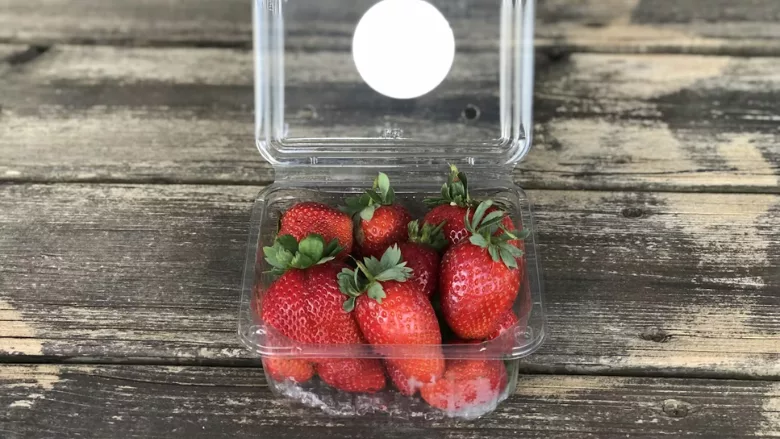
CalRecycle has issued a final draft of Senate Bill 54 (SB 54), the Plastic Pollution Prevention and Packaging Producer Responsibility Act, which establishes an extended producer responsibility (EPR) program to manage packaging and single-use plastic, including food packaging and food contact materials (FCMs). Updates included in the new, final draft may impact the fresh produce industry’s ability to qualify for categorical exclusion.
The state EPR program would require all single-use packaging of any material to be 100 percent recyclable or compostable by 2032. Plastic single-use packaging would be required to reach 65 percent recycling rate by 2032 and 30 percent by 2028. The weight and number of plastic components would be permanently capped at a producer’s 2023 baseline and would be reduced by 25 percent by 2032, without provisions accommodating for business growth.
To qualify for categorical exclusion, fresh produce producers would be required to prove that:
- No alternative packaging exists that is compliant with U.S. Food and Drug Administration (FDA) Food Safety Modernization Act (FSMA) food contact requirements and California law
- Conflicts cannot be resolved through liners, coatings, or closures
- A full package redesign would fail safety or legal requirements.
Producers would be expected to provide a formal notice to CalRecycle with FDA/FSMA citations and detailed documentation as to why packaging alternatives fail food safety goals.
Western Growers believes that new language in the draft act would “effectively eliminate” the categorical exclusion pathway that allowed fresh produce packaging to comply while meeting food safety requirements. Additionally, distributors selling into the state of California would be treated as “producers.”
Penalties for violation could reach $50,000 per day, and ongoing noncompliance may result in packaging bans.
Stakeholders can submit comments on the final draft act until February 13.
Looking for quick answers on food safety topics?
Try Ask FSM, our new smart AI search tool.
Ask FSM →