Food Safety
search
Ask Food Safety AI
cart
facebook twitter linkedin instagram youtube
  • Sign In
  • Create Account
  • Sign Out
  • My Account
Food Safety
  • NEWS
    • Latest News
    • Sponsored Insights
    • Sponsored White Papers
  • PRODUCTS
  • TOPICS
    • Contamination Control
    • Food Types
    • Management
    • Process Control
    • Regulatory
    • Sanitation
    • Supply Chain
    • Testing and Analysis
  • PODCAST
  • EXCLUSIVES
    • Food Safety Five Newsreel
    • eBooks
    • FSM Distinguished Service Award
    • Interactive Product Spotlights
    • Videos
  • MORE
    • BUYER'S GUIDE
    • NEWSLETTERS >
      • Archive Issues
      • Subscribe to eNews
    • Store
    • ASK FSM AI
  • WEBINARS
  • FOOD SAFETY SUMMIT
  • FSM FEATURES
    • FSM Features Collection
    • eMag Archives
    • Editorial Advisory Board
    • Contact
    • Advertise
  • SIGN UP!
NewsRegulatoryFDA

FDA to Revoke 52 ‘Obsolete and Unnecessary’ Standards of Identity for Food Products

By Food Safety Magazine Editorial Team
close-up macaroni noodles with FDA logo overlay

Image credit: Ayush Sharma via Unsplash

July 16, 2025

The U.S. Food and Drug Administration (FDA) is revoking 52 “obsolete and unnecessary” food Standards of Identity (SOIs) for canned fruits and vegetables, baked goods, dairy products, macaroni products, fish and shellfish, and other foods. The action is part of the agency’s ongoing analysis of its portfolio of more than 250 SOIs to ensure that they remain useful and relevant, the goal of which is to reduce bureaucracy and focus resources more efficiently.

FDA is revoking, or will revoke, the 52 SOIs through three rulings:

  • A direct final rule revoking SOIs for 11 types of canned fruits and vegetables that are no longer sold in U.S. grocery stores, including seven standards for fruits artificially sweetened with saccharin or sodium saccharin. (The agency is issuing a companion proposed rule in the same issue of the Federal Register in case the direct final rule is withdrawn due to significant adverse comments). Specifically, the direct final rule revokes the SOIs for: artificially sweetened and canned apricots, cherries, figs, fruit cocktail, peaches, pears, and pineapple; canned preserved figs; canned seedless grapes; canned field corn; and canned dried peas. 
  • A proposed rule that would revoke SOIs for 18 types of dairy products, including certain milk and cream products, cheeses and related cheese products, and frozen desserts. Specifically, the direct final rule revokes the SOIs for: acidified milk and sour cream; low-sodium cheddar and colby cheeses; caciocavallo siciliano cheese; cold-pack cheese food with fruits, vegetables, or meats; cook cheese/koch kaese; gammelost cheese; high-moisture jack cheese; nuworld cheese; pasteurized blended cheese with fruits, vegetables, or meats; pasteurized process cheese or cheese food with fruits, vegetables, or meats; samsoe cheese; sap sago cheese; goat's milk ice cream; and mellorine. 
  • A proposed rule that would revoke SOIs for 23 types of food products, including bakery products, macaroni and noodle products, canned fruit juices, fish and shellfish, and food dressings and flavorings. Specifically, the direct final rule revokes the SOIs for: milk bread, rolls, and buns; enriched macaroni products with fortified protein; milk, nonfat milk, and enriched nonfat milk macaroni products; wheat and soy macaroni products; vegetable noodle products and enriched vegetable noodle products; wheat and soy noodle products; frozen concentrate for artificially sweetened lemonade and colored lemonade; frozen orange juice; reduced acid frozen concentrated orange juice; canned concentrated orange juice; orange juice for manufacturing; orange juice with preservative; concentrated orange juice for further manufacturing; concentrated orange juice with preservative; Olympia oysters; frozen, raw, lightly breaded shrimp; and vanilla-vanillin extract, flavoring, and powder.

Many of the standards listed in the two proposed rules predate more recent consumer protections such as requirements about ingredient safety, ingredient labeling, food packaging, safe food production, and manufacturing practices and nutrition labeling information and claims.

SOIs were first established in 1939 to promote “honesty and fair dealing” and to ensure that the characteristics, ingredients and production processes of specific foods were consistent with what consumers expect. However, according to FDA, advances in food science, agriculture and production practices, and additional consumer protections have rendered many of the older, more rigid “recipe standards” unnecessary. “Many of these standards have outlived their usefulness and may even stifle innovation in making food easier to produce or providing consumers healthier choices, said FDA Commissioner Marty Makary, M.D., M.P.H.

The decision to revoke the 52 SOIs are part of FDA’s and the U.S. Department of Health and Human Service’s (HHS’) “Deregulatory Plan,” for which a request for information was released in May. The Deregulatory plan is in line with President Trump’s Unleashing Prosperity Through Deregulation Executive Order.

Looking for quick answers on food safety topics?
Try Ask FSM, our new smart AI search tool.
Ask FSM →


KEYWORDS: President Trump and food safety industry

Share This Story

Fsm purple logo 200x200

The Food Safety Magazine editorial team comprises Bailee Henderson, Director of Content Strategy and news editor ✉, and Adrienne Blume, M.A., Director of Editorial and Industry Engagement.

Recommended Content

JOIN TODAY
to unlock your recommendations.

Already have an account? Sign In

  • people holding baby chicks

    Serovar Differences Matter: Utility of Deep Serotyping in Broiler Production and Processing

    This article discusses the significance of Salmonella in...
    Microbiological Control
    By: Nikki Shariat Ph.D.
  • woman washing hands

    Building a Culture of Hygiene in the Food Processing Plant

    Everyone entering a food processing facility needs to...
    Management
    By: Richard F. Stier, M.S.
  • graphical representation of earth over dirt

    Climate Change and Emerging Risks to Food Safety: Building Climate Resilience

    This article examines the multifaceted threats to food...
    Best Practices
    By: Maria Cristina Tirado Ph.D., D.V.M. and Shamini Albert Raj M.A.
Manage My Account
  • eMagazine Subscription
  • Subscribe to Newsletters
  • Manage My Preferences
  • Website Registration
  • Subscription Customer Service

More Videos

Sponsored Content

Sponsored Content is a special paid section where industry companies provide high quality, objective, non-commercial content around topics of interest to the Food Safety Magazine audience. All Sponsored Content is supplied by the advertising company and any opinions expressed in this article are those of the author and not necessarily reflect the views of Food Safety Magazine or its parent company, BNP Media. Interested in participating in our Sponsored Content section? Contact your local rep!

close
  • Top view portrait of two factory workers standing by conveyor belt during quality inspection at food production, copy space
    Sponsored byFlexXray

    Foreign Material By the Numbers: What the 2026 Benchmark Report Reveals

  • a conveyorized industrial metal detector system that appears to resemble a Loma Systems IQ4 Metal Detector setup with an integrated conveyor belt and control panel for food or package inspection.
    Sponsored byMettler Toledo

    Beyond Detection: How to Avoid Physical Contamination in Food Through a Smarter Inspection Strategy

  • The image displays a bottling plant production line, commonly used in the beverage industry for filling and packaging soft drinks.
    Sponsored byBIOIONIX

    Sustainability with ROI: A Beverage Producer Case Study in Water Savings

Popular Stories

Dr. Heidi Overton speaking at Senate hearing

In Senate Hearing, FDA Commissioner Nominee Says Lack of Resources Will Challenge GRAS Reform

rangpur lime

Pathogens Found on Brazilian Citrus Fruit Present Emerging Food Safety Concerns

baby food jars

Testing Finds Widespread Microplastics, Lower Heavy Metals in Baby Foods

allergens ebook

Events

October 6, 2026

Advances in Environmental Monitoring Science and Strategy

Live: October 6, 2026 at 2:00 pm EDT: This webinar will cover how environmental monitoring science and EMP strategies support sanitation verification and the safe production of food.

October 15, 2026

How to Prevent Physical Contamination in Food Production and Strengthen Compliance

Live: October 15, 2026 at 2:00 pm EDT: Attend this webinar to gain insight into how product inspection helps protect your brand, reduce recall risk, and support compliance.

October 29, 2026

FDA Proposes Major GRAS Reform: What It Could Mean for Your Business

Live: October 29, 2026 at 2:00 pm EDT: Attend this webinar to examine potential implications for self-GRAS, Flavor and Extract Manufacturers Association (FEMA) GRAS, and food-contact substances.

View All

Products

Global Food Safety Microbial Interventions and Molecular Advancements

Global Food Safety Microbial Interventions and Molecular Advancements

See More Products

Related Articles

  • little piece of cherry pie

    FDA Revokes Standards of Identity for Frozen Cherry Pie

    See More
  • hot dogs

    FDA to Revoke Authorization for Mostly Obsolete Food Dye, Orange B

    See More
  • person holding OJ

    FDA Requests Input on Petition to Amend Standard of Identity for Orange Juice by Lowering Brix Level

    See More

Related Products

See More Products
  • 1118396308.jpg

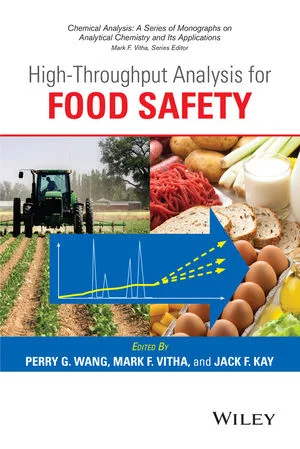
    High Throughput Analysis for Food Safety

  • 1119053595.jpg

    Food Safety for the 21st Century: Managing HACCP and Food Safety throughout the Global Supply Chain, 2E

  • 9781498721776.jpg

    Handbook of Food Processing: Food Safety, Quality, and Manufacturing Processes

See More Products

Related Directories

  • Institute for Food Safety and Health (IFSH) - Illinois Tech

    IFSH is a one-of-a-kind applied food science research consortium comprised of the Illinois Tech, the U.S. FDA, and the food industry. In collaboration with the FDA, we provide stakeholders with the opportunity to develop and exchange knowledge, experience, and expertise in the areas of food safety, food defense, and nutrition.
  • International Association For Food Protection-IAFP

    The International Association for Food Protection (IAFP) represents a broad range of members with a singular focus — protecting the global food supply. Within the association, you will find educators, government officials, microbiologists, food industry executives and quality control professionals who are involved in all aspects of growing, storing, transporting, processing and preparing all types of foods.
×

Never miss the latest news and trends driving the food safety industry

Newsletters | Website | FSM Features Collection

JOIN TODAY!
  • RESOURCES
    • Advertise
    • Contact Us
    • Directories
    • Store
    • Want More
  • SIGN UP TODAY
    • Create Account
    • eMagazine
    • Newsletters
    • Customer Service
    • Manage Preferences
  • SERVICES
    • Marketing Services
    • Reprints
    • Market Research
    • List Rental
    • Survey/Respondent Access
  • STAY CONNECTED
    • LinkedIn
    • Facebook
    • Instagram
    • X (Twitter)
  • PRIVACY
    • PRIVACY POLICY
    • TERMS & CONDITIONS
    • DO NOT SELL MY PERSONAL INFORMATION
    • PRIVACY REQUEST
    • ACCESSIBILITY

Copyright ©2026. All Rights Reserved BNP Media, Inc. and BNP Media II, LLC.

Design, CMS, Hosting & Web Development :: ePublishing