Food Safety
search
Ask Food Safety AI
cart
facebook twitter linkedin
  • Sign In
  • Create Account
  • Sign Out
  • My Account
Food Safety
  • NEWS
    • Latest News
    • White Papers
  • PRODUCTS
  • TOPICS
    • Contamination Control
    • Food Types
    • Management
    • Process Control
    • Regulatory
    • Sanitation
    • Supply Chain
    • Testing and Analysis
  • PODCAST
  • EXCLUSIVES
    • Food Safety Five Newsreel
    • eBooks
    • FSM Distinguished Service Award
    • Interactive Product Spotlights
    • Videos
  • BUYER'S GUIDE
  • MORE
    • ENEWSLETTER >
      • Archive Issues
      • Subscribe to eNews
    • Store
    • Sponsor Insights
    • ASK FSM AI
  • WEBINARS
  • FOOD SAFETY SUMMIT
  • EMAG
    • eMagazine
    • Archive Issues
    • Editorial Advisory Board
    • Contact
    • Advertise
  • SIGN UP!
NewsContamination ControlMicrobiological

Study: Natural Algal Communities Can Inhibit Aquaculture Pathogens
By Food Safety Magazine Editorial Team
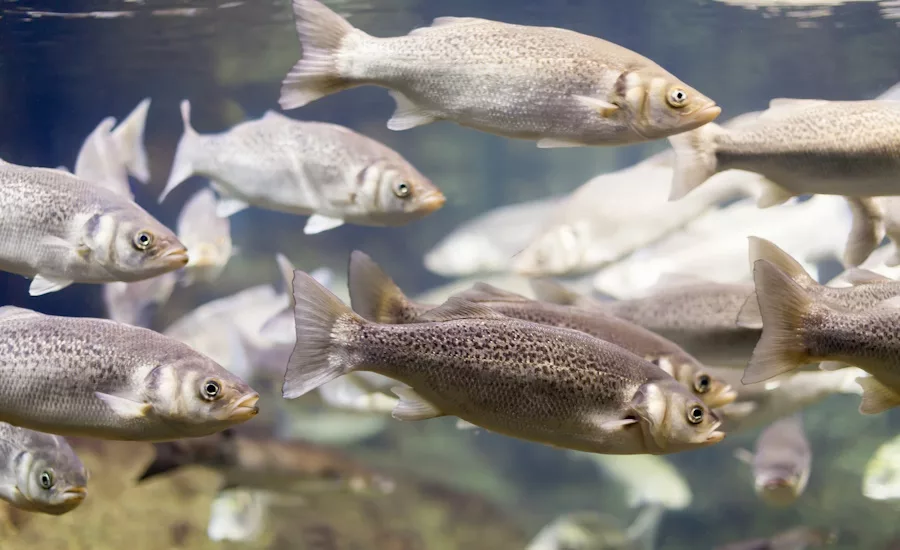
Image of grey mullet swimming in water

Image credit: bearfotos via Freepik

May 22, 2025

A new study by Danish researchers has demonstrated that it is possible to develop a consortium of bacteria that can inhibit bacterial pathogens in aquaculture. This could potentially reduce the use of antibiotics in aquaculture and possibly other applications.

The study—"Stronger together: harnessing natural algal communities as potential probiotics for inhibition of aquaculture pathogens”—was published in Microbiology Spectrum, a journal of the American Society for Microbiology (ASM).

In the new study, researchers set out to find and develop non-antibiotic biological disease control and prevention options for aquaculture. 

“Aquaculture is the fastest growing food-protein producing sector in the world, and the carbon footprint is lower than that of many animal husbandry sectors,” ASM notes. 

Aquaculture, like other intensive productions, is challenged by infectious disease outbreaks. Most commonly, these are caused by bacterial agents and can, to some extent, be treated with antibiotics. 

“However, the alarming rise and spread of antibiotic-resistant bacteria calls for alternative treatments,” ASM says. “While vaccines can be an excellent strategy, these do not work on fish larvae that have no developed immune system. Using beneficial bacteria or probiotics to combat pathogens is a strategy becoming widespread in both animal rearing and horticulture.”

The researchers developed an in vitro assay to evaluate the anti-pathogen efficacy of mixed algal microbiomes from the live-feed microalgae Tetraselmis suecica and Isochrysis galbana. The scientists wanted to find combinations of beneficial bacteria, since they believe that the anti-pathogen effect is likely stronger in a combination. 

Looking for quick answers on food safety topics?
Try Ask FSM, our new smart AI search tool.
Ask FSM →

“To test if the pathogen could be inhibited by a mixture of other bacteria, we needed a measure of the growth (and growth inhibition of the pathogen), so we tagged the fish pathogen with a green fluorescent protein. By measuring this—and the reduction in fluorescence— we could identify bacterial communities that inhibited the pathogen,” said corresponding study author Lone Gram, Ph.D., professor in the Department of Biotechnology and Biomedicine, Technical University of Denmark. 

The researchers found that mixtures of bacteria could inhibit Vibrio anguillarum, a fish pathogen, and subsequently isolated pure cultures of bacteria. They found that some of these bacteria only inhibited the fish pathogen when combined, not alone, demonstrating that some bacteria were stronger together.

“We have shown that it is possible in microbiomes (in our case, the microbiome of algae used as live feed in aquaculture) to find mixtures of bacteria that can inhibit the pathogen,” Gram said, “thus paving the way for engineering microbiomes that can inhibit bacterial pathogens and reduce the need for use of antibiotics. We can then reduce the spread of antibiotic-resistant bacteria.” 

The full study can be found here.

KEYWORDS: antibiotics aquaculture

Share This Story

Fsm purple logo 200x200

The Food Safety Magazine editorial team comprises Bailee Henderson, Digital Editor ✉; Adrienne Blume, M.A., Editorial Director; and Stacy Atchison, Publisher.

Recommended Content

JOIN TODAY
to unlock your recommendations.

Already have an account? Sign In

  • people holding baby chicks

    Serovar Differences Matter: Utility of Deep Serotyping in Broiler Production and Processing

    This article discusses the significance of Salmonella in...
    Microbiological
    By: Nikki Shariat Ph.D.
  • woman washing hands

    Building a Culture of Hygiene in the Food Processing Plant

    Everyone entering a food processing facility needs to...
    Sanitation
    By: Richard F. Stier, M.S.
  • graphical representation of earth over dirt

    Climate Change and Emerging Risks to Food Safety: Building Climate Resilience

    This article examines the multifaceted threats to food...
    Management
    By: Maria Cristina Tirado Ph.D., D.V.M. and Shamini Albert Raj M.A.
Manage My Account
  • eMagazine Subscription
  • Subscribe to eNewsletter
  • Manage My Preferences
  • Website Registration
  • Subscription Customer Service

More Videos

Sponsored Content

Sponsored Content is a special paid section where industry companies provide high quality, objective, non-commercial content around topics of interest to the Food Safety Magazine audience. All Sponsored Content is supplied by the advertising company and any opinions expressed in this article are those of the author and not necessarily reflect the views of Food Safety Magazine or its parent company, BNP Media. Interested in participating in our Sponsored Content section? Contact your local rep!

close
  • Salmonella bacteria
    Sponsored byThermoFisher

    Food Microbiology Testing Methods: Salmonella species

  • a diagram explaining indicator organisms
    Sponsored byHygiena

    How Proactive Listeria Testing Helps Prevent Six- and Seven-Figure Recalls

  • woman grocery shopping
    Sponsored byCorbion

    Designing Safety Into Every Bite: Proactive Risk Mitigation for Refrigerated Foods

Popular Stories

baby eating bottle

Infant Botulism Spike Exceeds 100 Cases, Extent of ByHeart's Involvement Unclear

NRTE breaded stuffed chicken

USDA Indefinitely Delays Enforcement of Salmonella as Adulterant in Raw Breaded, Stuffed Chicken

digital map of europe

EU Publishes Food Fraud Tool Mapping Thousands of Cases Since 2016

Events

December 11, 2025

How to Develop and Implement an Effective Food Defense Strategy

Live: December 11, 2025 at 2:00 pm EDT: From this webinar, attendees will learn common areas where companies encounter challenges in their food defense strategies and how to address them.

May 11, 2026

The Food Safety Summit

Stay informed on the latest food safety trends, innovations, emerging challenges, and expert analysis. Leave the Summit with actionable insights ready to drive measurable improvements in your organization. Do not miss this opportunity to learn from experts about contamination control, food safety culture, regulations, sanitation, supply chain traceability, and so much more.

View All

Products

Global Food Safety Microbial Interventions and Molecular Advancements

Global Food Safety Microbial Interventions and Molecular Advancements

See More Products

Related Articles

  • Antimicrobial Edible Films Inhibit Pathogens in Meat, Say Penn State Scientists

    See More
  • person blowing bubble of gum

    Study Shows Chewing Gum Releases Thousands of Microplastics, Whether Gum is Synthetic or Natural

    See More
  • 3d printer

    3D-Printed Sensor in Development Can Detect Foodborne Pathogens at Low Levels Using Light

    See More

Related Products

See More Products
  • food-safety-making.jpg

    Food Safety: Making Foods Safe and Free From Pathogens

  • 9781138070912.jpg

    Trends in Food Safety and Protection

  • global food.jpg

    Global Food Safety Microbial Interventions and Molecular Advancements

See More Products

Related Directories

  • Wenda Ingredients

    Natural curing, yield and texture improvement, shelf-life extension, color retention, and pathogen control. Wenda Ingredients' portfolio of clean-label ingredients provides brands and processors with the most advanced solutions.
×

Never miss the latest news and trends driving the food safety industry

eNewsletter | Website | eMagazine

JOIN TODAY!
  • RESOURCES
    • Advertise
    • Contact Us
    • Directories
    • Store
    • Want More
  • SIGN UP TODAY
    • Create Account
    • eMagazine
    • eNewsletter
    • Customer Service
    • Manage Preferences
  • SERVICES
    • Marketing Services
    • Reprints
    • Market Research
    • List Rental
    • Survey/Respondent Access
  • STAY CONNECTED
    • LinkedIn
    • Facebook
    • Instagram
    • X (Twitter)
  • PRIVACY
    • PRIVACY POLICY
    • TERMS & CONDITIONS
    • DO NOT SELL MY PERSONAL INFORMATION
    • PRIVACY REQUEST
    • ACCESSIBILITY

Copyright ©2025. All Rights Reserved BNP Media.

Design, CMS, Hosting & Web Development :: ePublishing