Food Safety
search
Ask Food Safety AI
cart
facebook twitter linkedin
  • Sign In
  • Create Account
  • Sign Out
  • My Account
Food Safety
  • NEWS
    • Latest News
    • White Papers
  • PRODUCTS
  • TOPICS
    • Contamination Control
    • Food Types
    • Management
    • Process Control
    • Regulatory
    • Sanitation
    • Supply Chain
    • Testing and Analysis
  • PODCAST
  • EXCLUSIVES
    • Food Safety Five Newsreel
    • eBooks
    • FSM Distinguished Service Award
    • Interactive Product Spotlights
    • Videos
  • BUYER'S GUIDE
  • MORE
    • ENEWSLETTER >
      • Archive Issues
      • Subscribe to eNews
    • Store
    • Sponsor Insights
    • ASK FSM AI
  • WEBINARS
  • FOOD SAFETY SUMMIT
  • EMAG
    • eMagazine
    • Archive Issues
    • Editorial Advisory Board
    • Contact
    • Advertise
  • SIGN UP!
NewsContamination ControlFood TypeSupply ChainMicrobiologicalProduceGrowers/GAPs

Researchers Developing Automatic AI Deterrent Technology for High-Risk Birds in Produce Fields
By Food Safety Magazine Editorial Team
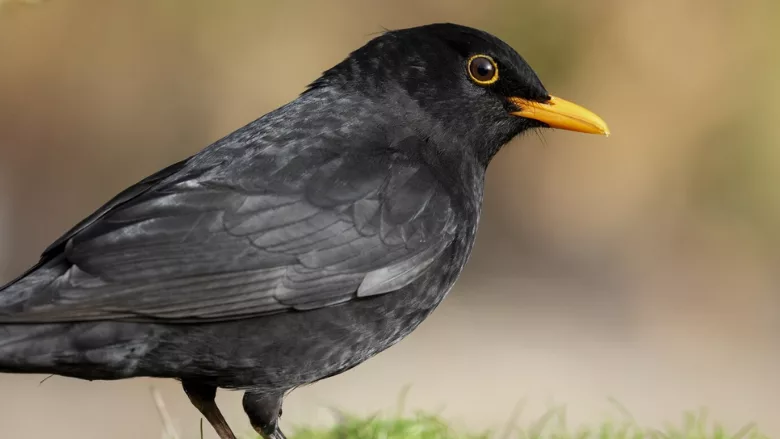
common blackbird

Image credit: wirestock via Freepik

March 31, 2025

A project funded by the Center for Produce Safety (CPS) is developing technology that leverages digital sound surveillance, artificial intelligence (AI), and machine learning to identify the presence of high-risk birds in a produce field and automatically deploy deterrent methods.

Chetan Badgujar, Ph.D., Assistant Professor of Biosystems Engineering and Soil Science in the University of Tennessee’s (UT’s) Institute of Agriculture, is the Principal Investigator on the proof-of-concept project. By only deploying deterrents when high-risk birds are present and using a range of methods at varied intervals, he hopes that his technology will prevent birds that pose a greater food safety risk from habituating while reducing the impacts on helpful pest-eating species.

Dr. Badgujar’s developing toolbox builds upon previous CPS-funded research led by the University of California, Davis’ Daniel Karp, Ph.D., in which the prevalence of different bird species in agriculture and their risk for spreading foodborne pathogens were examined. Dr. Karp’s research showed that small insect-eating birds, such as swallows, posed a lower food safety risk than birds that flock near livestock, such as blackbirds and starlings.

The toolbox will incorporate existing AI-based bird recognition software developed by Cornell University, BirdNET Sound ID, which includes recordings of more than 900 North American bird species. At present, Dr. Badgujar and his team are testing the accuracy of BirdNET Sound ID in detecting and identifying birds when connected to an in-field microphone with a range of approximately 100 feet. So far, the setup has been 50–90 percent accurate in species identification, with better results for birds with higher-pitched calls. Guided by co-investigator Hao Gan, Ph.D., a UT electrical engineer with expertise in micro-scale systems and AI modeling, the researchers aim to successfully filter out background noise interfering with capturing bird calls and improve the detection system’s accuracy.

Once the researchers achieve 70 percent accuracy in their system’s bird species identification, Dr. Badgujar intends to connect the detection system with in-field deterrents triggered by the presence of high-risk birds. These deterrents could include loud noises (e.g., firecracker or gunfire sounds), visual disturbances (e.g., laser beams or flashing colored lights), and physical interventions (e.g., unfurling coils of reflective ribbons that wave in the wind).

The toolbox in development is stationary, intended for use in small fields up to five acres. Once it is completed, the researchers will test it at the UT Organic Crops Unit in Knoxville, Tennessee, and in berry blocks at the Plateau AgResearch and Education Center about 90 minutes west. Eventually, for larger operations, Dr. Badugiar envisions the toolbox installed on an autonomous robot that roams produce fields or orchards, deterring birds while also conducting pest scouting and other activities.

Looking for quick answers on food safety topics?
Try Ask FSM, our new smart AI search tool.
Ask FSM →


KEYWORDS: artificial intelligence birds Center for Produce Safety study

Share This Story

Fsm purple logo 200x200

The Food Safety Magazine editorial team comprises Bailee Henderson, Digital Editor ✉; Adrienne Blume, M.A., Editorial Director; and Stacy Atchison, Publisher.

Recommended Content

JOIN TODAY
to unlock your recommendations.

Already have an account? Sign In

  • people holding baby chicks

    Serovar Differences Matter: Utility of Deep Serotyping in Broiler Production and Processing

    This article discusses the significance of Salmonella in...
    Meat/Poultry
    By: Nikki Shariat Ph.D.
  • woman washing hands

    Building a Culture of Hygiene in the Food Processing Plant

    Everyone entering a food processing facility needs to...
    Personal Hygiene/Handwashing
    By: Richard F. Stier, M.S.
  • graphical representation of earth over dirt

    Climate Change and Emerging Risks to Food Safety: Building Climate Resilience

    This article examines the multifaceted threats to food...
    Management
    By: Maria Cristina Tirado Ph.D., D.V.M. and Shamini Albert Raj M.A.
Manage My Account
  • eMagazine Subscription
  • Subscribe to eNewsletter
  • Manage My Preferences
  • Website Registration
  • Subscription Customer Service

More Videos

Sponsored Content

Sponsored Content is a special paid section where industry companies provide high quality, objective, non-commercial content around topics of interest to the Food Safety Magazine audience. All Sponsored Content is supplied by the advertising company and any opinions expressed in this article are those of the author and not necessarily reflect the views of Food Safety Magazine or its parent company, BNP Media. Interested in participating in our Sponsored Content section? Contact your local rep!

close
  • Salmonella bacteria
    Sponsored byThermoFisher

    Food Microbiology Testing Methods: Salmonella species

  • a diagram explaining indicator organisms
    Sponsored byHygiena

    How Proactive Listeria Testing Helps Prevent Six- and Seven-Figure Recalls

  • woman grocery shopping
    Sponsored byCorbion

    Designing Safety Into Every Bite: Proactive Risk Mitigation for Refrigerated Foods

Popular Stories

NRTE breaded stuffed chicken

USDA Indefinitely Delays Enforcement of Salmonella as Adulterant in Raw Breaded, Stuffed Chicken

non-conforming product

How to Handle Non-Conforming Product

spoonfuls of food ingredients

FDA’s Developing Rule to Tighten GRAS Oversight Moves to White House

Events

December 11, 2025

How to Develop and Implement an Effective Food Defense Strategy

Live: December 11, 2025 at 2:00 pm EDT: From this webinar, attendees will learn common areas where companies encounter challenges in their food defense strategies and how to address them.

May 11, 2026

The Food Safety Summit

Stay informed on the latest food safety trends, innovations, emerging challenges, and expert analysis. Leave the Summit with actionable insights ready to drive measurable improvements in your organization. Do not miss this opportunity to learn from experts about contamination control, food safety culture, regulations, sanitation, supply chain traceability, and so much more.

View All

Products

Global Food Safety Microbial Interventions and Molecular Advancements

Global Food Safety Microbial Interventions and Molecular Advancements

See More Products

Related Articles

  • swallow (bird) on a branch

    Researchers Developing Food Safety Risk Assessment for Wild Birds in Agriculture

    See More
  • two researchers standing in front of large screen that says AI

    Using RASFF Data, Researchers Develop Integrated AI Framework for Improved Food Safety Risk Assessment

    See More
  • researcher looking at screen that says AI

    FAO Report Highlights Needs for Responsible AI Adoption in Food Safety Fields

    See More

Related Products

See More Products
  • 1118396308.jpg

    High Throughput Analysis for Food Safety

  • 1119237963.jpg

    Food Safety in China: Science, Technology, Management and Regulation

  • food safety.jpg

    Food Safety Contaminants and Risk Assessment

See More Products

Events

View AllSubmit An Event
  • May 14, 2025

    Leveraging AI for a Safer Today and Tomorrow

    On Demand: This session will highlight some of the early and visible benefits of using AI for data-informed decision making.
View AllSubmit An Event

Related Directories

  • JBT Avure Technologies

    Food manufacturers of all shapes and sizes, including the world’s largest poultry producer, depend on our high pressure processing machines to serve up healthy, delicious and safe products. And double and triple shelf life without chemicals, additives or heat.
  • NEMIS Technologies

    At NEMIS, we are setting new standards in environmental monitoring, helping your facility stay audit-ready and protected from contamination. Our cutting-edge solutions are designed to proactively identify and address risks, transforming how food safety is upheld in production environments.
×

Never miss the latest news and trends driving the food safety industry

eNewsletter | Website | eMagazine

JOIN TODAY!
  • RESOURCES
    • Advertise
    • Contact Us
    • Directories
    • Store
    • Want More
  • SIGN UP TODAY
    • Create Account
    • eMagazine
    • eNewsletter
    • Customer Service
    • Manage Preferences
  • SERVICES
    • Marketing Services
    • Reprints
    • Market Research
    • List Rental
    • Survey/Respondent Access
  • STAY CONNECTED
    • LinkedIn
    • Facebook
    • Instagram
    • X (Twitter)
  • PRIVACY
    • PRIVACY POLICY
    • TERMS & CONDITIONS
    • DO NOT SELL MY PERSONAL INFORMATION
    • PRIVACY REQUEST
    • ACCESSIBILITY

Copyright ©2025. All Rights Reserved BNP Media.

Design, CMS, Hosting & Web Development :: ePublishing