Food Safety
search
Ask Food Safety AI
cart
facebook twitter linkedin instagram youtube
  • Sign In
  • Create Account
  • Sign Out
  • My Account
Food Safety
  • NEWS
    • Latest News
    • White Papers
  • PRODUCTS
  • TOPICS
    • Contamination Control
    • Food Types
    • Management
    • Process Control
    • Regulatory
    • Sanitation
    • Supply Chain
    • Testing and Analysis
  • PODCAST
  • EXCLUSIVES
    • Food Safety Five Newsreel
    • eBooks
    • FSM Distinguished Service Award
    • Interactive Product Spotlights
    • Videos
  • BUYER'S GUIDE
  • MORE
    • NEWSLETTERS >
      • Archive Issues
      • Subscribe to eNews
    • Store
    • Sponsor Insights
    • ASK FSM AI
  • WEBINARS
  • FOOD SAFETY SUMMIT
  • EMAG
    • eMagazine
    • Archive Issues
    • Editorial Advisory Board
    • Contact
    • Advertise
  • SIGN UP!
NewsManagementSupply ChainTrainingFoodservice/Retail

Foodservice Food Safety Training Leaves Low-Literacy Employees at a Disadvantage, Study Finds

By Bailee Henderson
young person in cook's uniform holding laptop smiling at camera

Image credit: stockking via Freepik

March 27, 2025

A recent survey of foodservice employees revealed weaknesses in currently used food safety training materials for food handlers, reporting that low-literacy trainees are often left at a distinct disadvantage.

The study, published in the Journal of Food Protection and carried out by researchers at the University of Houston’s College of Global Hospitality Leadership, was conducted with the intent of informing the development of a food safety training toolkit for novel foodservice food handlers with low literacy. A toolkit was designed to complement American National Standards Institute (ANSI)-certified food handler training, as many states, including Texas, California, Illinois, and Arizona, require that all foodservice employees pursue ANSI-certified food handler training and certification. After the toolkit was developed, the researchers tested its effectiveness at improving food safety learning outcomes for novice food handlers.

Previous studies have found that traditional food safety training modules rely on excessive text, audio, and visuals, providing a poor instructional experience for novice workers with lower levels of education or literacy. The authors defined low-literacy food handlers as those who may have several years of experience in the foodservice industry but also have low literacy skills or a language barrier that acts as a hindrance to training and/certification. Additionally, research suggests that almost 57 percent of entry-level foodservice employees have little to no education, adding to the level of difficulty that training platforms can present for novice-level foodservice workers, especially when they are unfamiliar with the use of technology or online platforms.

The survey included interviews with foodservice stakeholders in a variety of roles, such as chefs, managers, human resources personnel, and health inspectors. Their responses were analyzed to develop the novice training toolkit, which was complimentary to ANSI-certified training and consisted of five parts: basic food safety, personal hygiene, cleaning and sanitizing, cross-contamination and allergens, and time and temperature. The food safety knowledge of 25 food handlers was measured through a pre- and post-training intervention survey to assess the effects of the toolkit on food safety knowledge and self-efficacy. The knowledge of the group of trainees who were taught with the toolkit was compared against a control group who were given ANSI-certified training materials only.

Participants in the initial interviews, responsible for overseeing anywhere from 10–10,000 employees, voiced concerns about the effectiveness of current food safety training for low-literacy food handlers and expressed the need for accommodations to be created. The majority of the participants reported not having a say in choosing the food safety training program given to food handlers. All participants confirmed overseeing at least one employee who is not literate, and supervising more than one employee who are low-literacy or low-education. Comprehension of training materials was reported as a challenge, and some respondents admitted to completing training modules for their employees to comply with regulations.

When asked to describe an ideal food safety training program, the interviewees mentioned training materials that contain fewer words and more pictures, and are less than two hours long in total. Several respondents also suggested that online courses should be paired with hands-on training.

Among the foodservice workers who participated in the ANSI-certified training and were given the toolkit materials, 8 percent reported having no education, while 8 percent, 12 percent, 12 percent, and 20 percent reported their highest levels of education to be grades 1–11, no diploma but completed 12th grade, attained a regular high school diploma, or attained a GED/alternative credential, respectively. The majority of participants (96 percent) reported that they had taken ServSafe food safety training in the past, and 84 percent had worked in the food industry for four or more years.

Looking for quick answers on food safety topics?
Try Ask FSM, our new smart AI search tool.
Ask FSM →

Overall, the researchers found that the novel training toolkit was effective, as the toolkit intervention group had higher overall post-training knowledge scores than the control group. Additionally, despite the majority of the study participants having several years of experience in the foodservice sector, adequate training was seen to increase low-literacy foodservice workers’ food safety self-efficacy, or in other words, their self-confidence that they can understand food safety training materials and pass required tests for certification.

The study was supported by the Society for Hospitality and Foodservice Management Foundation. The first author on the study is Karla Acosta, Ph.D., Adjunct Faculty Member at the University of Houston’s College of Global Hospitality Leadership and Food Safety Manager for The Acheson Group.


KEYWORDS: study University of Houston

Share This Story

Baileehendersonmay23

Bailee Henderson is the Digital Editor of Food Safety Magazine, where she covers industry-relevant current events, regulatory affairs, and scientific developments. She also produces the Food Safety Five Newsreel. Notably, Bailee's coverage for Food Safety Magazine has been featured in national televised news segments including CBS Sunday Morning and MSNBC's Rachel Maddow Show. She can be reached at hendersonb@bnpmedia.com.

Recommended Content

JOIN TODAY
to unlock your recommendations.

Already have an account? Sign In

  • people holding baby chicks

    Serovar Differences Matter: Utility of Deep Serotyping in Broiler Production and Processing

    This article discusses the significance of Salmonella in...
    Food Type
    By: Nikki Shariat Ph.D.
  • woman washing hands

    Building a Culture of Hygiene in the Food Processing Plant

    Everyone entering a food processing facility needs to...
    Personal Hygiene/Handwashing
    By: Richard F. Stier, M.S.
  • graphical representation of earth over dirt

    Climate Change and Emerging Risks to Food Safety: Building Climate Resilience

    This article examines the multifaceted threats to food...
    International
    By: Maria Cristina Tirado Ph.D., D.V.M. and Shamini Albert Raj M.A.
Manage My Account
  • eMagazine Subscription
  • Subscribe to Newsletters
  • Manage My Preferences
  • Website Registration
  • Subscription Customer Service

More Videos

Sponsored Content

Sponsored Content is a special paid section where industry companies provide high quality, objective, non-commercial content around topics of interest to the Food Safety Magazine audience. All Sponsored Content is supplied by the advertising company and any opinions expressed in this article are those of the author and not necessarily reflect the views of Food Safety Magazine or its parent company, BNP Media. Interested in participating in our Sponsored Content section? Contact your local rep!

close
  • Darkling Beetle
    Sponsored byElanco Animal Health

    Integrated Pest Management: Protecting Poultry Operations as Seasons Change

  • NEVIFIT 3 Compartment BPA-FREE
    Sponsored byCorbion

    The Risks of Ready-to-Eat: Five Ways to Protect Today's Prepared Meals

  • a group of workers in a food production facility
    Sponsored bySkillUp by Registrar Corp

    How to Build a Better Training Program: Data and Insights from the Global Food Safety Training Survey

Popular Stories

nara organics whole milk infant formula

Another Infant Botulism Outbreak Sickens Three, Nara Organics Formula Suspected Cause

diverse group of people wearing protective clothing in food production plant

EU Member States Report Challenges in Implementing Food Safety Culture Official Controls

half full baby bottle next to rubber duckie on white surface

Organic Infant Formulas Caused Back-to-Back Botulism Outbreaks—What Gives?

Events

June 25, 2026

Rethinking Food Safety: Eliminating Biofilm and Building a Smarter Food Safety System

Live: June 25, 2026 at 2:00 pm EDT: Join this webinar to explore a modern approach to decontamination that goes beyond surface-level cleaning to combat biofilm and persistent pathogens.

June 30, 2026

FSMA 204 in Practice: Building a Traceability-Ready Operation

Live: June 30, 2026 at 11:00 am EDT: Attend this webinar to learn how food businesses can move from fragmented records toward a more reliable approach for recall response, FDA requests, and supply chain visibility.

July 21, 2026

Using AI Responsibly in Food Safety Management Systems

Live: July 21, 2026 at 2:00 pm EDT: This webinar will provide participants with guidance on how to effectively use generative artificial intelligence (AI) tools to develop key components of a food safety management system (FSMS).

View All

Products

Global Food Safety Microbial Interventions and Molecular Advancements

Global Food Safety Microbial Interventions and Molecular Advancements

See More Products

Related Articles

  • oil bubbles

    Oils, Acids Promising Antimicrobials for Low-Moisture Food Safety, Study Finds

    See More
  • Study Finds Widespread Conflicts of Interest in Food-Safety Decisions

    See More
  • tilapia on ice

    Study Finds Microplastics in Guts of All Fish Assessed, Affects Food Safety of Fish

    See More

Related Products

See More Products
  • 1119053595.jpg

    Food Safety for the 21st Century: Managing HACCP and Food Safety throughout the Global Supply Chain, 2E

  • 9781498721776.jpg

    Handbook of Food Processing: Food Safety, Quality, and Manufacturing Processes

  • 9781138198463.jpg

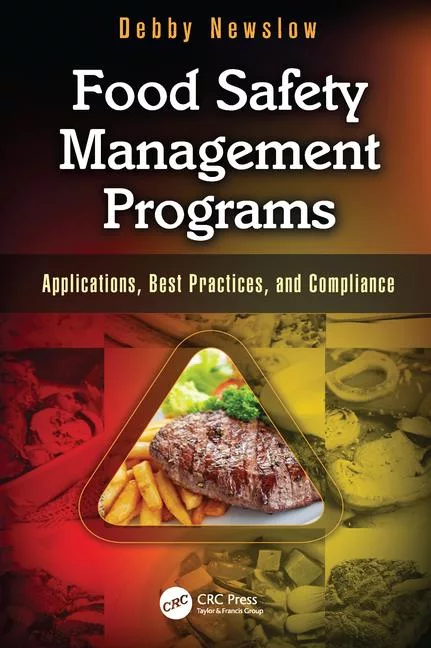
    Food Safety Management Programs: Applications, Best Practices, and Compliance

See More Products

Events

View AllSubmit An Event
  • June 3, 2026

    How to Build a Better Food Safety Training Program

    On Demand: Join this webinar to learn how AI is impacting food safety training, and how you can leverage AI in your programs.
  • June 25, 2026

    Rethinking Food Safety: Eliminating Biofilm and Building a Smarter Food Safety System

    Live: June 25, 2026 at 2:00 pm EDT: Join this webinar to explore a modern approach to decontamination that goes beyond surface-level cleaning to combat biofilm and persistent pathogens.
View AllSubmit An Event

Related Directories

  • BD Food Safety Consultants LLC

    We are a Food Safety Training and Consulting firm located in Naperville, IL. Our primary goal is to provide with effective training and consulting solutions for Food Manufacturing and Distributing companies. Our training services include the following: FSPCA PCQI classes, IAVA Courses, IHA Accredited HACCP classes, FSVP Courses and Internal Auditor Training classes. We also offer Learning Management System for food manufacturing industry.
  • Food Safety and Quality Consultants LLC

    Food Safety and Quality Consultants, LLC (FSQC) is a professional full-service food safety and quality consulting firm offering a complete line of training, consulting, and auditing services to meet your needs. We will help you turn the complicated into compliance by making your food safety systems simple and effective!
×

Never miss the latest news and trends driving the food safety industry

Newsletters | Website | eMagazine

JOIN TODAY!
  • RESOURCES
    • Advertise
    • Contact Us
    • Directories
    • Store
    • Want More
  • SIGN UP TODAY
    • Create Account
    • eMagazine
    • Newsletters
    • Customer Service
    • Manage Preferences
  • SERVICES
    • Marketing Services
    • Reprints
    • Market Research
    • List Rental
    • Survey/Respondent Access
  • STAY CONNECTED
    • LinkedIn
    • Facebook
    • Instagram
    • X (Twitter)
  • PRIVACY
    • PRIVACY POLICY
    • TERMS & CONDITIONS
    • DO NOT SELL MY PERSONAL INFORMATION
    • PRIVACY REQUEST
    • ACCESSIBILITY

Copyright ©2026. All Rights Reserved BNP Media, Inc. and BNP Media II, LLC.

Design, CMS, Hosting & Web Development :: ePublishing